
ola funding round

OLA’s Latest Fundraiser Of $500mn Will Help Them Grow In Size And Otherwise!

What’s The News?

Ola, India’s largest cab aggregator which is run by ANI Technologies Pvt. Ltd, has recently raised $500 million in fresh funds from a collective group of new and existing investors which include –Baillie Gifford (investment management firm), Didi Kuaidi (China’s largest taxi-hailing service company and Uber’s competitor in China), Falcon Edge Capital, Tiger Global, SoftBank Group, DST Global, etc.

According to the makers, they will be using the funds for majorly four purposes, that is –

  • To push forward and encourage growth across all their existing categories
  • Introducing mobility solutions using innovative methods for the local market
  • Building and nurturing the ecosystem for drivers
  • And lastly, to stand strong in front of their competitor – Uber

After closing this round of investment, Ola has received a total of more than $1.3 billion in external funding, with the previous one being of $400 million.

Speaking about the whole industry in general; a lot of VC money has been pumped into the taxi space in India, which is now seen to be heating up and has also been seeing a extraordinary growth in the past few years as well.

Going by the current scenario and stats; clearly, the Indian taxi market is growing drastically and won’t be seeing a saturation point anytime soon. At this point, the industry is said to be valued somewhere around $6-$9 billion dollars by different estimates, and is projected to grow at the rate of 17-20% annually.

And in this ocean, the organised taxi market, with a market share of 3-4%, is as small as a pond, and still has a lot of potential to grow.

How Much Has Ola Grown In Terms Of Market Size & Market Valuation?

To begin with – The makers have reported that, Ola’s platform accounts for more than 275,000 cabs and 75,000 auto-rickshaws, which do not even include the kaali peeli taxis and yellow taxis across all their 102 cities in India.

To add to that, the company has stupendously grown by 30 times in the last one year, and now logs over One million booking requests a day as well.

The company is also anticipated by the investors, to post a pre-tax profit by 2017-2018 – reported by DealStreetAsia.

As per company’s statement and media reports, Ola presently accounts for whooping 80% of the market share of the given industry in India, out-beating all its major competitors.

Since their Series E round of funding of $400 Mn, the Taxi app has become the third-most valuable venture-backed company in India (after online marketplaces Flipkart and Snapdeal) and the #1 Taxi Aggregator as well.

And lastly, if you compare Ola with its biggest competitor – Uber, Ola remains a clear winner of the market share, as it holds a strong presence in over 100 cities, while Uber is still in 20+.

Over the past one year, the company has grown by manifolds and has various categories such as –

  • Ola Café (a food delivery service)
  • Ola Store (an independent grocery-ordering app)
  • Ola Wallet (a mobile payments app)
  • Ola Shuttle (a shuttle bus service)

Diversifying into such ventures has only put the company in direct competition with various other major brands in those relevant industries like – Foodpanda, Scootsy, Alibaba Group- backed PayTM, Snapdeal-owned FreeCharge, and many others. But at the same time, has also made the company equally larger and in line to become the biggest player in the Indian Start-up Terrain.

Talking about their recent acquisitions –In March 2015, Ola took over its competitor ‘TaxiForSure’ for $200 million and has also transferred their users to Ola’s mobile
application. Other than that; more recently, the company has also acquired ‘Geotagg’, a trip-planning applications company in November 2015, for an undisclosed amount, to strengthen its new bus-shuttle service.

Moving ahead, the grand vision of the company is to rule over the rapidly growing middle class in India, by offering a relatively better transportation infrastructure and service that is coupled with technology.
Microsoft acquires mobile data labs

Mobile Data Labs – Founder of MileIQ App, Acquired by Microsoft!

THE NEWS…

So it’s just in that – Microsoft has recently acquired ‘Mobile Data Labs‘. The start-up is famous for its app called “MileIQ”.

For all those who aren’t aware, MileIQ is one of the most popular Android and iOS mileage-tracking apps which can automatically track how far you drive.

The financials of the deal have not been disclosed by either of the companies, but it is certain that the app won’t be going anywhere. Microsoft won’t be shutting the app down, at least not anytime soon.

The only difference will be that the people who till before were working for Mobile Data Labs, will now be working on integrations with Microsoft software.

Mobile Data labs will continue to build and offer mobile productivity solutions as they were, and the only difference now would be that, it would also be taking advantage of insights from Office 365 and the Office Graph.

On the other end, Microsoft, for a fact knows that phones now are a primary device for many, and since most of its products were made for desktop usage the company has now opted for the mobile route.

They understand that the mobile and cloud revolution has pushed the users to demand for more compact, fast apps for their smart phones, and acquisitions like such clearly show that Microsoft is willing to buy up start-ups to attain & maintain its superiority in the mobile & cloud world as well.

Hence, even though this is Microsoft’s latest acquisition since Satya Nadella became the CEO and opted for a “mobile first and cloud-first” strategy, this isn’t their first acquisition.

Some of the recent others include – Acompli, Sunrise, and Wunderlist as well.

Moreover, Microsoft is also internally building an army of early-stage mobile apps and their latest is the Android app launcher Arrow.

ABOUT – MOBILE DATA LABS (MILEIQ)

Redmond-based prodigy of Mobile Data Labs – MileIQ is an app that automatically tracks and logs the miles you drive. In other words, the app helps business travelers to track the miles they drive on business.

The app was cofounded in 2013 by Dan Bomze and Chuck Dietrich. Dan wanted to make an app that was a mix of his business credit card and Fitbit. Something that would automatically log his drives, calculate their value, and sync his mileage reports, etc…

As much as the idea sounds common, yet MileIQ has turned out to actually be a handy tool to millions of workers who otherwise had to track and report their miles manually. It is of great help for those who intend to claim deductions or reimbursements.

The app uses handset’s sensors to calculate the mileage, with the help of which the users can save around $547 a month and $6500 a year.

Till before it got acquired, it had managed to raise a total of more than ‘$15 million‘ from CRV, SV Angle, and Salesforce CEO Marc Benioff.

The app is said to have received more than 1 million users and has been the top grossing finance app in the iTunes store for the last 20 months.

utube music app

YouTube Launches Its Long-Awaited Music App

THE NEWS…

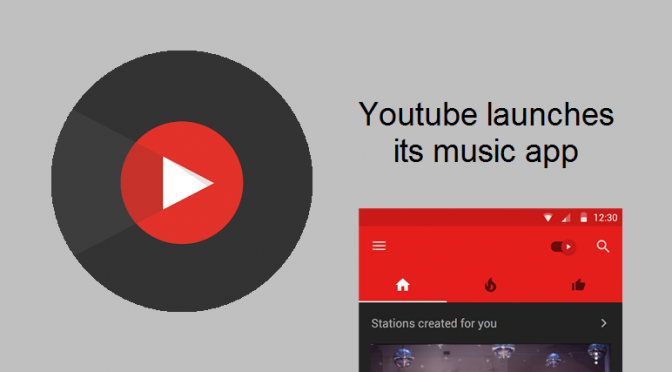
So it’s just in that – YouTube has recently launched their latest ‘YouTube Music’!

So YouTube since more than a year had been experimenting to understand how it could offer its huge collection of music videos, audio tracks, covers, live performances, to its users.

They had also begun testing with an Android-only beta version of Music, which back then was called ‘Music Key’. Music key had a very small and enclosed set of users. Their ultimate goal was to understand and observe how would music fanatics use it and react to this app.

And not to forget, how would that affect YouTube as a whole as well.

Picking up on the observations they collected; the world’s third most popular website has cracked the code and launched YouTube Music.

During the beta mode, the company had also learned that the users (obviously) disliked ads.

Hence, to solve that purpose YouTube also launched ‘YouTube Red’.

YouTube Red, simply put, is the enhanced and paid version of YouTube Music, which offers ad-free viewing and listening, audio-only mode and offline play in YouTube Music.

YouTube gives the audience a 14-day free trial, to use YouTube Music but ad-free, post which the free version kicks in, which has ads. YouTube Red is available can be purchased for $9.99.

Moving on! As we know, Ping (Apple) failed, Apple Music is only for broadcasting, and Spotify is just about “Okay” too. Clearly, there hasn’t been much success and social experience around music yet.

On the other hand, the social aspects of music on YouTube have been extraordinary, and since artists already have a regular engagement on the platform, YouTube Music will only make life easier for them.

With this app, YouTube ultimately aims at creating a stop destination and also desires to make the switching between video and audio-only play, easier.

According to the makers, one will get a chance to experience and discover a new world within an already existing galaxy, which is especially designed to make discovering music a lot easier.

Look at it this way – at the end of the day, you are going watch or listen to music on YouTube only, but with YouTube Music app, that experience will far more simpler,
convenient and more enjoyable.

ABOUT – YOUTUBE MUSIC

YouTube Music is strongly focusing on personalization. When someone launches the app, they would see the main screen offering a trio.

First, they would see a personalized homepage which will have basic genre stations keeping in mind your personal taste into account. And for those wondering of how do they know your personal choice? Well, you’re still logged on YouTube, even when you are on the music app, so they exactly know what you’ve watched and searched for earlier.

The next is the second tab which focuses on top hits of the day’s most popular videos.

And the third screen collects all the videos a user has “liked” in one place. One can make their own playlists, by pushing the ‘thumbs-up’ button on a song and the app will place the song into a playlist. One can also search for individual artists, songs or albums, etc…

It is obvious that, the end goal of the app is to keep you engaged in watching and/or listening of music on YouTube Music.

And to get you listening immediately, the YouTube Music app has also curated a few areas, which are pretty interesting to listen too. The YouTube team works on tweaking algorithms every now-&-then, to pull out content specific to the music vertical, which can be anything from an official video, a dance mix to a cover.

Unlike the sad typical radio “Top 40”, these curated areas are nothing but a human-created list which is based on what’s hot and trending on the platform at any given moment.

Lastly, what is interesting to note is that, YouTube has also taken the efforts to collect all the best alternate versions of a particular song or video, and has made them easily accessible using the “Explore” tab under the currently playing track. Basically, for example when you are listening to a particular song, you will also see different versions or remixes of that original under the “Explore” tab.

HOMEAWAY ACQUIRED BY EXPEDIA

Expedia’s Shopping Spree Continues – HomeAway Gets Acquired!

THE NEWS…

Expedia is on the verge of becoming an online travel superpower!

Expedia seems to be on a shopping spree lately and has gone on to acquire Travelocity ($280 million) and Orbitz Worldwide – which owns Orbitz.com and Cheaptickets.com ($1.38 billion) in the recent past.

Continuing the spree, it was recently announced by Expedia Inc. that it would be acquiring the publicly traded vacation rental service ‘HomeAway’ along with all the brands under it, for a whooping $3.9 billion in cash and Expedia common stock as well. As per the reports, the transaction shall most likely close around the first quarter of 2016.

HomeAway was founded in 2005 and it allows users to arrange vacation rentals at 1.2 million properties in 190 countries around the world. It has been a publicly listed company since 2011.

In recent years the company has also made a range of acquisitions to stand strong in front of its competition. Some of these include: – BedandBreakfast.com, VRBO.com and VacationRental.com in the US, and similar sites in the UK, Germany, France, Spain, Brazil, Australia and New Zealand as well.

Now as soon as Expedia announced that it would be paying $38.31 per share for HomeAway, that is 20% higher than HomeAway’s original price before the deal, HomeAway’s stock price jumped to $40.15 in a day’s time in New York, while Expedia shares jumped 2.3%.

There was also a rumour amongst the investors that the rival groups would also place a counteroffer to the bid, but to their surprise, nothing of that sort happened.

WHAT’S IN IT FOR EXPEDIA?

Let’s start of by saying that, the end-game for Expedia is to create an online travel giant that stands strong in front of Priceline and its dominant site ‘Booking.com site.’ Priceline currently has a market capitalization of $57 billion, while Expedia stands at a $10 billion valuation.

Now Airbnb and other start-ups in the present travel market are seen to be changing the dynamics. They are doing so by introducing new tools that competes with lodging operators and cannot be directly searched via websites like Expedia. Keeping that in mind, in an attempt to stay ahead of the competition and to respond fittingly, Expedia has introduced their own service that is based on people renting out their rooms and homes.

So this deal is definitely a win-win for all. It will leverage Expedia to deliver best-in-class experiences to an even wider audience globally; it will help HomeAway to receive the desired distribution, technology and expertise from Expedia; and the consumers can also expect a lot of home-rental inventory being displayed via Expedia.

According to the CEO of Expedia – Dara Khosrowshahi, the company aims to become the fastest growing $100 billion alternative accommodations company. They had been doing so since the last two years in partnership with HomeAway. But now, the company has moved a step further, and has taken the next most logical step by adding HomeAway and its leading brands to their portfolio.

Well, this acquisition places Expedia along with its army of subsidiaries like – Hotels.com, Hotwire.com, Travelocity, Orbitz and Venera, directly in competition with Airbnb.

Although, much cannot be anticipated at this point in regards to how the acquisition will affect the rivalry between HomeAway and Airbnb (valued at $24 Billion), but it is certain that the backing of Expedia would give HomeAway the resources to compete more effectively.

BlackBerry Priv

‘BlackBerry Priv’ – The New Smartphone In Town That Is Powered By Android OS!

THE NEWS…

There has been a lot of buzz since a while regarding BlackBerry launching an Android smartphone, given that this is a ‘make or break’ situation for the company.

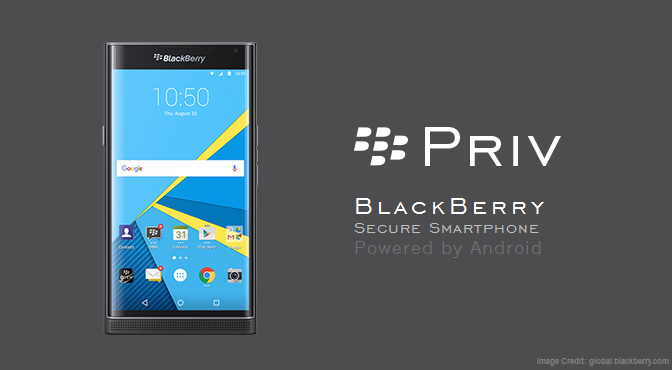
Putting an end to all the gossip, Blackberry has recently announced their latest Android- powered (Android 5.1.1 Lollipop) handset – BlackBerry Priv.

What is interesting to note here is that, ‘Priv’ is the first smartphone made by BlackBerry that is working on an operating system that is not its own.

And what makes the new Blackberry Android Phone even more unique is that the company has collaborated with Google to provide the consumers with the best of BlackBerry security and productivity under the Android ecosystem.

Additionally, this new version is also has a slick slider keyboard attached, making it one of the only few smartphones in the current market to offer something of this sort. This feature could also help Priv stand out.

It has already been made available for pre-order starting at $699 and its shipping shall begin from 6 November in the US.

Mentioned below are the details about the availability of the device and its prices: –

  • Canada – ‘Rogers’ and ‘ShopBlackBerry’ ($899 CDN)
  • Germany – ‘Amazon Germany,’ ‘Media Markt’ and ‘Saturn’ (€799)
  • United Kingdom – ‘Carphone Warehouse’ and ‘ShopBlackBerry’ (£559 Incl. VAT)
  • United States – ‘ShopBlackBerry’ ($699 USD)

THE FEATURES…

The new Blackberry Priv comes with a 5.4-inch dual-curved WQHD Plastic AMOLED Touchscreen, a display resolution of 2560 x 1440 pixels, powered by a Qualcomm
Snapdragon 808 Hexa-Core, and a 64 bit processor.

Additionally, the phone also consists of an 18 mega pixel dual-flash camera, 3 GB low powered RAM and an internal storage of up to 32 GB which can be expanded up to 2 TB via microSD card slot. The phone also offers a battery life of up to 22.5 hours.

But the smartphone’s “wow factor” is actually their slide out physical keyboard, which makes them stand out in the crowd.

Talking about security; now many of us know that security has been a long-standing problem with the Android phones and more than 1 billion Android devices as of date stay exposed to the ‘Stagefright’ exploit.

To give you a brief idea, Stagefright bug is something that lets the attacker remotely execute a code using Multimedia Text messages, which often the users won’t even see.

It is known to be the biggest Android security problem since a very long time now and almost all the Android phone users prone to attacks.

Hence, in an attempt to counter that, BlackBerry has applied its world-renowned security model to the Android OS.

Priv offers a pre-loaded brand new ‘BlackBerry DTEK’ application, which is specifically designed to help you control and protect your privacy.

It tells you when your data could be at risk, which apps access your personal data, and also shows the overall security of your device based on various factors.

Giving credit where credit due; BlackBerry indeed has a long history of holding the best, private and secure mobile solutions‎. BlackBerry OS was the first one to provide secure email and applications on mobile devices.

And when BlackBerry and Google come together to design a ‘secure mobile platform,’ with the most flexible application ecosystem, it does not need a lot of brainstorming to understand that, it is going to be the best.