
GST Bill

GST Bill decoded – A must read for the common man!

What is GST (Goods and Services Tax)?

The biggest indirect tax reform since 1947 – the Goods and Services Tax Bill or the more famously known GST Bill, is a single tax on the supply of goods and services, right from the manufacturer to the consumer.

This tax would be charged and collected at every stage of sale or purchase of goods or services, based on the input tax credit method, which makes GST essentially a tax only on value addition at each stage. And the final consumer will only bear the GST charged by the last dealer in the chain, along with all the set­off benefits at all the previous stages.

It also allows GST-registered businesses to claim tax credit to the value of GST they paid as well.

In other words, GST is one [uniform] indirect tax that combines all other indirect Central level and State level taxes into one, making India one unified common market.

It is a comprehensive indirect tax method on manufacture, sale and consumption of goods and services throughout India, to replace the taxes that are levied by the central and state governments. The nature of GST itself is that it taxes only the final customer.

It is officially known as The Constitution (One Hundred and Twenty-Second Amendment) Bill, 2014, that proposes a national Value added Tax. It was published on 19.12.2014, introduced by Arun Jaitley, passed by Lok Sabha (8th August 2016) and Rajya Sabha (3rd August 2016) and will be implemented in India from the 1st of April 2017.

This bill will come directly under the Central government, will be governed by the GST act and with the help of certain procedures they would also be providing feasible conditions for the taxpayer.

The central government has also assured states of compensation for any revenue losses incurred by them from the date of introduction of GST for a period of five years.

The Structure and Features…

Keeping in mind the federal structure of India, there are going to be two components of GST – Central GST (CGST) and State GST (SGST). And in cases of Inter­state transactions, the Centre would levy and collect the Integrated Goods and Services Tax (IGST), which would roughly be equal to CGST plus SGST. Either ways, no cross utilization of credit would be permitted.

At the Central level: Central Excise Duty, Additional Excise Duty, Service Tax, Additional Customs Duty commonly known as Countervailing Duty, and Special Additional Duty of Customs, will be subsumed. While, at the State level: Subsuming of State Value Added Tax/Sales Tax, Entertainment Tax (other than the tax levied by the local bodies), Central Sales Tax (levied by the Centre and collected by the States), Octroi and Entry tax, Purchase Tax, Luxury tax, and Taxes on lottery, betting and gambling, shall be subsumed.

The GST Council will consist of the Union Finance Minister (as the Chairman) and MoS in charge of Revenue; Minister in charge of Finance or Taxation, or any other Minister, nominated by each state.

Besides these; the other salient features of the Bill include:

  1. Both – Parliament and the State Legislatures will have simultaneous power to make laws governing the tax
  2. Most of the Central and State indirect taxes will be subsumed into the GST
  3. Dispensing with the concept of ‘declared goods of special importance’ under the Constitution
  4. GST to be levied on all goods and services, except alcoholic liquor for human consumption. Petroleum and petroleum products shall be subject to the levy of GST on a later date notified on the recommendation of the GST Council
  5. The GST structure would follow the destination principle, wherein imports would be subject to GST, while exports would be zero-rated. And in the case of inter-State transactions, the State tax would apply in the State of destination as opposed to that of origin.
  6. Compensation to the States for loss of revenue for a period of five years that could arise on account of implementation of the tax
  7. Creation of GST Council to examine issues relating to the tax. This council would also be making recommendations to the Union and the States on several parameters including: rates, taxes, cesses and surcharges to be subsumed, exemption list and threshold limits, Model GST laws, etc.

GST Bill Simplified!!

TAKE FOR EXAMPLE ––

A manufacturer of shirts. He buys raw material or inputs worth Rs 100. This amount includes a tax of Rs 10.

He manufactures a shirt using those raw materials, and during the process he adds value, of say, Rs 30 to the materials he started out with, making the gross value of his good to be (Rs 100 + Rs 30) Rs 130.

So at a tax rate of 10%, the tax on output (shirt) will then be Rs 13.

But with the new GST, he can set off this (Rs 13) tax against the tax he has already paid on raw material/inputs (Rs 10), and pay the remaining Rs 3 as the effective GST.

NO CASCADING!!

The good (shirt) is then purchased from the manufacturer by the wholesaler at Rs 130, and his personal value or his margin (Rs 20) is then added to the total, making the selling price (Rs 130 + Rs 20) Rs 150.

And at a tax rate of 10%, the tax on this amount will be Rs 15.

But again with the new GST, he can set off this (Rs 15) tax, against the tax that he already paid (of Rs 13) when he purchased the good from the manufacturer, and only pay the remaining Rs 2 (Rs 15-13) as the effective GST.

NO CASCADING!!

Finally, a retailer buys the shirt from the wholesaler, and adds a Rs 10 value, or margin, on the purchase price of 150, making it (150 + 10) Rs 160. The tax on this amount would be Rs 16.

But again with the new GST, he can set off this tax, against the (Rs 15) tax that he already paid during his purchase, and only pay the remaining Rs 1 (16-15) as the effective GST.

So the total GST on the entire value chain will be (Rs 10 + 3 +2 + 1) Rs 16.

But if you look at it from the other end –– in a full non-GST system, there is a cascading burden of “tax on tax”, as there are no set-offs for taxes paid in the chain.

Which means – a manufacturer will end up selling the good Rs 143 (130 + 13), the wholesaler will end up quoting Rs 179.30, and the retailer will sell the good at Rs 208.23.

So the total tax on the entire value chain will be (Rs 10 + 13 + 16.30 + 18.93) Rs 58.23. This of course, does not include the other taxes!

Effects & Benefits of GST bill

GST is a worldwide accepted system that is now being seen to be as a more efficient tax system which is neutral in its application and distributionally attractive.

Benefits

Some of the benefits of the bill include: –

The assumed rate of GST (16%-17%) is much lesser when compared with the current rate of taxation of around 35%-40%

The benefits of GST are:

  • The prices of products will lower after the introduction of the GST, which would in turn increase the product demand.
  • The concept of warehouse will change when GST is introduced.
    • Currently, a warehouse is required for each state. If the dealer and the warehouse are in different states, then the dealer needs to pay a Central Sales Tax of about 2%.This increases the price of the commodity, and forces companies to setup warehouses in each state.
    • With the implementation of GST, the CST gets eliminated, and the number of warehouses can also be reduced.
  • GST is an uncomplicated tax pattern, unlike the current tax pattern which involves the calculation as well as the tabulation of various indirect taxes.
  • There won’t be any GST charged on the Goods with the exempt category, 1% on bullion and a reduced rate for the essential item.
  • Elimination of mostly all other Central and State taxes including: octroi, CENVAT, central sales tax, state sales tax, entry tax, license fees, turnover tax, etc… and their cascading effects.
  • Wider tax base, necessary for lowering the tax rates and eliminating classification disputes.
  • Explanation of tax structure and Simplification of compliance procedures, and Reduction in duplication and compliance costs
  • Automation of compliance procedures to reduce errors and increase efficiency
  • Dis-incentivisation of Tax Evasion: If you don’t pay tax on what you sell, you don’t get credit for taxes on your purchases. And since you will be buying only from those who have already paid taxes, the result would be the unearthing of a lot of underground transactions.
  • Lower tax rates: Right now, we have more tax on fewer items; with GST, there will be less tax on more items. This will follow from GST covering all goods and services.

Other than these, although GST is deemed to benefit all businesses in India, but small businesses can rejoice for the following reasons:

  • Ease of starting business
  • Higher exemptions to new businesses
  • Simple taxation
  • Breathing space for businesses in both sales and services
  • Reduction in logistics cost and time
  • Reduction in the cost of doing business

Effects

This goods and services tax will undoubtedly give India a much needed facelift on the taxation front.

Of course, the suspense over the rate at which GST will be levied remains, but that shouldn’t be much of a trouble, as analysts and economists are predicting it to be somewhere around 17%-18%.

Goes without saying – since the bill has just been passed in the current session, it will take a good few years, to completely roll out GST and see its effects.

Therefore, it will be premature to conclude how this reform will impact the Indian economy overall, in the near term.

Having said that – the rollout of the bill will certainly have several immediate effects! There definitely will be some immediate winners and losers

Let’s take a look: –

THE WINNERS

  • Automobiles:A clear winner from implementation of GST, which is expected to lead to lower prices for the end user and thus boost demand, and companies including Maruti Suzuki India Limited, Mahindra and Mahindra Limited, etc will make the most of it.
  • Multiplexes:Multiplexes pay around 25% of their average revenues per user as taxes (average ticket price + F&B per head), in three broad areas of — Entertainment tax on net ticket sales, Value-added tax (VAT) on F&B, and Service tax on input costs for which there is no set-off available.
  • FMCG: If the GST rate is less than or equal to 18%, then it should be positive for most FMCG companies. Additionally, there will be gains from warehouse rationalization and a better competitive position. Although, the results will be seen over the period of time.
  • Logistics:The logistics industry is expected to be benefited in several ways. Not only will it get a boost and reduced transit time, but further, interstate trade barriers would also reduce resulting in better interstate commerce as well. Additionally, Consolidation of warehousing facilities will add onn to the benefits too.
  • Cement: The cement companies currently pay far more than the anticipated 18% GST rate. These benefits are being expected to be eventually passed on to the consumers as demand continues to remain weak.
  • Retail:Last, but not the least, the retail industry will benefit from the opportunity to set off input tax credit on rent is expected to aid margin expansion.

Other than these – the price of consumer durables like air conditioners, refrigerators will see a fall which will begin with the logistic and supply chain inventory side, then move on to the overall pricing.

THE LOSERS

As mentioned earlier, services-related sectors are expected to be the losers. They might have to shell out higher taxes than what they are currently paying.

  • Telecom: Even a moderate rise in tax outgo could hit the demand and revenues, but the impact would be marginal. Users will have to pay more for their mobile bills. This will further add on to their existing bigger problems of slowing Data volumes and the launch of Reliance Jio Infocomm Limited.
  • Consumer staples and discretionary: Many consumer staples currently have low indirect tax, and with the launch of GST will create a negative impact for companies in food processing, bakery, edible oil, dairy segments and personal care items. Quick service restaurants may face the heat too.
Univision Communications Acquires Gawker Media: The Inside Out Story!

The News…

Univision Communications Inc (UCI) today announced that it had entered into an agreement to acquire Gawker Media Group, as part of its bankruptcy proceedings.

The deal will be accounted as an asset purchase which includes the following platforms: Gizmodo (Gadget and technology lifestyle), Jalopnik (Cars and automotive culture), Jezebel (Celebrity, Sex, Fashion for women), Deadspin (Sports), Lifehacker (Productivity tips) and Kotaku (Video games and East Asian pop culture), but not its flagship site Gawker.com, which will be ceasing its operations soon because they have not been able to find a buyer for it.

These assets are going to be integrated into Fusion Media Group (FMG), which is UCI’s division that serves the young, diverse audiences in America.

The deal will also allow most employees to keep their jobs, but the founder of the company Nick Denton, will be removed.

Post the completion of this strategic acquisition, with the help of Gawker’s nearly 50 million readers per month, FMG is expecting its digital reach to rise to nearly 75 million unique visitors, or 96 million unique visitors when including its extended network. Additionally, it will further extend their content offerings across the verticals of Gawker, as well.

Hence, going ahead – with the help of these newly acquired digital-first media assets, FMG will keenly be focusing on catering to USA’s diverse youth with their digital-first brands.

The sale is the direct result of Gawker’s defeat in a lawsuit against Wrestler Hulk Hogan a.k.a. Terry Bollea, who had sued Gawker Media violation of his privacy as they had published a clip of a sex tape featuring Hogan.

That’s also one of the main reasons why Gawker filed for bankruptcy in the first place. They didn’t want Hogan to collect the money, and this led to Hogan reaching to a place, where it now had to negotiate a settlement. Which it always wanted!

The sale has already been approved by the federal bankruptcy judge Stuart Bernstein and is within the 14-day window of appeal phase wherein the unsecured creditors, such as Hogan, can appeal the sale, post which, the secured creditors like the Silicon Valley Bank, will be paid out immediately, followed by the lawyers, bankers handling the sale, “priority claims” (such as corporate taxes), and then finally, the long list of unsecured creditors of which: Terry Bollea, being the largest.

Other creditors than Hulk Hogan, include Morrison Cohen (Law firm), insurance brokerage risk strategies, SimpleReach (content-distribution firm), Google, etc.

Having said that – post the sale of the assets, Gawker still plans to appeal that $140 million verdict in a higher court.

And as far as the founder Nick is concerned –– he plans to work to make the web a forum for the open exchange of ideas and information but will stay out of the news and gossip business.

Eight steps to the fall of Gawker…!

Gawker media that was founded in 2003, started with its fall in 2010! Since then, the company has been at the center of controversies, not just to report it, but have been the ones to be a part of them. Eight of such phases have led to its ultimate demise.

Let’s first relive them: –

Phase 1: Picking a fight with Peter Thiel

In 2007 – Gawker had published an article “Peter Thiel is totally gay, people” written by Owen Thomas.

For the unawares – Peter Thiel is the billionaire co-founder of PayPal and one of the most active and largest VC in the world, who also happens to sit on the Board of Facebook, as well. This article infuriated Peter so much that he went on a 9-year revenge spree, and made sure that Nick along with Gawker Media was destroyed.

He called Gawker’s now-defunct blog Valleywag the “Silicon Valley equivalent of al-Qaeda”, and secretly spent about $10 million to fund Hulk Hogan’s lawsuit as well.

Phase 2: Hack

In 2010, all the commenter accounts (1.3 Mn) at Gawker Group along with their entire website source code were hacked and released by a hacker group called Gnosis. Thus, raising questions about their security and credibility!

Phase 3: redesign and traffic loss

In 2011 – Gawker decided to revamp all their media sites, which led to a major design change that went on to include user experience more like that of television, allowed for users to create their own discussion pages, on Gawker’s Kinja, and a lot more.

What was being seen as an effort to increase the engagement of site visitors, turned out to get disliked by many and failed to bring in traffic. Page views after the redesign had declined significantly. 80% decrease in overall traffic, to be specific!

To fix this – although, Gawker began giving visitors the option to choose between the new design and the old design for viewing the sites, but what’s gone was gone! They weren’t able to retrieve their old number.

Phase 4: Leaked Quentin Tarantino script

In 2014 – Actor Quentin Tarantino filed a copyright lawsuit against Gawker Media for distribution of his 146-page script for The Hateful Eight.

Phase 5: Nasty comments about Condé Nast CFO

In July 2015 – Gawker’s staff writer had published a post about the married CFO of Condé Nast attempting to pay a gay porn star for a night in a Chicago hotel. This post led to heavy criticism and ultimately removal of the post [for the first time], and the resignation of Gawker’s Executive Editor and Editor-in-Chief, as well.

Phase6: Daily Mail defamation lawsuit

In 2015 – Gawker was sued for defamation by Daily Mail for publishing a first-person article narrative by a former employee of Daily Mail, and stated that the article contained was being intended to mock ‘The Mail’.

Phase 7: Teresa Thomas lawsuit

A former employee of Yahoo Teresa Thomas sued Gawker for alleging that she was dating her boss, and invading her privacy and defaming her.

And, the most important of all…

Phase 8: Hulk Hogan sex tape

In 2012, Gawker had posted a short clip of Hulk Hogan having sex with Heather Clem (wife of radio personality Bubba). Hogan sent Gawker a cease-and-desist order to take the video down, but since the company blatantly refused, the case was moved to become a lawsuit for violation of privacy, with an asking of $100 million in damages.

Interestingly, the lawsuit was secretly being bankrolled by Peter Thiel.

Cut to 2016 – to continue fighting, Gawker Media had to sell a minority stake to Columbus Nova Technology Partners.

In March 2016, the case was ruled in favour of Hulk Hogan by the jury and was awarded $115 Mn in compensatory damages, along with an additional $25 Mn in punitive damages, and $10 Mn from Denton personally.

And 3 months later in June – Gawker filed for Chapter 11 bankruptcy protection

This led to the auctioning of the assets of Gawker Media, which included offers such as a “stalking horse” offer by Ziff Davis (owner of IGN and AskMen.com, tech and gaming publisher, whose digital properties include PC Magazine, ExtremeTech and IGN) of “$90 million”. A stalking horse bidder is someone who helps set the minimum base price for bidding, by throwing a number during the bid.

Why does Univision Want Gawker’s Network of critical Blogs?

To begin with – Univision is the biggest Hispanic media company serving Latin Americans in the US. They have evolved into a multimedia company with 16 broadcast, cable and digital networks, 61 television stations, and online and mobile apps, products and content creation facilities in New York City, Los Angeles, and Miami.

In 2015 – UCI announced the formation of FMG (Fusion Media Group), which included: The Root, Flama, Univision Digital, Univision Music, FUSION, El Rey Network, The Onion, The A.V. Club and ClickHole. Additionally, FMG also included ‘Story House’, a content development unit that produces original content for companies owned by UCI as well as third party networks and platforms.

So, why in the world would a company so diversified and sorted, want Gawker Media, an aggressively disrespectful digital publisher that sold itself in a bankruptcy auction?

Well, that’s because there’s more to what meets the eye!

First, UCI is not looking to turn all these brands into Univision brands, and all they are looking for is to be able to sell ads against all of these, and want to expand their reach with different brands.

Their core business of television is suffering from a steep downfall of viewership, and to help itself from the fall, the company has seen to be been investing heavily in the digital arena and going after these multicultural and millennial properties. This is also being done to improve their financial profile ahead of their IPO (initial public offering) that is expected later in 2016.

Univision’s online-growth strategy outlined that they were expanding their role as a go-to source for digitally connected, diverse audience, and if you take a look at their digital assets under FMG [The Root, Flama, Univision Digital, Univision Music, FUSION, El Rey Network, The Onion, The A.V. Club, ClickHole, and Story House], it is very clear that their plan is aimed at diversifying their aggregate in the middle of an aging and largely Spanish-speaking audience that it has been serving for decades.

The trick here for them would be to maintain its connection to Latino consumers while building out media properties keeping in mind that they don’t fall into that bracket.

And Gawker Media fits just perfectly, in this strategy! Even though, their sites does not focus on Hispanics per se, but the millions of eyeballs it delivers that majorly fall under the age of 35, could fit nicely into their overall pitch to advertisers.

To add to that, is their well-developed eCommerce business that Univision could leverage across its portfolio as well.

Although, we can’t really say as to how Univision’s digital businesses will gel with Gawker from an operational standpoint, and they can’t even give an assurance that they will successfully replace the reduced television advertising revenue, with revenue from their digital platforms, as well. All Univision is now focusing on is justifying its find for new avenues of growth, to once again become the dominant broadcaster.

And even if Univision does end up getting wounded by owning Gawker’s media operations — but Gawker will still remain valuable (given that, it has revenues worth $18 Mn for the year to date as compared with $49 Mn in 2015 during the same time) — and can be used as a vehicle to expand their online advertising reach to millennial audiences.

Wal-Mart acquires Jet for $3.3 billion to fight Amazon!

The news…

In a recent –– it has been announced for what is being called as one of the biggest eCommerce acquisitions ever that, Wal-Mart Stores has entered into a definite agreement to acquire Jet.com today for a whooping $3 Bn in cash.

By making the purchase of Jet.com; Wal-Mart has entered the list of investors betting on so-called “unicorns”, or private start-ups that are valued at over $1 Bn.

According to the transaction, Wal-Mart will pay $3 Bn will be paid in cash and $300 Mn will be paid in stock as Wal-Mart shares, over the period of time.

Marc Lore – CEO and Founder of Jet, accounts for 25% stake in the company, and will be making somewhere close to $750 Mn from this deal.

Although both the companies will remain separate companies, and both will maintain distinct brands, where Wal-Mart will be focusing on delivering the company’s Everyday Low Price strategy, while Jet.com will work on to provide a unique a differentiated customer experience with curated assortment. However, both the companies will co-operate with each other over technology solutions!

This deal also follows a five-year eCommerce acquisition spree of Wal-Mart, wherein they had bought 15 start-ups, in attempts to become the dominant player of the online eCommerce industry. Shares of Wal-Mart fell by 0.6% to $73.35 in New York, after gaining a total of 20% this year till the end of last week.

As per several resources, Wal-Mart is believed to have insisted Marc Lore to remain at the combined entity for several years.

Marc Lore will be replacing Wal-Mart’s current top eCommerce executive, Neil Ashe (who will leave the company) and will take over their eCommerce operations, along with his Jet.com.

Additionally, Wal-Mart is also preparing to introduce Jet’s technology, while being under Walmart’s umbrella.

For now, the acquisition has been approved by the Boards of both companies and is expected to close this financial year itself.

Allen & Company and J.P. Morgan Securities were Financial advisors to Wal-Mart during this deal.

What’s in it for Wal-Mart?

To begin with – Wal-Mart will be getting access to Jet’s proprietary technology and customer data.

Their technology is said to be one of their prized possessions and one of the best in the industry! It offers a real-time pricing algorithm, which tempts customers with lower prices if they add more items to their basket.

Additionally, it also identifies orders in real-time, segregates which order should be routed to which vendor for getting the lowest fulfilment and shipping costs, and moreover, this technology also helps in giving back to the system in the form of discounts as well.

And quite honestly, buying this platform would make more sense than trying to develop it internally.

On the other end; Wal-Mart will be getting what many dream to have – Marc Lore, one of the smartest minds of the American e-commerce system!

This is Wal-Mart’s way of injecting the entrepreneurial spirit into the company, and a desperate attempt by them to infuse a talent with fresh ideas and expertise, along with an attractive brand with proven appeal towards millennials.

Marc Lore is the founder and CEO of Jet, which was started in 2014 after selling his previous company to Amazon for a whooping $550 Mn. The company’s name was Quidsi – the parent company of Diapers.com and Soap.com.

What’s in it for Jet.com?

The real question here is what will Jet’s founder, Marc Lore be getting out of the deal?

Not only will Marc be monetising his 25% to roughly 750 Mn, but Marc will also be moving into Wal-Mart to head its eCommerce division along with Jet.com.

This would enable Jet and Mark to get deeper pockets to fight their arch-rival Amazon.

Plus, getting close to Wal-Mart would also give Jet the opportunity to increase their margins by making use of their vendor relationships and distribution network, to get goods at a cheaper price.

Talking from investor’s point of view…

Jet.com’s backers would be making anywhere from twice to 15 times of their initial investment, depending on when they invested.

Jet’s investors include some of the biggest names on Wall Street and Silicon Valley — from Goldman Sachs, Alibaba Capital Partners, Citi Ventures, Coatue Management, Forerunner Ventures and General Catalyst, Norwest Venture Partners, Silicon Valley Bank, Temasek Holdings Pte, Thrive Capital, Google Ventures, etc…

These are the ones who had invested in early 2015, at around $600 Mn valuation, and would be making somewhere around 5 times of their original investment.

But the biggest winners would be the investors from the first round in July 2014, when the company as valued at $200 Mn. These include New Enterprise Associates (as the lead), with participation from Accel, Bain Capital Ventures, MentorTech Ventures, Primary Venture Partners and Angel Investor David Spector. These would be pulling out a roughly 15-times return on their investment.

What are the key underlining factors that led to this deal?

Last year, of every $10 that an American shopper spent on goods; $1 was spent online.

Clearly, Wal-Mart was very slow to capitalize on the online shopping revolution that was now being dominated by Amazon. The gap between them just seemed to be getting bigger and bigger! Today, Amazon has a stock market value of $365 Bn, while world’s largest retailer Wal-Mart stands at a stock market value of $230 Bn.

Even the Wal-Mart faithful were beginning to use Amazon. Last year over a tenth of Wal-Mart’s customers had shopped on Amazon as well.

And on the online front, with online sales of about $14 Bn last year, Wal-Mart had been struggling to compete against online retailers like Amazon as well, who accounted for revenues worth $99 Bn.

They couldn’t match Amazon’s fast and efficient shipping through Amazon Prime (that offered 200 Mn different items, while Walmart.com served around 11 Mn) as well.

Wal-Mart had spent Billions of dollars on expanding their online operation! This included hiring thousands of workers, opening two offices in Silicon Valley, building large eCommerce distribution centers, and even starting a subscription service similar to Amazon Prime at half the price as well, but couldn’t even come close to shaking Amazon.

Meanwhile, on the other hand; Jet.com, a year-old start-up, managed to achieve: –

  • Ability to scale with speed, and reached $1 Bn in Gross Merchandise Value (GMV) and also managed to offer 12 Mn SKUs in their first year as well
  • A customer base of urban and millennial customers and an average of 25,000 orders being processed daily, with 400,000+ new shoppers being added every month
  • Best-in-class technology with a real-time pricing algorithm
  • A group of more than 2400 retailer and brand partners tailored to create an attractive and distinctive assortment for consumers

Interestingly, even after being such a new company, they are one of the only few who have managed to shake Amazon’s dominance on internet shopping. By offering heavy discounts on bulk orders, Jet claimed to undercut Amazon in many areas and additionally, also boosted high-volume shopping on their own site as well. It had grown to around 3.6m shoppers in the US in no time!

Now, it is true that Wal-Mart was looking for ways to lower prices, broaden their offerings and offer the simplest, easiest shopping experience; but does that mean, spending $3.3 Bn on a business that is yet not profitable a good decision?

If you looked at Jet from a fundamentals perspective, the company wouldn’t be worth what they paid for it. But were they looking for that?

Turns out – Wal-Mart was never valuing Jet.com solely based on their traditional metrics like profitability, which the start-up did not have! They were looking for something far more bigger.

Marc Lore!

After selling Quidsi to Amazon and after working with them for a while, when Marc decided to start Jet.com, Investors lined up to back him, and shockingly, he managed to raise more than $200 million even before the website was even launched or sold a single product.

He was seen as someone who could bring a unique approach when it came to eCommerce and was one of very few who had the capabilities to put a dent in Amazon!

They wanted to inject Marc and probably some of the veterans on his team, into Wal-Mart to help them pull them out.


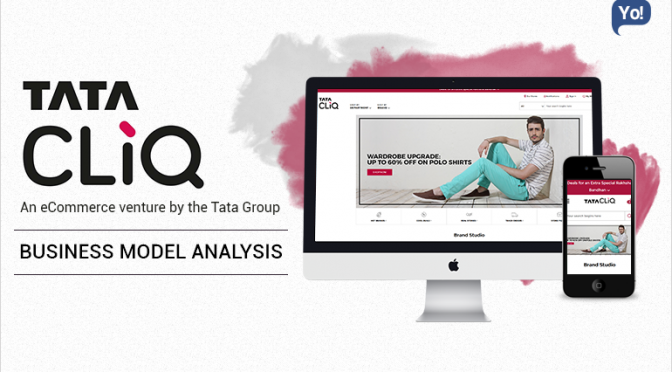
Tata CLiQ: The new to-be giant in the eCommerce market!

While the top players in the Indian eCommerce playfield are promoting cut-price competition and heavy discounts, and incurring millions in losses, Tata Group is seen to be going against the trend with their latest eCommerce venture “Tata CliQ”.

What started as a close-door project for nearly 18 months named as ‘Tata Mall’ back then, was recently launched as TataCLiQ.com — is the short answer to the –– ‘what’s TataCLiQ?’

But who wants to know the short story. Let’s go deep!

What is Tata CliQ?

Tata CliQ – a venture initiated by the Tata group under Tata Unistore, is their much-awaited eCommerce platform that offers consumers a new shopping experience in apparel, electronics and footwear categories.

CliQ is a combination of — “Clique (elite) and Click”, which curates authentic and exclusive products for customers with impeccable taste. Tata Industries owns 90% of Tata Unistore, and the rest is owned by Trent, another Tata Group company that operates retail chains such as Westside, Star Bazaar, and Landmark.

Tata CliQ is the online shopping portal in India that offers genuine [branded] products delivered to your doorstep from your favourite brands. It is a smart combination of in-store experience of a large on-ground network with the convenience of online shopping.

Their stockpile includes 30000+ authentic products from 400+ Indian and International brands across Electronics, Fashion, and Footwear, sourced directly from brands and brand-authorised sellers, with Tata CLiQ assurance and money-back guarantee, and at unbeatable prices and promotions.

Some of their really cool features include: QR Code and Barcode scanner to help you easily find products on their app, native Voice Search, Visual Search (that can be used with just a picture of a product), ‘Que magazine’ is about real people and real stories about the latest trends, etc…

Operating Model

Tata CliQ follows a “curated marketplace model”, wherein they sell products from major brands and retailers, and play around with the exclusive nature of their model by sourcing directly through their approved retailers.

Unlike normal online marketplaces where sellers are free to sell any and every product, CliQ maintains their exclusivity by carefully choosing the kind of products that they display on the platform, and have also formalised strategic partnerships with a long range of such international brands, which offer exclusive range of products, as well.

Basically, they only sell C.A.M.E.L.S. – that’s Certified Authentic Merchandise Everybody Loves!

Which means – CLiQ partners only with the original owners, and not representatives, brokers, or dealers, of the brand –– a serious, long-term relationship with the original manufacturer!

Whatever their breed be – Westside, AND, Vero Moda, Croma, HP, Apple, etc., doesn’t matter! And since what you see is what you get, buying a camel becomes very easy too.

Talking about their shipping and deliveries – the products are shipped directly from the brand’s stores to your doorstep or can also be collected at the dedicated CLiQ and PiQ kiosks at 100+ stores as well.

And in cases, if you’re not happy with what you see then, you can ask for a pickup, or just walk into a nearby partner store to make the exchange.

Unique Selling Points

What sets them apart is their three-pronged strategy which is anchored on Brand Stores, Phygital Strategy (‘Phygital’ – a combination of Physical and Digital) and a curated approach to sales, products, and after-sales service!

‘Phygital’ means having a digital as well as physical presence and an experience wherein one can buy a product online and chose to pick it up from any of their CLiQ and PIQ stores.

This model not only helps them to reduce the turnaround time for the company but for the customer as well, in cases the product needs to be returned. In addition to that – this strategy also cuts down the need to have their own warehouses; thus, bringing down the operational costs considerably, too!

Partnerships

Tata CLiQ has partnered with several brands from markets around the home country along with UK, France, Germany and Russia to curate its offerings.

They have also formed a strategic partnership with “Genesis Luxury Fashion” to offer their range exclusively in India!

Genesis is the marketing and distribution partner for more than 14 international luxury brand that includes brands like: Coach, Burberry, Furla, Tumi, Hugo BOSS, Jimmy Choo, Giorgio Armani, Emporio Armani, Armani Jeans, Bottega Veneta, Canali, G-Star RAW, Michael Kors, Paul Smith and Villeroy & Boch. This alliance makes CLiQ the only authorised partner to offer several international luxury brands in India that the Genesis represents.

In additional to that – CLiQ also has an exclusive tie-up with 12 other international brands, that include New Look, Warehouse, Oasis, Lipsy London, Quiz, Phase Eight, FG4 London, Infinity Lingerie, Hawes & Curtis, s.Oliver, Kurt Geiger and Make It Mine-MIM.

On the other end – they have also partnered with the likes of Microsoft Corporation to sell Microsoft products through the eCommerce portal.

It was also recently announced that Maxus (Global communications consultancy) bagged the media mandate for Tata Group’s eCommerce platform Tata CLiQ, which involves management of all media across television, print, radio, and cinema, following a multi-agency pitch.

 Strategies

At this point, they are targeting the Brand-affined urban sect of the society, and to reach out to them efficiently, CLiQ has been made operational in 6,856 pin codes, of 23 States and 2 Union Territories across 689 cities and towns.

Tata CLiQ believes and wants to follow an asset-light marketplace model, in other words, the Omni-channel model, wherein say for example, a washing machine can be made available to a customer from the nearest Croma store, while the external brands are sourced directly from the warehouses of the manufacturer or their authorized seller.

Due to this strategy, the company is able to drastically cut down its dependence on two heavy overheads of any eCommerce company – warehousing and logistics. This also gives Tata CLiQ a cost advantage of around 5-6% points when it comes to procuring products for the marketplace. Plus, it also helps in efficiently managing the inventory.

And operationalising every store and managing a range of brands and retailers on the platform is going to be the key!

Additionally, CLiQ has also outsourced much of their manpower requirement to other group companies like Tata Consultancy Services (which has also helped them with the IT of the business) and Tata Business Support Services Limited, their Business Process Outsourcing wing.

Talking about their marketing strategies – CLiQ has recently launched their advertising campaign called ‘#SureThing’, which is a delightful, witty, quirky take on online shopping, the campaign focuses on TataCLiQ.com’s USP of being the #SureThing in shopping.

Who leads the brand?

Tata CLiQ is currently led by Ashutosh Pandey, as the CEO of the brand!

An MBA in Marketing, HR and Finance from the University of Delhi, and a Civil Engineering Graduate from the BIT Sindri started his career Tata Administrative Services in June 1998 as a TAS Manager, soon after his graduation.

Post which, he stuck around and went on to work with them for several of their subsidiary brands including Tata Tea Limited, Rallis India Limited, Tata Communications, The Indian Hotels Company Limited (Taj Group of Hotels), Landmark Limited, and Tata Industries Limited. During this phase, he also had worked for Accenture Consulting as well.

In October 2015, he took over as the CEO of Tata CLiQ!

How has their growth been so far?

Tata CLiQ was envisioned by the team at Tata Industries under the guidance of Executive Director KRS Jamwal.

What Google was for search and Facebook was for social networking, they a similar differentiated offering that would work towards innovation and customer value, but at the same time create its own exclusivity.

After doing their research of various Business models across the globe and after analyzing consumer pain points, they decided to narrow down to their own unique solution of the Physical model (a marriage of Physical shopping benefits and Digital shopping convenience)!

These pain points included unavailability of these brands and mistrust and lack of authenticity for the international brands from Indian consumers that prevented them from buying here in India.

At this point, there were two sets of players – the retailers and the eCommerce marketplaces that ruled the market! The team believed that eCommerce was now in its e-retail 1.0 phase, and was gradually making way into the phase 2.0.

Hence, in attempts to be the leader of phase 2.0; CliQ, was launched as the country’s first online Omni-channel marketplace in the dog-eat-dog online retail world!

They initially started off their eCommerce website and mobile application with apparels, footwear, and electronics, but are in preparations to add categories such as accessories, home furnishings, and jewellery. These will include international and Indian brands as well as in-house products.

By 2025, it is being anticipated that the online merchandise sales will jump up from $220 Bn in India from $11 Bn, and CLiQ wishes to acquire a significant position and market share of it, and to do so, unlike their competitors, CLiQ would be focusing on profit margins and unit economics,  then just growing sales via discounts.

paytm-bigbazaar

Big Bazaar & PayTM – A Winning Partnership

The News…

In a recent development made on the 4th of August; Kishore Biyani-led Future Group (that holds a range of retail and fashion outlets such as Big Bazaar, Ezone, EasyDay, Brand Factory, FutureBazaar, etc) is all set to create a mega coalition of offline-online retail: Big Bazaar and PayTM, to extend the reach of their retail store brands.

This strategic tie-up between India’s largest mobile payment and eCommerce platform, and one of the leading retail companies in India, would not only help to offer seamless shopping service to the customers, but would also enable users to shop for Big Bazaar merchandise on PayTM’s marketplace, and get deliveries at their home.

Additionally, users would also be eligible to promotional offers offered by PayTM while using their PayTM Wallet to make purchases at Future Group retail outlets.

Clearly, the future group does not have a great eCommerce strategy, and this partnership would help them in bringing the high frequency, large offline platform, online and get mobile and internet customers to shop for Big Bazaar merchandise. Everything that is available offline will be available on the anchor app.

Future Group has a diverse range of retail outlets and offerings that are spread across the country, and with this deal in place; evidently, Kishore’s Future Group has taken one step forward towards going online, without taking on the overheads of risks and huge costs associated with the eTail business.

Together, the two partners intend to create a mobile first, Omni-channel retail and payment solution for a wide range of consumer base.

This tie-up will further make Big Bazaar the anchor store on PayTM’s marketplace, which would allow PayTM users to make online purchases at Big Bazaar. Their offerings would include all their merchandise from categories such as food, fashion, home, etc. Additionally, customers would also be able to get 15% cash back on all purchases made using PayTM’s wallet, both online and offline.

The deal is exclusive in terms of anchor customer and that PayTM will not have another anchor customer in the same category. An “anchor customer” is basically a market-leading company that partners with a small business to provide that first substantial order!

Having said that – Big Bazaar merchandise will only be made available on PayTM after its Independence Day sales, that’s somewhere around the end of this year.

It would be really interesting to observe how this new partnership evolves and what changes it brings about, to the Indian eCommerce segment!

Big Bazaar and PayTM –– A winning partnership…!

Believe it or not – It’s already a win-win!

Together, they would not only benefit consumers but also each other. This new coalition of [offline-online] giants is all set to shake-up the retail industry in India! Not only that, but many (or most) would be forced to see the eCommerce portals at the industry from a different angle as well.

Evidently, this tie-up is yet another attempt by Future Group to go online. Some say, they are  late to the eCommerce party, but we believe otherwise. We don’t think they are late!

As a matter of fact, we consider this deal to be a master stroke decision taken by the duo! They just didn’t want to spend enormous amount of capital in the acquisition of customers, and then fulfilment and administrative obligations, and so on, and were in search of the right match to help them in that space.

And because, both the companies would now focus on offering better, cheaper and faster deals to the same customers, rather than spending their individual crores to fight each other and lure retail customers.

Since the last two years, Future Group has seriously been busy understanding the game of eCommerce and how to engage with it.

According to their research (in eCommerce) – the cost of acquiring a customer accounts for roughly 20%, cost of fulfilment accounts for 20%, and cost of running the operations accounts for 8-10%, totalling to more than 50% as just the cost of operation. At this cost, you can’t sell any goods on this medium! That’s where unit economics comes into play.

The unit economics of eCommerce has been the key to understanding the business, more than focusing on the topline! And on an end-to end basis, between Future Group and PayTM, the duo is predicting to attain the lowest unit cost economics in the Industry. This key differentiator of theirs would further help the two, to create sustainable customer value, as well.

The company is further working on to make the unit economics of the coalition, in a manner that’s beneficial to the customers.

As it is believed that in any business, unit economics ultimately plays a crucial role for the survival of any player; hence, keeping in mind –– PayTM’s cost of acquiring the customer being the lowest and Big Bazaar being there to manage the distribution /cost of fulfilment at the lowest, this partnership will turn out to be the leader in the space in no time!

Additionally, strong experience in large-scale customer acquisition and seamless payments through Digital Wallets would also turn out to become key ingredients in driving this partnership.

This means that a customer can walk into a Big Bazaar outlet or any other Future Group store and make payments using the PayTM wallet, and furthermore, customers of Big Bazaar can also take advantage of promotional offers on all purchases made online and / or offline, using the platform’s wallet facility as well.

Other than these – the tie-up with PayTM comes just a few days ahead of Big Bazar’s yearly flagship sale, “Maha Bachat” that contributes around 3% to their annual revenue, will be running from 13th to 16th of August this year. Big Bazaar is targeting ₹1000 crore in sales from the sale and a new set of customers outside of their loyal userbase, which will be encouraged furthermore by the online partnership.

Other partnerships of Future Group and PayTM…!

To begin with — as much revolutionary this partnership is; but this isn’t the first time that Future Group has decided to tie-up an eCommerce portal or launched a new scheme to use digital medium to sell their products!

Future Group has tried its hand at several places before landing upon this deal! Earlier in 2014, Future Group began their online journey by inking a deal with Amazon to sell their products on Amazon, and later this year in April, also made their first acquisition internet of the online furniture store, FabFurnish.com.

Before Flipkart snapped away Jabong, Future Group along with Abof and Snapdeal had also tried to bid their way to acquisition, but failed.

More recently, according to several sources, Future Group is already in talks with Snapdeal in making a similar deal of online retailing of products and brands being offered by the Group.

These talks are at a very advanced stage with Snapdeal.com, and the deal should get concluded very soon as well.

Having said that – although, there isn’t any official statement about this recent development, but what is certain, is that Future Group will be selling on Snapdeal on the Maha Bachat Day.

On the other end, in February, in attempts to widen their online-offline reach, PayTM initiated several partnerships: –

  • A Tie-up with Indian Oil (IOCL) to let users pay for vehicle fuel at petrol pumps through PayTM wallets in Delhi.
  • Tie-up with Aditya Birla Retail’s supermarket chain “More”, to enable their customers to make payments across their stores
  • Tied up with several offline players in the mobile and electronic appliances sector to help them to list their stores on its eCommerce marketplace as well.
  • Additionally, they also announced a partnership with PVR Cinemas, to bring their movie tickets to PayTM’s eCommerce platform

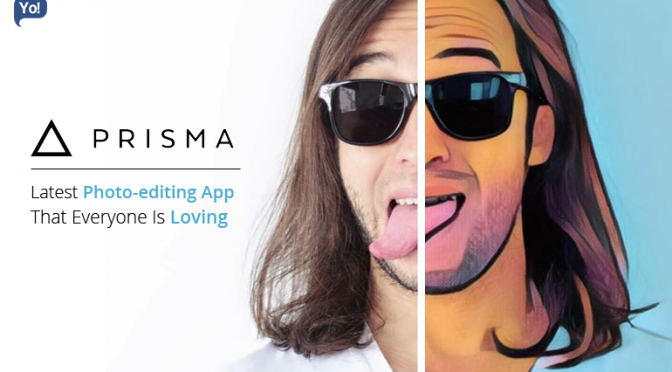
Prisma: the 2-month- old application that transforms an photos into artistic styles of famous artists like: Van Gogh, Picasso, Levitan, etc…

What is Prisma?

Developed by Prisma labs Inc that is HQ’d in Moscow (founded by Alexey Moiseenkov) and released on 11th June of 2016, Prisma is a photo-editing application that makes use of Neural Network and Artificial Intelligence (AI) to transform an image into an artistic effect.

Well, technically it’s not a photo-editing app! And although, many relate it to the likes of Facebook-owned Instagram; but unlike Instagram (which just tweaks an existing photo), Prisma interestingly “Redraws” your smartphone photos in any one of the given styles of 33 famous artists, by detecting patterns in your photo and then in the work of the selected artist, and then finally using the rules to make a third, combined image!

They don’t just overlay like an Instagram filter; but instead, create the photo from scratch!

Rather than inserting a layer over the image; Prisma literally renders the image by going through different layers to finally recreate the image. It transforms your photos into the styles of famous artists like Van Gogh, Picasso, Levitan, and many world famous ornaments and patterns as well.

Simply put — the complex neural networks that power the app hold the capability of learning certain styles and are then able to apply the styles to a different image. It basically merges both the images to make it look as if an artist “painted” the photo with a specific style.

What is their operational model?

Honestly, this is a really simple app to use! Here is how it works: –

  • Share the photo: – When you’re ready to share, just choose the destination (Instagram, Facebook, etc) and do the needful.
  • Edit the photo: – After you have taken or chosen a photo; the next screen is where you can crop or rotate the picture. After you click next – you’ll be brought to the final screen from where you can change the filters. Here, their thumbnails you see aren’t live, but examples of what the filter looks like/would do. (Processing generally takes 10 to 13 seconds)
  • Take or Select a photo: – Download and open the Prisma app from the iOS or Google Play store. You don’t need to create an account. Similar to other photo editing apps, the main screen is split into two sects; the top-half being the camera view, and the bottom half being settings section.
  • You Can Adjust Filter Strength and Use Multiple Effects: – You can also adjust the strength of the filter you’ve chosen by just swiping your finger down on the image. And if you wish to apply more than one effect – just go back to the edited image in your gallery and apply the next filter.
  • Get rid of watermarks: – Although, all the edited photos have a default Prisma come with a watermark on the corner. But you can remove it by going to Settings and choosing the option “Enable Watermarks”.

Who leads the brand?

Prisma is the brainchild of the 25-year old Alexey Moiseenkov!

Alexey has completed his Master’s degree in Applied informatics from the Saint Petersburg State Poly-technical University and although, he doesn’t have any background as an artist himself, but what drove him to launch Prisma was that he had grown up loving painting.

Some of the stints that he had done before Prisma, included being a Visiting Lecturer at the Moscow Institute of Physics and Technology, Product Manager & Analyst at the Mail.Ru Group, Project Manager at Yandex and Project Manager at e-Legion.

Other than these, he had also cofounded Just.Juice and Le-Dantu as well.

How has their growth been so far?

The idea had started off as a hobby by Alexey during his days at Mail.Ru!

Earlier, you would have to spend at least an hour on Photoshop, or more on some website or service, to redraw an image.

Other than these, there also were several image manipulation softwares that utilized artificial intelligence; one such being – Masquerade [acquired by Facebook], that made use of self-learning algorithms to alter the faces of users in images or videos, but was limited to fitting effects to various facial shapes.

But the original idea had come up when Alexey saw a similar algorithm online that could process photos in the style of artworks. The only problem was that it was super slow and took about 10 minutes or even one hour!

Hence, in an attempt to solve this problem – Alexey developed Prisma in roughly the next two months, and then quit his job!

This was 11th June 2016!

To everyone’s surprise, the app garnered over 7.5 Mn downloads and more than 1 Mn active users on iOS store, and also became the leading app at the App Store in Russia and other neighbouring countries, in just one week.

Since, then there has been no looking back for the app!

It has become an overnight sensation across the globe.

The app has so far been downloaded about 16.5 Mn times since its release and has over 2 million active users worldwide, after its debut for Android phones last week. According to App Annie, the app has also been listed in the top 10 apps on the App Store in 77 different countries.

As a matter of fact, Prisma was downloaded over 1.7 Mn times and more than 50 Mn pictures were processed by the app, on the first day of the android version release!

With more than, 650 Mn photos processed so far, Prisma is currently the 5th most popular free app on iTunes, ahead of both Instagram and Pinterest, and has also managed to attain the position of becoming the only photo-editing app to make it to the top 50 most downloaded free apps.

The success of the app is so much that, Prisma accounts for Russian politicians and Bollywood stars among the fans that are seen to be posting pictures to their Instagram accounts.

More recently, the company has also received an investment from the Russian internet giant Mail.Ru of $2 Million, in against for 10% stake.

What strategies helped Prisma to go viral?

Every time something goers viral on the internet world; there’s some reason why that happens, that makes them go famous, with little to no effort spent. This rule is especially applicable to the apps that go viral in download sales number.

Some of these apps that have exceeded expectations in download numbers in the recent times include – Pokemon Go, Angry Birds, Candy Crush, Temple Run, Flappy Birds, MSQRD, etc…

What do all these apps have common? Let’s find out!

  • Launch

Firstly, always launch your app on Tuesday! Tuesday because, four days before the weekend can bring the app in category ranks by weekend, and not any other day because people would be up to their neck and positive effect won’t be seen.

  • Evolve

Make your app boost something what users already use! To put that into perspective – when Prisma came in the limelight, their offering was something that was an extension, an evolution from the photo-editing features, to better artistic filters! Something all users were already familiar with, and saved huge amounts of cost and time that would have been utilized to create awareness.

  • Cross Promotion

Research shows that developers using cross-promotion would have 181,800 active users as compared to 76,600 for those not using them.

A great amount of hype can also be created effectively with the help of cross-promotion from a network of applications. There are several in-app cross-promotional tools available like- Chartboost, Fiksu, Admob, Tapjoy and more, which can ascend the visibility of your app.

Then there are also distinct app review sites such as Cnet, 148apps, Mashable, Techcrunch, IGN wireless, etc., who can also help to drive traffic and get limelight.

  • Teaser launches

Prisma had launched a teaser, exclusively for the iPhone audience in the beginning, making it a sensation and talk of town. Everyone began talking about it, and all the publicity made people curious to try the app once, and once is all they needed.

Why video? Because, people hate taking the pain in reading the content about an app, so it is better to shoot a 1-2 minute long video showcasing all the features of your app with a catchy background score, and share it on YouTube, Vimeo and Facebook.

Resistance from over-marketing or hyping! Prism has no annoying habits of TV commercials and spamming the social media or your mailboxes. After a certain amount of userbase, one must also reduce the inorganic advertising and let the virality and curiosity of the web world do the work for you.

But the masterstroke of all, that helped Prisma get viral was….

  • Integration with social media

Literally nobody was using the app generated photographs for self-keep; but instead, they were using them to flaunt it on social media (Tumblr, Facebook, Twitter, Pinterest and just about any other social website). With the help of this – the users became their marketers, who helped them in advertising the product forward.

What is the future of Prisma?

The developers of the app are in no mood to stop here and have lined up several new developments on the app.

Some of these additional features that will get integrated to the app would include: automatic suggesting of best filters for a particular shot, more filters to choose from, etc…

Photos is only the start! Prisma Labs is all pumped up to add something like the Boomerang app from Instagram, along with some really clever filters where the quality will be superb.

Other than these, Prisma Labs is also already working on the ‘Video’ and ‘Virtual Reality’ version of the app and may launch it soon too. In fact, Alexey recently also published a 360-degree image on Facebook, which gives a glimpse of how Prisma video filters may work in the future. They are also working on more features to boost user engagement as well.

Flipkart (Myntra) acquires Jabong, and becomes the undisputed market leader of fashion and lifestyle segment with 60-70% market share!

The news….

Flipkart-owned Myntra recently acquired its industry rival Rocket Internet-backed Jabong from Global Fashion Group for $70 Million.

The negotiations were led by Nishant Verman – Head of Corporate Development at Flipkart, along with the founders of Flipkart Sachin and Binny Bansal.

As per Myntra’s CEO, Ananth Narayanan – Myntra and Jabong would be run as separate entities, and he would assume the charge as CEO of Jabong, as well.

The sale process was competitive with multiple parties participating until the end, and Flipkart was the chosen suitor as its proposal delivered best value for all stakeholders.

The deal was a roller coaster, and there were several offline and online parties interested in it. And after months of back-and-forth talks between multiple interested Indian parties and Global Fashion Group & Kinnevik (the owners of Jabong), the deal finally saw the daylight.

According to people involved in the deal, Myntra eventually paid more $50 million than what Snapdeal and Future Group were willing to pay. But still, experts believe that this is a steal for Flipkart!

There are a lot of cost synergies at the back-end between the two companies and Flipkart could derive a lot of value from the purchase.

Although the financial details of the deal were not disclosed; but the combination of Myntra (that was acquired by Flipkart in 2014 for ₹ 2000 crores) and Jabong, will create a hell of a combination with a base of 15 million monthly active users, and will further strengthen Flipkart’s position as the undisputed leader in Fashion and Lifestyle segment in India.

Together, Flipkart’s Myntra along with Jabong will now account for a whopping 60-70% market share of the online fashion business, leaving very little for the rest.

With Jabong in their kitty, Flipkart has not only one-up’ed Snapdeal and Amazon in the race in the high-margin online fashion segment but has also created a tremendous amount of pressure on the smaller online fashion retailers and Internet-only brands. Such a deal would also help them in reducing the dependability on discounts, as well.

With this transaction in place – Myntra has managed to pip Snapdeal and the Future Group to acquire Jabong in an all-cash deal that will create India’s largest online fashion destination.

What led to the sale of Jabong?

To begin with – Fashion and lifestyle (that is pegged at $2 Bn and is estimated to grow to $20 Bn by 2020) is the single-largest online category!

With more than 430 fashion and lifestyle start-ups founded in just the last one year, this sector is going to be one of the biggest drivers of the eCommerce growth in India.

Start-ups such as Tiger Global Management-backed LimeRoad, Sequoia Capital-backed Voonik and Koovs among others; till before were being perceived to be a threat to Myntra and Jabong.

In this category, the niche and specialised players continued to grow, making it difficult for the others.

Talking about Jabong – a company that was founded in 2012 had got merged with four other online fashion retailers in Latin America, Russia, the Middle East, South-east Asia and Australia to create a Global Fashion Group (GFG), by their main investor – Rocket Internet in 2014.

Post the collaboration, Jabong also got several other board members which included – Swedish investment firm Kinnevik (who also owned a large stake in Jabong’s parent Global Fashion Group).

By the end of FY2015, Jabong’s revenues stood at €122.1 Million, with a negative EBITDA (earnings before interest, taxes, depreciation and amortisation) of ₹415 crores.

To curb their losses further, Jabong even tried shutting its London design centre, which created western clothes that the platform was increasingly associated with.

But to their hard luck – nothing seemed to be working in their favour! To worsen the situation more, Arun Chandra Mohan and Praveen Sinha (Cofounders of Jabong) were also let go from the company around late last year, as well.

They even tried raising some more funds from their existing investors, even at a lower valuation of €1 Billion (from earlier €3.1 Billion), but even though, the company had somewhat managed to reduce their losses by reducing discounts, both Kinnevik and Rocket Internet seemed unwilling to infuse fresh capital, post this.

The company had unfortunately lost its sheen!

Hence, as a whole – due to gradual evacuation of all the top management along with cofounders of Jabong, several bad decisions and funding crunch in the market, led to the fall of Jabong! And it was put on display for a sell-off.

In fact, Snapdeal, Amazon and PayTM had been in the race to acquire Jabong at different points in time. Amazon had been in discussions with Global Fashion Group (GFG), to acquire Jabong more than a year ago, but the deal didn’t materialize due to over valuation (which was said to be a whooping $1 Billion).

Moreover, since it was put on display, Jabong was formally in discussions with companies including Future Group, Snapdeal and Aditya Birla-owned Abof among several others, for a potential buyout.

PayTM and Snapdeal had come the closest to buying Jabong, but before they could do that, Flipkart snapped it up!

Turns out – Snapdeal had dropped out of the race proactively before anything closed! According to them, Jabong did not address the issues that had come up during due diligence, which included ––– Jabong’s owners refusing to indemnify them against potential damages arising out of a ‘financial impropriety’, and that, Jabong was also understating their monthly burn rate for driving sales and was also in violation of latest FDI guidelines by selling self-owned goods.

But nevertheless, many experts and analysts that were close to the deal still believe that, this is a good exit for Jabong and Flipkart.

What’s in it for Flipkart?

To begin with – Jabong is India’s major fashion multi-brand e-store and accounts for 1500 on-trend international high-street brands, sports labels, Indian ethnic and designer labels and over 150000 styles from over a thousand sellers.

Some of global brands that will be exclusive to both the platforms include Dorothy Perkins, Topshop, Tom Tailor, G Raw Star, Bugatti Shoes, The North Face, Forever 21, Swarovski, Timberland and Lacoste.

With deep pocketed and powerful players including Amazon and upcoming challengers such as China’s Alibaba and Japan’s Rakuten, entering the Indian ruthless eCommerce market — Jabong’s acquisition will definitely play a crucial for Flipkart!

The acquisition comes at a time, when rival Amazon is spending Billions of Dollars to become the market leader of the Indian market, and would not only further penetrate the red-hot Fashion category but will also help in keeping the likes of Amazon at bay.

Other than that, one of the biggest advantages of this acquisition would be that it would allow both the companies to quickly reduce the burn, on discounts as well.

On the operations end, this will not only give the trio (Flipkart, Myntra and Jabong) a lot of bargaining power with the sellers, but will also help them in greatly reducing their overall marketing costs, as well.

To sum it up – this is the perfect example of a company acquiring another, for synergies in areas like access to customer base, increase of territorial reach, new set of products/brands, new logistics networks and / or a great team!

Why have the consolidations become aggressive?

Yes, consolidations are happening, but more than that rationalization is happening. Like it or not – consolidation is an inevitable and natural part of any evolving industry!

And since the past few years, the consumer-focused internet space has also reached this phase of acquisitions, mergers, and shutdowns, too.

While these consolidations send out messages that the sector is maturing, but there are several underlying reasons to a merger, acquisition or shutdown. Most of acquisitions have largely been because of the inability of companies to raise additional capital and weed out competition, or because they have been forced by common investors.

Take for instance the acquisition of Letsbuy by Flipkart – Tiger Global was a common investor in both the companies and had forced the former to merge with the latter. Similar was the case with Ola and TaxiForSure (TFS), who had SoftBank had as the common investor, but SoftBank didn’t want TFS to lock lips with hyper-funded Uber. But in the cases of FabFurnish and CommonFloor, they took place due to an acute funding and cash crunch.

To put things in perspective – sectors like power and cement were hot investment propositions between 2007 and 2012; and the last two years saw a sudden swing of consolidations, where the assets in the industry shifted from weaker to stronger companies. What enforced these consolidations? Banks! These consolidations were directed by the banks that had lent to these sectors, and which were consequently looking at huge NPAs (Non-Performing Assets).

Evidently, the eCommerce business and market is reaching its maturity of players, and the next 6-9 months, will be the deciding months to narrow down on the key contenders.

According to a study conducted by Red Seer Consulting (The Indian e-tailing Leadership Index) that surveyed more than 3000 customers across the country; placed Flipkart at #1 position overall, which was followed by Amazon, then Snapdeal, PayTM and ShopClues!

Having said that – the rest of the players in the industry are definitely going to face valuation and investment pressure! All the companies that have been taking it lightly will now have to divert their focus to Unit Economics (Revenues earned from one customer) and Road to Profitability, and prove their worth.

Those who are able to prove; will survive, and the rest may turn acquisition targets, which will also be the drivers of consolidation in this space.

This means that there are going to be more M&A activities this financial year across several big and mid-sized eCommerce companies, as well.

But the immediate impact will not be on the smaller brands, but instead, it would be on Snapdeal and Amazon, who are competing for the top positions in the market.

While it remains difficult to predict the eventual winners in this battle for the eCommerce crown in India, but it is for sure that more consolidation, down rounds, funds squeeze, and more, are eminent!

ZoomCar: India’s first and largest self-drive rental company with a market share of 60%

What is ZoomCar?

ZoomCar is India’s first self-drive car rental company that allows individuals to hire cars by the hour or by the day.

It was founded by David Back and Greg Moran in February 2013 in Bangalore (India), and currently employees about 600 people in their company.

This membership-based service gives individuals the leverage to hire cars by the hour or by the day, and reservations for the same can be made through ZoomCar’s website or its mobile app.

ZoomCar, as a company, competes directly with global giants such as world No. 2 Avis (present in 175 countries), and ORIX Auto Infrastructure Services, a unit of Japan’s ORIX Corporation, and Global brand Hertz that operates in India through a deal with ORIX.

The difference between them and ZoomCar is that, these MNC’s focus more on the corporate leasing of fleets and/or chauffeur driven pick-ups, while ZoomCar has positioned itself exclusively as a self-drive car service.

ZoomCar’s fleet currently includes everything from Swift, City, Ecosport, Fortuner, Ford Figo and Honda Amaze to BMW 3 series and Mercedes-Benz A-Class sedans.

With ZoomCar, your hiring experience is hassle free as the tariff always includes free fuel, insurance, and taxes. And even though, a refundable deposit is charged per trip, but if you’ve done multiple bookings then you can forego the deposit entirely!

Some of the reasons that makes ZoomCar self-drive car rental service the premier choice includes:

  • Rental options – hourly, daily, weekly or monthly
  • Free fuel, insurance, and taxes included in the rate
  • All-India permits in mostly all vehicles
  • Vehicles conveniently located at strategically nearby locations with a doorstep delivery option
  • All ZoomCar locations along with call center are open 24/7 to help you schedule the pickup and drop-off at any time of your convenience

As of date, ZoomCar offers a rough fleet of 6000 vehicles spread across 9 cities including: Bangalore, New Delhi, Gurgaon, Mumbai, Navi Mumbai, Hyderabad, Chenai, Pune and Chandigarh, that are available for pickup from one of their 24 locations.

With 2100+ Rides Daily, 870000+ Happy users, 110000000+ Kms Travelled (enough for 143 round trips to the moon!), ZoomCar at this point accounts for 60% market share and is known to be the largest name in the sector!

What is their Operating and Business Model?

Before using their service, one must be eligible to do so as well.

The criteria’s include: Must be a ZoomCar member to use their vehicle, must be 18 years or above, must possess a valid Light Motor Vehicle (Non-Transport) Indian license or valid international driver’s license (if NRI) and must not have an alcohol or drug-related driving violations in the past seven years.

Steps to use their service: –

  1. SIGNUP – you need, to begin with signing up with all your details on the site!
  2. BOOKING – To book the vehicle all you need to is:
    1. Upload your driver’s license,
    2. Pay the small security deposit of ₹5000. You can also choose to pay the security deposit max 24 hours before your booking starts
    3. And done, your booking is confirmed!
  3. UNLOCK – You will receive your car’s number plate 20 minutes before the booking starts. Most of ZoomCar’s vehicles are equipped with an All India Permit.
  4. FUEL – Irrelevant of the package, ZoomCar always pays for the fuel
  5. RETURN – before the trip ends, bring the car back to the same location where you picked it up from, and fill the return checklist to end your booking! If you drop the car off at a different location, then you will be charged ₹2000, and the full hourly rate and late fees until the vehicle is returned to the correct location.
  6. SAFETY – In the event of an accident or a vehicle breakdown, ZoomCar is 100% committed to providing the help you need.
  7. PAYMENT – Includes Hourly charge of vehicle + X amount per km driven depending on car model.

The company offers 3 attractive pricing options, suiting your needs: –

The ideal package for Long Outstation Trips, Multiday Bookings, and Office Commute is definitely – ZOOM LITE (5 free kms/hr). Then there is ZOOM CLASSIC (10 free kms/hr) that is ideal for General Usage and Weekend Trips. And if you wish to go for Long Outstation Trips, Run around the city, or use the car just for the Joy of Driving, then ZOOM XL (15 free kms/hr), is the ideal one for you.

Other than these, they also have ZOOM COMMUTE for the Daily office commuters, wherein one can own a ZoomCar for the week that includes: Fuel, taxes & insurance just like with their normal package, starting at just ₹600/day.

To ensure top notch SECURITY & THEFT, ZoomCar has made sure that all their fleets are equipped with GPS and other transmission devices to track the realtime location, and Commercial number plates ensure at State RTO your vehicle will be checked.

Talking about their Business Model…

ZoomCar follows a model wherein it buys 75% of the cars in its networks through loans from banks, while the remaining are leased from large companies like Avis Budget Group.

Other than that – more recently they have also started a new initiative called ZAP (ZoomCar Associate Program).

Here, individuals invest in either a Maruti Ritz LDI or a Maruti Swift LDI (for now) and get into a 30-month Lease Agreement with ZoomCar to lease the car to them.

In against for the business and for all the operational support that ZoomCar will provide, they take a 30% cut of the revenue earned from the car, and they also provide a monthly minimum guarantee payment of 3% of the vehicle ex-showroom price to ensure a baseline level of repayment, as well. At the end of the lease tenor, ZoomCar will return the car to you.

  •   Target Audience

As of now, the target audience of ZoomCar has been restricted to mainly tier-1 and tier-2 metros in India. For now, they have opted for an approach of maintaining a very hyperlocal and dense network in existing cities, rather than going far and wide.

They want to offer easy accessibility to the self-drive services at affordable costs to the urban population with a rising disposable income, more specifically the middle-income groups in A Grade cities, to begin with.

  •   Partnerships

Talking about their partnerships – ZoomCar has created several partnerships for various reasons, but overall, to improve their services. Few of such include partnership with the auto manufacturers like Ford & Mahindra which allowed them to become the first car rental company in India to offer an electric vehicle (the Mahindra REVA E2O by Mahindra) and the Ford EcoSport.

They have also tied up with Tata Motors to add 50 brand new Tata Nanos to their fleet of cars.

Other than that, ZoomCar has also penned down several other partnerships with locally established real estate developers, universities, hotels, and corporate IT parks to secure parking for its vehicles and offer pick-up points to its members, as well.

As a noble initiative; in November 2013, Zoom had also partnered with Uber and the Ashoka Foundation to launch a month-long campaign in Bangalore called RideSmartBLR to discourage drunk driving for its health, economical and environmental benefits, and encourage car-rental.

Who leads the brand?

ZoomCar was a collective find of Greg Moran and David Back, but in 2015 David decided to step down and move back to his homeland, citing personal reasons. Since then, only Greg has been the face of the company.

Greg Moran

Greg runs the show at ZoomCar offices as the CEO of the company.

Prior to co-founding ZoomCar with David Back, Greg studied MBA in Finance and Entrepreneurship at USC Marshall School of Business. He was the Founder and President of the USC Energy Club, as well. This was known to be Southern California’s largest such club. Additionally, he also holds a degree in International Relations from the University of Pennsylvania.

He started his career in July 2006 with Cerberus Capital Management, as a Summer Associate for about two months, and provided macro based financial research and analysis on the European leveraged finance market. One year later, he then joined Fieldstone Private Capital Group Limited in August 2007 as an Analyst and then Senior Analyst as well.

Performing detailed financial modeling and providing commercial due diligence support for power (conventional and renewable), water, satellite, and bio-fuels companies; Greg spent roughly 3 years with the company.

This was followed by a stint of more than a year at International Power America Inc, as a Financial Analyst and Business Development in 2011.

Later, he worked as an Independent Project Finance Consultant under the roof Greg Moran Consulting and provided tax and GAAP oriented financial modelling services to independent renewable energy developers in North America, and also joined FloDesign Wind Turbine, as a Summer Associate and Business Development in 2012.

Post which, he finally listened to his heart and started ZoomCar in April 2012!

What’s their story?

This is the story of the American duo – David Back & Greg Moran who founded ZoomCar!

During that time, that’s almost four years ago, while they were sitting in a bar having beers and chilling, they developed a common interest of entrepreneurship amongst each other and chose to take it forward to pursue it.

What they noticed that was – India lacked any short-term car rental services. They believed that India was the perfect developing country where this could be implemented.

They also approached Professor Alford, the Vice-Dean for International Legal Studies for advice and received an objection stating that “car-ownership is a huge status symbol in India – so people would prefer to own a car rather than share one.”

To which, research further showed that launching a service like this in India was very tough because of three reasons— a lot of capital was required, there was high vehicle damage on Indian roads and the regulatory approvals are tedious.

Since no player was offering a similar service, Greg strongly believed that ZoomCar automatically would receive the edge and because of its fundamental uniqueness, his idea had the potential to click in India!

Having said that – in 2013, the two University of Pennsylvania graduates, decided to fill that void and moved to India!

The next step was to register the business!

Now, for someone to register a business like this in India, they needed to have 50 cars in their name, owned, registered, and insured, and then one was also needed to have five different offices across the state in which you’re getting license.

To fix that – the duo came up with an interesting idea! Since they were a start-up with limited resources and capital; instead of procuring 50 cars, they tied-up with a local operating owner who already had a license and ended up subleasing cars from him.

This is how ZoomCar was initially launched with a fleet of 7 cars in 2013!

Basically, they used his license to run for the first almost ten months, after which, they earned a little money of their own, using which they procured 50 cars and got the license. That was in January of 2014!

Anyway, since then, there has been no looking back for the founders!

Dodging one problem after another, the company has managed to survive the process, and has managed to grow on to become the largest self-drive rental company in India, with a market share of 60%.

Even though, in the very next year, David Back resigned in May 2015, citing personal commitments; Greg has made sure to not let it affect the business at all!

The company has also added a new marketplace model to their existing business model, wherein, ZoomCar is looking to add more vehicles to its fleet by tying up with third-party vendors and dealers.

Using this marketplace model, they are planning to increase their fleet size to 50,000 cars in 30 cities in the next two years.

Other than that, the company is also seen to be adding several other features, including the running a pilot of hiring an Auto-rickshaw for Self-drive using their app or website, and Zoomcar Associate Program (ZAP), as well.

So far, the company claims to have over 2000 vehicles in India with operations in Bangalore, Pune, Delhi NCR, Mumbai, Hyderabad, Chennai, and Chandigarh.

It is being claimed that, ZoomCar has already hit profitability in their existing markets, such as Bangalore, Mumbai and Delhi, but profitability at the group level is still pending and would be achieved by 2017.

ZoomCar’s Board of Directors Advisors includes former United States Treasury Secretary and former Director of the United States’ National Economic Council, Larry Summers, and Chair of the UK’s Pension Protection Fund and former US SEC Commissioner Lady Barbara Judge.

Talking about their investments – the company has raised a total equity funding of $46.2 Mn from 18 Investors, including Barbara Judge, Basset Investment Group, Blue Cloud Ventures, Empire Angels, Fabrice Grinda, Ford Motor Company, Microsoft Accelerator, Mohandas Pai, Nokia Growth Partners (NGP), Sequoia Capital, Reliance Venture Asset Management, etc. and several others….

How to Create a Workplace Environment That Makes Employees More Productive

On YoSuccess, we have been interviewing entrepreneurs and covering success stories of startups for years. While these startups & entrepreneurs certainly motivate readers, they also inspire us to make YoSuccess a better organization.

There are many things that we constantly learn from them. But one thing that has come to our notice more than anything else is that how much attention these modern-day startups are paying to create a workplace environment to make their employees more productive.

Today, CEOs across the world know that to increase revenue they have to work out ways to increase their employees’ productivity. So, we thought of passing the knowledge we have acquired on improving workplace environment with our readers through following 5 points.

The Interior

Interior is certainly the first thing you need to pay heed to. How is the office furniture, how is its spatial arrangement, how is the brightness, how is the air quality & temperature, is there clutter of any kind near the workstation – all these things you need to make right to make sure your employees are working comfortably and without unwanted distractions.

Additionally, you also need to ensure that your employees have access to both natural & artificial light as well as have free space to move around a little bit. In a closed& congested place, you cannot expect them to bring out their best.

All these small things have psychological effects on people and affect their productivity. And usually, people are not consciously aware of it. As French Nobel laureates Albert Camus pointed out in his book The Plague, ‘one may often suffer a long time without knowing it.’

But as an employer, it’s your job to be aware of it, and fix things if they aren’t as they should be to bring out the best in your employees.

Working Hours

For ages, organizations of all industries have been following the 8-hour workday pattern. And there is a good reason behind it, as there is a limit to how long a person can work productively in a day on an on-going basis.

banner1856

The original 8 hours a day work poster in Melbourne, 1856.

Over the years, several studies have been made to find out the optimum working hours, only to reconfirm the original 8 hours a day work theory. In recent times, rising competition in every industry and introduction of concepts like workaholism have made employers think that stretching workday beyond 8 hours is the need of the hour to get ahead in the race by getting more work done.

But the number of hours never interprets the amount of work done; it’s the number of productive hours that counts. By making your employees work beyond their productive limit, you really won’t get any extra work done, only burn extra electricity. Besides, by leaving employees only a small window for their personal growth through rest & recreation, you might inadvertently be forcing them to add less value to your company.

In his recent interview on Yosuccess, Matthew DeSantis, Founder of MyBhutan, shared some inspiring words in this context:

“I am a huge advocate of work environments that weigh personal development over a particular job function. By supporting employee wellness, education, and interaction, a company builds a community around the work environment. With this, morale rises so does innovation.

Office Timings

Most tech startups these days don’t follow the typical 9 to 5 job routine. Reason being, in a company, some employees can be morning persons and others night owls; thus, having flexible office timings seems like a good option, and is being adopted in many organizations. But there is a catch.

With flexible timings, members of the same team may come to the office hours apart, which may cause coordination problem; therefore, may delay the work progress.

The solution here is to keep a limit to the flexible timings. For instance, in our company, employees can come between 9AM and 11AM (and leave accordingly). This way, the night owls don’t feel the constant pressure to reach office at 9AM sharp. And with just a couple of hours’ gap, we really don’t much face team coordination problems.

The same flexibility should be applied to the intermediate breaks. Allow employees to take a short break whenever they feel a little distracted or exhausted, instead of making them drag themselves until that 1 o’clock lunch break.

Recreational Activities

Employees are the lifeline of an organization; therefore, ensuring their wellbeing should be a priority to you as an employer. Doing parties, taking employees on trips once in a while are good ways to keep up the spirit of team members. And as a matter of fact, many companies have adopted this party& trip routine these days due to its positive impact on their employees’ productivity.

However, recreational activities should not be limited to just doing party twice a month, or a trip twice a year. Frequent in-house group activities, playing music at workstation once in a while, and other such small recreational activities actually do the trick of building a bond between team members, allow them to be more expressive, thus, more creative and innovative.

LogiNext - Yoga session on work station

Yoga practice session at the workstation of LogiNext.

Motivation

As an employer, the biggest challenge you have is to keep your employees motivated. Organizing frequent knowledge sessions is a good way to keep employees motivated as it ensures that everyone in company’s employee hierarchy is on the same page and has a clear idea about company’s goals and needs. One effective way to keep this momentum is by implementing best practices for employee recognition programs, which reinforce positive behavior and make team members feel valued for their contributions.

It is understood that being the owner/CEO of a company, you already have enough on your plate to spare time to interact with each employee on a regular basis. The solution is to build a system,with the help of executives,which ensures the occurrence of such knowledge sharing sessions within the team, as well as with other in-house teams.

Additionally, it is also important to make your employees feel that what they are doing matters, not just for earning money and for the benefit of the company, but also for their personal growth and for the growth of the community; that their work is taking the community towards a more advanced form of civilization.

Hopefully, these tips will help you in building a better workplace environment, which will trigger your employees’ productivity to the maximum, and ultimately will take your company to the heights you have always envisioned.

If you have additional tips to improve workplace environment, feel free to suggest so that we can make this post even more helpful for entrepreneurs &business owners across the world.


Verizon to combine its latest purchase – Yahoo with AOL, to create the third-largest digital ad network in the US

The News…

Verizon Communications Inc and Yahoo! Inc (which stands for: “Yet Another Hierarchically Organized Oracle”) announced today that Verizon will be acquiring Yahoo’s core operating business for approximately $4.83 billion in cash, and have entered into a definitive agreement.

This, of course is much lesser than $44 Bn that they had once been offered by Microsoft in 2008, and definitely much lesser than their worth during the Dot.com boom in the early 2000 of $125 Bn.

This deal includes the acquisition Yahoo’s advertising technology and popular online content such as Yahoo Sports, Yahoo Finance and micro-blogging site Tumblr, along with the Yahoo brand and real estate attached to the core business including Yahoo’s headquarters in Sunnyvale, California.

But, what the sale does not include is – Yahoo’s Cash, its shares in Alibaba Group Holdings (15% stake worth more than $32 billion), its shares in Yahoo Japan (36% stake worth about $8 billion), Yahoo’s convertible notes, certain minority investments, and some of Yahoo’s oldest non-core patents related to paid search, search optimization and advertising (called the Excalibur portfolio).

These assets would continue to be a part of Yahoo, but under a differently named entity. This, name change would be done only after the closing of the deal and will also include the registration as a publicly traded investment company.

Verizon will be uniting Yahoo with AOL (the first web portal they had acquired last year for $4.4 Billion), under the leadership of Marni Walden (EVP and President of the Product Innovation and New Businesses organization, Verizon).

The completion of this deal is likely to create a new and powerful rival in the mobile media technology sector that would account for more than 1 Billion users, which would also combine an unrivalled roster of the world’s most beloved brands.

Other than Verizon, Yahoo had also received offers from several other prominent buyers including – AT&T, Billionaires Dan Gilbert and Warren Buffett backed one offer, so did the parent company of Yellow Pages, and private equity firm TPG.

Bank of America Merrill Lynch along with three others acted as financial advisors, while Winston & Strawn LLP along with several others acted as legal advisors to Verizon for the deal.

On the other hand, Goldman, Sachs & Co and two others were financial advisers to the Yahoo Board and its Strategic Review Committee, and Weil Gotshal & Manges LLP were the legal advisors to Yahoo.

The deal is subject to customary closing conditions that includes – approval by Yahoo’s shareholders and regulatory approvals, and is expected to close by 2017, thus, marking the end of one of Silicon Valley’s most iconic pioneering companies. But till then, Yahoo will continue to operate independently and normally.

Upon the completion of the deal, Yahoo’s seventh and final CEO – Marissa Mayer will be departing from the company with severance pay worth more than $57 Mn.

But the real battle will begin after the closing of the deal.

After getting approval from the regulator, Verizon faces two-faced challenges: One –– the tough integration process of merging two big teams with thousands of employees (Yahoo – 8,800 employees and 700 contractors and AOL – 6,800 employees) will be tough. Two –– Turning a bleeding yahoo into a money-making, profitable company, otherwise it’s going to hurt AOL’s bottom line.

What will Verizon get for $4.83 Billion?

Headquartered in New York City; Verizon Communications operates America’s most reliable wireless network (112.6 Mn retail connections nationwide), communications and entertainment services over America’s most advanced fibre-optic network, and integrated business solutions to customers worldwide, that accounts for revenues worth $132 Billion (in 2015).

With the acquisition of Yahoo, it gets direct access to Yahoo’s more than 1 billion monthly active users and 600 million monthly active mobile users through its search, communications and digital content products.

As a leading US mobile phone network, Verizon has already had a wealth of data from all its smartphone users, and the recent acquisitions of AOL and Yahoo, would directly help Verizon save $500 Mn a year. This amount includes the cost of acquiring internet traffic and other expenses.

Yahoo also connects advertisers with target audiences through their advertising technology that combines the power of their data, content and technology.

So if you look at it from an Advertisers perspective – in a market, where Advertisers are constantly looking for another platform of scale that can reach mass audiences, this deal is like a jackpot and would only help in creating a third platform of scale, which would directly be at par with the worlds only two – Google and Facebook.

Under Tim Armstrong (CEO, AOL), AOL has invested in and grown global premium brands, that include — The Huffington Post, TechCrunch, Engadget, MAKERS and AOL.com, and market leading programmatic platforms – ONE by AOL, for both advertisers and publishers.

And the addition of Yahoo to Verizon and AOL will create one of the largest portfolios of global brands with extensive distribution capabilities, and the combined entity together, will be strong and large enough to compete directly with Google and Facebook in the digital advertisement space, to start off with.

Together, AOL and Yahoo would account for more than 25 brands that includes: Yahoo’s key assets such as market-leading premium content brands in major categories including finance, news and sports, Yahoo! Mail, Flickr and Tumblr as well as AOL’s Huffington Post and Tech Crunch, etc…

What is the $10 Billion Plan of Verizon?

Even though this is a sad day for Yahoo, that was once as big as Google or Facebook during its prime days during the dot.com boom, it does raises interesting questions about its new owner.

So what are Verizon’s ambitions?

The strategic underlying principle for Verizon is to create a large four parts ad platform to one part content.

Clearly, Verizon’s ambitions are visibly obvious! They aim to become a globally media company and wants a larger share of the booming digital advertising pie.

The Yahoo acquisition deal, marked the end of an era for Yahoo, and was another step towards what’s been a multi-year, $10 Bn plan of Verizon (which also includes the $4 Bn acquisition of AOL last year), to take on the biggest names in digital advertising world – Facebook and Google!

The digital ad space is currently ruled and dominated by Google and Facebook. Most of internet’s referral traffic runs through these platforms and most of the ad dollars run through these platforms as well. The only way for any company to create a credible competitor is to acquire scale!

Some of their other series of deals include a joint-venture with Hearst to acquire Complex, a stake in AwesomenessTV, and buying Intel’s internet TV service OnCue.

And with this latest acquisition, a combined Yahoo-Verizon becomes the third-largest digital ad network in the US.

What led to the fall of yahoo?

So Yahoo had begun in 1994 as “Jerry’s Guide to the World Wide Web”, by Stanford University students Jerry Yang and David Filo! It, back then was just a list of websites that were curated by these students, which in no time grew on to quickly attract millions of Americans, as they began turning on dial-up Internet connections and needed a home page that would direct them to all their essential destinations.

By 1996, the company was at its peak during the dot.com bubble and had gone public! They were so big that, at one point their shares were being traded at $500 a share, which made them worth a staggering $125 Bn in January 2000.

Having said that – their prime days didn’t remain for long!

Why?

Well, Yahoo missed on a lot of opportunities which led to their fall. It missed the opportunity to convert its early lead and millions of users into more than just a portal, and also lost out on the golden change of buying the young Google and Facebook, as well. Instead, Yahoo had gone on to pay a handsome price to buy Geocities for $4.5 billion and Broadcast.com for $5.7 billion, which didn’t help them much.

Later, as “Google” and “Facebook” picked up and became the default platform for search and all things social, respectively, all that was left was photo sharing, video streaming and instant messaging, and Yahoo missed out on that opportunity as well.

The old-fashioned way of knowing which a ‘dying brand’ was, was when a company went out of business”! But, the more recent way is to recognize the first sign was, when we stop talking about them.

And since then, the company has been removing pigeons after pigeons from their hat, to merely survive a bit longer!

In the span of six years, the company changed five CEOs, who weren’t able to give the company a clear direction, as to if it was a media company or a technology company! In fact, over the last four years – Marissa Mayer, the current and last CEO of yahoo had been trying to turn things around for the company, too. To an extent, they also largely missed the mobile revolution as well!

The only thing that kept Yahoo afloat for this long was Jerry Yang’s risky $1 Bn bet in against for 40% on Alibaba in 2005, which eventually went on to become China’s eCommerce king. Although, over the period of time, yahoo did sell parts of the holding in Alibaba, but even after that, their stake is currently valued at $32 Bn, which far more than Yahoo’s flagging core business.

And even thought, Marissa did help create revenue with mobile products, but at the same time, quite a few of her turnaround strategies didn’t really improve the company’s revenue decline. Take for instance: $1.1 billion acquisition of Tumblr, $640 Mn acquisition of Brightroll, big spending on media personalities such as Katie Couric and David Pogue, doubling of mobile spend, dozens of acqui-hires, revamp of key products such as: Yahoo Mail, Flickr, Yahoo Weather and Yahoo Messenger, etc…

“You either embrace the constant, never-ending change; or you perish!” And that’s what’s happened to Yahoo. They Perished!

As Yahoo ping-ponged from a being a web portal to a becoming a media company, and then to a mash-up of both; it completely lost direction!

And this confused strategy, mismanagement, stubborn attitude, un-opportunistic and indecisive nature, led to beginning of their downfall.

Last week, the firm reported a $440m loss in the second quarter of 2016. Frustrated by the downfall and a sliding stock price, activist investors led by Starboard Value LP, pressured Mayer and the board to cut costs and sell off core assets, which eventually resulted in the deal.