

Shubpuja

Shubh Puja: India’s first religious eCommerce platform that makes use of science and technology!

After the Indian Weddings, if there’s anything else that Indians crazily spend on, is religion and spirituality!

Religion sells. Sells big time! There’s no question about that. It’s a $30 Billion never dying market. In such a scenario, since this largely remains to be an untapped market, it is a no-brainer for entrepreneurs to raid it.

Enter – Shubh Puja!

What is Shubh Puja?

Founded in 2013 by Saumya Vardhan, Shubh Puja is India’s first religious eCommerce platform that makes use of science and technology.

Some of their Vedic offerings include: Vedic Pujas, Astrology, Numerology, Palmistry, and Vastu consultation with the help of highly experienced, educated and qualified professionals.

ASTROLOGY: Different types of Horoscope consultations (love, career, etc), Consult a Pandit, Numerology, Palmistry, Prashna Kundli (Ask a question using a Kundli), Tarot Reading, Varshphal, and so on…

PUJAS: Antim Sanskar Puja, Corporate Puja, Festival Puja, Grah Shanti Puja, Marriage Puja, Navratri Puja, Nazar & Black Magic, Paaths, japs and kathas, Personal occasions Puja, shradh Puja, Sindhur Mani Puja Package, etc…

VASTU: Vastu for business, Vastu for home

PRODUCTS: Chowki, Gemstone, Gifts, Idols, Magnetic, Puja Items, Puja samagri, Rudraksha, Yantra

We live aside so many frauds with false claims, where almost any person can just wake up and become an expert on astrologer/Pandit. You don’t even need to have the relevant educational qualification and experience for it. And nobody ever asks for it too! This result in the gullible devotees being taken for a ride!

In such a scenario – Shubh Puja comes as a much needed platform that compiles of skilled, experienced and knowledgeable pundits and astrologers to offer services at the customer’s convenience.

To overcome this problem, Shubh Puja has tied up with highly qualified Pandits /Astrologers who hold more than ten years of experience, with at least a Masters or PhD from top-most institutes like Varanasi, Nasik, Ujjain, Jagganath Puri etc. Additionally, their credentials are also verified through professors and other highly qualified professionals in the area, as well.

Basically, it is a one-stop shop for all your religious and spiritual needs. Not only do they offer astrological and occult science consultations from highly qualified PhD level astrologers and numerologists, but in addition to that, they also organise religious ceremonies using vedic sciences through very experienced and accomplished vedic acharyas, and also help you with exclusive and specialised festive gift boxes for corporate and independent clients.

Interestingly, this is also one of the only platform that specializes in offering services like customized Puja packages and astrological services, to individuals and corporates who do not have adequate contacts or time to organise pujas themselves.

What is their operating and business model?

Positioned as an eCommerce platform, Shubh Puja works more like a marketplace to fulfil all your religious and spiritual requirements. And it works just like any other eCommerce platform too!

Just like how you buy clothes or electronics through an eCommerce portal, you can also buy various Puja packages that will either be conducted offline, or online.

Depending on the requirement, customer can book a package by buying it online or over the phone. Shubh Puja then connects the customer with the relevant pandit / astrologer, who belong to Benares, Ujjain, Haridwar or other parts of the country.

Although, the offline service is currently available only in Delhi, but you can always use the portal to book a pandit online for sessions.

All you need to do is – book a session and conduct the Puja through Skype! This is the first time, something like this is tried where a Puja is done online, and the users don’t even have to worry about how it is to be done, or what items to use, as the pandit does everything for them.

While Shubh Puja earns a great deal of money from matrimonial and wedding related services, they also offers various Pujas for health problems, career prospects as well as to companies that also includes a package for the start-ups looking for an auspicious beginning.

Shubh Puja makes sure that the religious ceremonies are organized in a hassle-free manner by offering:

  • Every Puja that you think of requires a long list of items (Puja samagri), which are usually not located at convenience stores. Arranging for Puja samagri (the items used in the ritual) for working professionals can be a nightmare. To relieve you from the trouble, Shubh Puja gives the option of arranging for the Puja samagri at a reasonable cost.
  • Fixed flat rates
  • Free muhurat consultation
  • Convenient location (Home, office, factory, temple etc.)

To add to all of that and adding more authenticity to the existing brand – Shubh Puja proudly holds the largest network of astrologers, numerologists, vaastu consultants in India, along with tie-ups with some of the biggest religious organisations, educational institutes, highly revered priests from Benaras, Ujjain, Haridwar and other parts of the country, and so on…

Talking about their business / pricing model – Shubh Puja works on a standard product pricing model!

Meaning – the prices are fixed, so priests cannot throw out random figures based on their perception of the wealth of the individual requiring services, as typically happens. Based on the assignment, the professionals get a fee, that too from Shubh Puja and not the user. In fact, they even have some of the pundits on their payroll.

Who leads the brand?

The company was founded by Saumya Vardhan!

Other than her – the company also consists of Harsh Vardhan (Director), Deepak Malik (Advisor – Operations) and Rajesh Patel (Advisor – Technology)

With more than 30 years of experience in setting up multiple international aviation and industrial ventures, Harsh is rated to be among the top-most aviation and management experts in India.

Deepak is the ex-MD– CCIL (Clearing Corporation of India Limited), where he had managed to increase the company’s revenue to ₹3.5 billion by managing infrastructure with assets worth ₹2.5 billion.

Belonging to the tech background, Rajesh (currently the CEO of Powerweave) brings along with him a rich and varied portfolio of experience across IT-enabled services, technology, media & communications, manufacturing and marketing domains, and provides the techno-strategic direction and vision to Shubhpuja.com.

Saumya Vardhan – Founder, Shubhpuja.com

An MBA (with distinction) from Imperial College London, MSc in Operational Research and a University topper in BSc (Hons) Statistics from LSR (Gold medalist) – this girl is indeed a genius!!!

Not only that, but she also has over 10+ years of international consulting, industry and entrepreneurship experience; is said to be excellent in business and financial modelling skills; has prepared financial appraisal, cash flow analysis and valuation models for various start-up projects corporate and private equity clients; and holds deep expertise in specialities like ––– Operations due-diligence, Upside identification, Process Improvement and cost optimisation, Lean sigma enterprise management, Implementing transformation and start-up projects

Beginning her career in 2004 – Saumya has worked with some of the top notch firms including: NHS Gloucestershire Hospitals (Model Developer), LCS International Inc LCSI (Financial Analyst), ThoughtWorks Limited (Business Consultant), Starair Consulting (Principal Consultant), Rolls-Royce (Summer Associate, Strategy and Futures Programmes Group), KPMG Advisory (Assistant Manager, Operations Strategy Group, Transaction Services), and Ernst & Young (Executive, Transaction Advisory Services).

After working at these places for about 10 years, she then decided to do something of her own and founded Shubh Puja in 2013!

To know her business better, Saumya has gone ahead and got trained to be a qualified astrologer as well. Furthermore, she now studying for her diploma in Vastu shastra and numerology, so that she is qualified enough to offer accurate services to our clients.

What is their story?

The year was 2013!

She had just moved back to India. Her friend’s father had passed away. Most of the family lived outside India, and those in India struggled greatly in organizing the rituals that surround the cremation process.

To give you a little context, more than 80% of India’s population is Hindu and most of the traditions that are followed here go back as far as around 500 BC, and play a huge role in our daily lives. Families often contact priests to perform everything from astrological chart readings to different rituals – you name it.

Plus, there’s no pricing schedule and just about nobody checks into the educational background or qualification of the people who deliver these services.

Now, imagine how difficult and elaborate the traditional Hindu 13-day death ceremony actually would have been for them. They had no clue who to consult, and how to go about it?

While at it – she noticed that the money that was being spent in India alone in the form of temple donations, purchase of offerings, spiritual tourism, payments for ritual services, astrology services, etc – easily touched billions of dollars.

As per an article published by Times of India, a couple of years ago – the Indian spiritual and religious market was worth around $40 Billion+.

That was it. This is when she decided that she will start up Shubh Puja. In late 2013!

From start to end – from bringing in the offerings needed for the ceremony, to informing a customer of when they need to log in, what recitations they need to do, and when they should participate with during the ceremonies ––– the priests on-the-ground would handle everything.

The idea was that the Indians across the world, who face issues in performing the Hindu religious rituals, would use this site to consult experts through Skype or Facetime and accordingly perform the task.

There are so many scams and scandals with spirituality, and she just wanted to fix this loophole and wanted to make people aware of the science and facts behind these rituals.

The biggest challenge at that time was to get access to highly qualified PhD level candidates (who follow scientific and vedic procedures as described in the Vedas) and make them available to people for consultation, changing people’s mindset in terms of booking and paying online for such services, awareness of the existence of qualified vedic, highly educated astrologers and pundits, etc..

She began by first identifying the religious needs of the market, then moved on to understanding the consumer behaviour in this industry, and where the gap was. She also got the opportunity to meet numerous experienced pundits and astrologers from different backgrounds and practices, who taught her our base i.e. Vedas!

In fact, later she also joined a yearlong advanced Vedic astrology professional course that was started by a legendary astrologer of modern times Shri. K.N.Rao.

The company was started with her own personal savings, and the idea turned out to be so good that Shubh Puja managed to start making profits from the fourth month of operations itself.

By doing so, she also wanted to create some guidance and structure in the practice, Saumya is also trying to make it easier for the next generation to keep up with the old traditions, who otherwise, five years from now will have no idea.

Over the period of time, Shubh Puja, that launched in December 2013 and catered to over 100 clients in a month and had 90+ pundits / astrologers / Vaastu consultants in Delhi from the occult science institutes in India (Varanasi, Nasik, Ujjain, Delhi, etc), has grown on to have conducted more than 6,000 pujas by 2016.

Additionally, they have also seen to be participating in various exhibitions, holiday carnivals and festivals for Diwali, New Year, Valentine’s Day, etc., and also conduct workshops on astrology, Vaastu Shastra and numerology for big groups of people or corporates, too.

As a matter of fact, in a matter of just a couple of years, Shubh Puja has established itself as an international brand offering exclusive worldwide services.

Apart from India, the company has also been getting excellent responses from our overseas clients from Russia, the US, Hong Kong, Singapore and the UK.

More recently, the company had participated in a six-week programme for 15 entrepreneurs chosen from among 181 applicants, based on innovation, their business model and the founding team’s expertise, wherein the top three winners would be awarded with prize money.

This is being conducted by a Zone Start-ups India accelerator for women entrepreneurs – empoWer, and will be offering equity-free seed funding in association with GIZ, Vodafone India, Google, Nishith Desai Associates, and SheEO, Zone Startups India is hosting this..

Going ahead – they wish to transform Shubhpuja.com and make it equivalent to Shaadi.com in religion eCommerce market. They will also be raising more money, for steady, stable and fast growth.


After the Indian Weddings, if there’s anything else that Indians crazily spend on, is religion and spirituality!

Religion sells. Sells big time! There’s no question about that. It’s a $30 Billion never dying market. In such a scenario, since this largely remains to be an untapped market, it is a no-brainer for entrepreneurs to raid it.

Enter – Shubh Puja!

What is Shubh Puja?

Founded in 2013 by Saumya Vardhan, Shubh Puja is India’s first religious eCommerce platform that makes use of science and technology.

Some of their Vedic offerings include: Vedic Pujas, Astrology, Numerology, Palmistry, and Vastu consultation with the help of highly experienced, educated and qualified professionals.

ASTROLOGY: Different types of Horoscope consultations (love, career, etc), Consult a Pandit, Numerology, Palmistry, Prashna Kundli (Ask a question using a Kundli), Tarot Reading, Varshphal, and so on…

PUJAS: Antim Sanskar Puja, Corporate Puja, Festival Puja, Grah Shanti Puja, Marriage Puja, Navratri Puja, Nazar & Black Magic, Paaths, japs and kathas, Personal occasions Puja, shradh Puja, Sindhur Mani Puja Package, etc…

VASTU: Vastu for business, Vastu for home

PRODUCTS: Chowki, Gemstone, Gifts, Idols, Magnetic, Puja Items, Puja samagri, Rudraksha, Yantra

We live aside so many frauds with false claims, where almost any person can just wake up and become an expert on astrologer/Pandit. You don’t even need to have the relevant educational qualification and experience for it. And nobody ever asks for it too! This result in the gullible devotees being taken for a ride!

In such a scenario – Shubh Puja comes as a much needed platform that compiles of skilled, experienced and knowledgeable pundits and astrologers to offer services at the customer’s convenience.

To overcome this problem, Shubh Puja has tied up with highly qualified Pandits /Astrologers who hold more than ten years of experience, with at least a Masters or PhD from top-most institutes like Varanasi, Nasik, Ujjain, Jagganath Puri etc. Additionally, their credentials are also verified through professors and other highly qualified professionals in the area, as well.

Basically, it is a one-stop shop for all your religious and spiritual needs. Not only do they offer astrological and occult science consultations from highly qualified PhD level astrologers and numerologists, but in addition to that, they also organise religious ceremonies using vedic sciences through very experienced and accomplished vedic acharyas, and also help you with exclusive and specialised festive gift boxes for corporate and independent clients.

Interestingly, this is also one of the only platform that specializes in offering services like customized Puja packages and astrological services, to individuals and corporates who do not have adequate contacts or time to organise pujas themselves.

What is their operating and business model?

Positioned as an eCommerce platform, Shubh Puja works more like a marketplace to fulfil all your religious and spiritual requirements. And it works just like any other eCommerce platform too!

Just like how you buy clothes or electronics through an eCommerce portal, you can also buy various Puja packages that will either be conducted offline, or online.

Depending on the requirement, customer can book a package by buying it online or over the phone. Shubh Puja then connects the customer with the relevant pandit / astrologer, who belong to Benares, Ujjain, Haridwar or other parts of the country.

Although, the offline service is currently available only in Delhi, but you can always use the portal to book a pandit online for sessions.

All you need to do is – book a session and conduct the Puja through Skype! This is the first time, something like this is tried where a Puja is done online, and the users don’t even have to worry about how it is to be done, or what items to use, as the pandit does everything for them.

While Shubh Puja earns a great deal of money from matrimonial and wedding related services, they also offers various Pujas for health problems, career prospects as well as to companies that also includes a package for the start-ups looking for an auspicious beginning.

Shubh Puja makes sure that the religious ceremonies are organized in a hassle-free manner by offering:

  • Every Puja that you think of requires a long list of items (Puja samagri), which are usually not located at convenience stores. Arranging for Puja samagri (the items used in the ritual) for working professionals can be a nightmare. To relieve you from the trouble, Shubh Puja gives the option of arranging for the Puja samagri at a reasonable cost.
  • Fixed flat rates
  • Free muhurat consultation
  • Convenient location (Home, office, factory, temple etc.)

To add to all of that and adding more authenticity to the existing brand – Shubh Puja proudly holds the largest network of astrologers, numerologists, vaastu consultants in India, along with tie-ups with some of the biggest religious organisations, educational institutes, highly revered priests from Benaras, Ujjain, Haridwar and other parts of the country, and so on…

Talking about their business / pricing model – Shubh Puja works on a standard product pricing model!

Meaning – the prices are fixed, so priests cannot throw out random figures based on their perception of the wealth of the individual requiring services, as typically happens. Based on the assignment, the professionals get a fee, that too from Shubh Puja and not the user. In fact, they even have some of the pundits on their payroll.

Who leads the brand?

The company was founded by Saumya Vardhan!

Other than her – the company also consists of Harsh Vardhan (Director), Deepak Malik (Advisor – Operations) and Rajesh Patel (Advisor – Technology)

With more than 30 years of experience in setting up multiple international aviation and industrial ventures, Harsh is rated to be among the top-most aviation and management experts in India.

Deepak is the ex-MD– CCIL (Clearing Corporation of India Limited), where he had managed to increase the company’s revenue to ₹3.5 billion by managing infrastructure with assets worth ₹2.5 billion.

Belonging to the tech background, Rajesh (currently the CEO of Powerweave) brings along with him a rich and varied portfolio of experience across IT-enabled services, technology, media & communications, manufacturing and marketing domains, and provides the techno-strategic direction and vision to Shubhpuja.com.

Saumya Vardhan – Founder, Shubhpuja.com

An MBA (with distinction) from Imperial College London, MSc in Operational Research and a University topper in BSc (Hons) Statistics from LSR (Gold medalist) – this girl is indeed a genius!!!

Not only that, but she also has over 10+ years of international consulting, industry and entrepreneurship experience; is said to be excellent in business and financial modelling skills; has prepared financial appraisal, cash flow analysis and valuation models for various start-up projects corporate and private equity clients; and holds deep expertise in specialities like ––– Operations due-diligence, Upside identification, Process Improvement and cost optimisation, Lean sigma enterprise management, Implementing transformation and start-up projects

Beginning her career in 2004 – Saumya has worked with some of the top notch firms including: NHS Gloucestershire Hospitals (Model Developer), LCS International Inc LCSI (Financial Analyst), ThoughtWorks Limited (Business Consultant), Starair Consulting (Principal Consultant), Rolls-Royce (Summer Associate, Strategy and Futures Programmes Group), KPMG Advisory (Assistant Manager, Operations Strategy Group, Transaction Services), and Ernst & Young (Executive, Transaction Advisory Services).

After working at these places for about 10 years, she then decided to do something of her own and founded Shubh Puja in 2013!

To know her business better, Saumya has gone ahead and got trained to be a qualified astrologer as well. Furthermore, she now studying for her diploma in Vastu shastra and numerology, so that she is qualified enough to offer accurate services to our clients.

What is their story?

The year was 2013!

She had just moved back to India. Her friend’s father had passed away. Most of the family lived outside India, and those in India struggled greatly in organizing the rituals that surround the cremation process.

To give you a little context, more than 80% of India’s population is Hindu and most of the traditions that are followed here go back as far as around 500 BC, and play a huge role in our daily lives. Families often contact priests to perform everything from astrological chart readings to different rituals – you name it.

Plus, there’s no pricing schedule and just about nobody checks into the educational background or qualification of the people who deliver these services.

Now, imagine how difficult and elaborate the traditional Hindu 13-day death ceremony actually would have been for them. They had no clue who to consult, and how to go about it?

While at it – she noticed that the money that was being spent in India alone in the form of temple donations, purchase of offerings, spiritual tourism, payments for ritual services, astrology services, etc – easily touched billions of dollars.

As per an article published by Times of India, a couple of years ago – the Indian spiritual and religious market was worth around $40 Billion+.

That was it. This is when she decided that she will start up Shubh Puja. In late 2013!

From start to end – from bringing in the offerings needed for the ceremony, to informing a customer of when they need to log in, what recitations they need to do, and when they should participate with during the ceremonies ––– the priests on-the-ground would handle everything.

The idea was that the Indians across the world, who face issues in performing the Hindu religious rituals, would use this site to consult experts through Skype or Facetime and accordingly perform the task.

There are so many scams and scandals with spirituality, and she just wanted to fix this loophole and wanted to make people aware of the science and facts behind these rituals.

The biggest challenge at that time was to get access to highly qualified PhD level candidates (who follow scientific and vedic procedures as described in the Vedas) and make them available to people for consultation, changing people’s mindset in terms of booking and paying online for such services, awareness of the existence of qualified vedic, highly educated astrologers and pundits, etc..

She began by first identifying the religious needs of the market, then moved on to understanding the consumer behaviour in this industry, and where the gap was. She also got the opportunity to meet numerous experienced pundits and astrologers from different backgrounds and practices, who taught her our base i.e. Vedas!

In fact, later she also joined a yearlong advanced Vedic astrology professional course that was started by a legendary astrologer of modern times Shri. K.N.Rao.

The company was started with her own personal savings, and the idea turned out to be so good that Shubh Puja managed to start making profits from the fourth month of operations itself.

By doing so, she also wanted to create some guidance and structure in the practice, Saumya is also trying to make it easier for the next generation to keep up with the old traditions, who otherwise, five years from now will have no idea.

Over the period of time, Shubh Puja, that launched in December 2013 and catered to over 100 clients in a month and had 90+ pundits / astrologers / Vaastu consultants in Delhi from the occult science institutes in India (Varanasi, Nasik, Ujjain, Delhi, etc), has grown on to have conducted more than 6,000 pujas by 2016.

Additionally, they have also seen to be participating in various exhibitions, holiday carnivals and festivals for Diwali, New Year, Valentine’s Day, etc., and also conduct workshops on astrology, Vaastu Shastra and numerology for big groups of people or corporates, too.

As a matter of fact, in a matter of just a couple of years, Shubh Puja has established itself as an international brand offering exclusive worldwide services.

Apart from India, the company has also been getting excellent responses from our overseas clients from Russia, the US, Hong Kong, Singapore and the UK.

More recently, the company had participated in a six-week programme for 15 entrepreneurs chosen from among 181 applicants, based on innovation, their business model and the founding team’s expertise, wherein the top three winners would be awarded with prize money.

This is being conducted by a Zone Start-ups India accelerator for women entrepreneurs – empoWer, and will be offering equity-free seed funding in association with GIZ, Vodafone India, Google, Nishith Desai Associates, and SheEO, Zone Startups India is hosting this..

Going ahead – they wish to transform Shubhpuja.com and make it equivalent to Shaadi.com in religion eCommerce market. They will also be raising more money, for steady, stable and fast growth.
Flexiloans

How is the fin-tech market reacting with the latest investment round of FlexiLoans..!!!

What’s trending?

Recently, on Friday the 7th of October 2016, the one-year-old lending platform FlexiLoans announced a fund raiser of ₹100 crores from industry biggies including – Sanjay Nayar (KKR India, CEO), Vikram Sud (former head of ops and technology at Citibank), Anil Jaggia (HDFC Bank, Chief Investment Officer), and Narayan Seshadri (ex-MD of KPMG’s advisory business).

The fund will be used to invest further in the expansion of FlexiLoans and for further investment in their technology and marketing platform.

Furthermore, as per the terms of the deal, a non-banking finance company (NBFC) has been founded by Nayar, Sud and Sheshadri – EpiMoney, will get a majority stake in FlexiLoans, which will be the product platform. Nayar, Seshadri and Sud have formed the new NBFC in their individual capacity and the initial loan book will be ₹100 crores.

Given the large number of undeserved category of Indian population with low credit rating, the digital NBFC space holds immense potential in India and investor interest is seen to be rising drastically as well. This is also being seen as one of the main motives to start EpiMoney as well.

This NBFC will see life post the completion of the acquisition of acquisition and, EpiMoney will operate on the technology based on FlexiLoans that solves the problems that small and medium enterprises (SMEs) face in accessing quick, flexible and adequate funds for expansion.

Although, it will continue to be run by the existing team, but the business will be re-branded after the completion of the acquisition!

By doing all this – the idea is to achieve the vision of using new-age technology to offer quick, fast and transparent funding access to millions of deserving entrepreneurs. And they have also seen to be aggressively working towards attaining this dream!

A major bottleneck to growth in India still remains to be lack of access to finance for micro-SMEs. They had noticed that the festive season (October to December) for most of the eCommerce platforms, accounted for more than 50% of traditional retail sales, and lack of seasonal financing requirements used to act as a huge barrier for the merchants.

Prior to this deal, it was announced in the beginning of October that FlexiLoans had partnered with over 20 national online marketplaces including the big ones – Flipkart, Ola, ShopClues and Jabong to serve over 2 million small businesses with quick loans and has served customers in over 18 cities and towns as well.

Along with that – they had also tied up with four eCommerce platforms including Flipkart, Grofers, Wydr and The Secret Label to offer collateral-free loans to merchants during the festive season too.

Additionally, just before that, FlexiLoans also partnered with Ola to offer their driver-partners (exclusively for Ola Star drivers including top rated driver partners) with immediate business and need-based loans of upto ₹1 lakh at a disbursal time of just 30 minutes, along with affordable monthly instalments and a repayment cycle tenure of 3-12 months.

This was also done because the platform had seen great demand for loans by this section. FlexiLoans had already processed over 500 small business loans, including cab owners over the last 6 months.

So the idea of getting into these partnerships was to strengthen their SMEs barrel and achieve an access to over 1 million merchants selling on its partner platforms.

What is Flexiloans?

Operational since November last year – FlexiLoans is an online lending platform that aims to solve the problem that SMEs face in accessing Quick, Flexible and Adequate funds for growing their businesses.

It was founded by four Indian School of Business alumni – Deepak Jain (former investment banker at Axis Capital), Manish Lunia (former executive at Aditya Birla Group’s M&A unit), and Ritesh Jain (former CFO of Housing .com), and Abhishek Kothari, a data science and analytics professional.

Some of their products offerings include: Working Capital Loans, Discounting and other Business Loans.

They use several traditional and non-traditional sources of data to score an applicant, which means that each applicant’s score is unique in keeping with the loan amount and profile of the applicant.

FlexiLoans also analyses customer profiles with the help of a multiple non-traditional and alternative data based proprietary credit model that also acts as potent replacement for the analyses of credit behaviour and repayment ability.

Now, more than 80% of Loan proposals of SMEs are rejected by institutional channels because of their inadequate financial history or collaterals, forcing these SMEs to opt for the expensive mediums.

FlexiLoans is a model that has been created to tape this unserved market. And their proprietary credit engine, conjoined with their simple application form, and ability to make the loan decision within 24 hours is what differentiates FlexiLoans from the rest, making them the best model to meet the financial requirements of the deserved but unserved.

How does it work?

They work on a fast, flexible and paperless process to offer loans without collateral. All one needs to do is: –

  • Fill the online Application Form
  • Link your Facebook and LinkedIn profile (increases the chances of approval)
  • Select the partner you are associated with (example: Flipkart, Grofers, etc)
  • Upload all your documents. This helps FlexiLoans to generate your Credit Score (in less than a day)
  • Lastly, sign the documents and get the loan approved in less than 48 hours

The state of fin-tech market in India!

There has been a drastic rise in the fin-tech start-ups in India. On one end, there are start-ups populating this emerging and dynamic sector, while on the other end, there are traditional banking institutions and non-banking financial companies (NBFCs) playing catch up too.

These Fin-tech firms are also seen to be breaking new ground in the formal finance sector through innovative and dynamic use of technology in the lending process as well. For instance, on one end, where traditional banks (around 100) and NBFCs (around 1100) use technology to simply calculate credit scores in India, Fin-tech ventures on the other end, are seen to be using Machine Learning algorithms and social media footprints, call records, shopping histories, and payments to utility service providers to check the credibility, increase the efficiency and provide greater access to credit.

Additionally, the turnaround time is also much faster for the approval and disbursal of loans of such fin-tech firms, as compared to several banks (State Bank of India, ICICI, HDFC, and Axis bank) who even have digitized and speeded up their processes.

The transaction value for the Indian fin-tech sector is being estimated to be around $33 Bil (2016) and is expected to reach $73 Bil in 2020, and will grow at a five-year compound annual rate of 22%.

In fact, global banks are seen to be responding to these opportunities as well ––– HDFC and Axis have launched their mobile phone applications to ease digital transactions, Federal Bank announced a partnership with Start-up Village to develop innovative banking products, Barclays is set to operationalize their fifth global fin-tech innovation center that will be located in India; and Goldman Sachs Principal Strategic Investments Group (GSPSI) is looking to invest in Bangalore’s fin-tech start-up scene, as well.

Nasscom had also recently reported that around 400 fin-tech firms operated in India and a large part of them were boosted by fin-tech-focused start-up accelerators and incubators that were funded by foreign investments.

The mobile usage that currently stands at 53% and is also expected to increase to 64% by 2018.

This new disruption in the banking and financial services sector has had a wide-ranging impact. Some of the key service offerings that are seen to be emerging on the digital platforms include:

  • Peer-to-Peer (P2P) Lending Services: P2P lending mediates and connects lenders with borrowers who may be individuals or businesses. Example: Lendbox, Faircent, MarketFinance, etc.
  • Payment Services: These companies allow both private individuals and businesses to accept payments over the web and on mobile without needing merchant accounts. The transfers are made directly to the linked bank account. Example: PayTM, Oxigen Wallet, etc…
  • Remittance Services: A sum of money that is sent in payment or as a gift is remittance. Few start-ups registered abroad are offering similar services and trying to disrupt the current monopoly held by firms like Western Union. Example: Instarem, FX, and Remitly.
  • Personal Finance or Retail Investment Services: Fin-tech companies revolving around the need to provide customized financial information and services to individuals, including – how to save, manage, and invest personal finances based on the specific needs. Example: Scripbox, PolicyBazaar, BankBazaar, etc.
  • Equity Funding Services: This includes crowdfunding platforms that help mediate funding of a project or business venture by raising funds from a large number of investors. Example: Ketto, Wishberry, and Start51.
  • Miscellaneous Software Services: These are companies that offer a range of cloud computing and technology solutions to help you improve access to financial products and in turn increase your efficiency in day to day business operations. Example: Catalyst Labs, AirtimeUp, ftcash, Profitbooks, HummingBill, etc.
  • Crypto-currency: This is digital currency in which encryption techniques are used to regulate the generation of units of currency and verify the transfer of funds. Although, cash transactions still dominate the Indian market and usage of digital financial currency (Bitcoin) has not been able to gain much traction; there still are a few bitcoin exchange start-ups present in India. Example: Unocoin, Coinsecure, and Zebpay.

Such a growth has mainly been sparked with the rise in smartphones and willingness of the consumer’s to transact online. It has also been rapid due to the large market base, an innovation-driven start-up landscape, and friendly government policies and regulations.

40% of the population still are not connected to banks and 87% of payments are still made in cash. Additionally, as much as 90% of the small businesses are not linked to formal financial institutions as well.

These gaps in access to institutions and services often eventually turn out to become reasons for the development fin-tech solutions (such as funding, finance management).

Besides all that – India is slated to have a huge market of around 29 million small businesses and SMEs that would be contributing somewhere around 45% to the country’s industrial output and around 40% of the total exports. With such a massive market still untapped, growth in the lending space (and by eventual extension of all other financial start-ups) is eminent.

To justify that even further, according to YourStory Research (Oct 2016) – the lending space has gathered over $190 million in investments over the last two years, making it the second-most popular category to attract investors after payments.

IGP-Gift

The lesser known leader of India’s $30 Billion gifting section – Indian Gifts Portal!!!

What is Indian Gifts Portal?

Founded in 1999 and headquartered in Lucknow – Intermesh Shopping Network Private Limited’s Indian gifts portal (IGP) is a reputed online shopping store that offers a vast array unique and special gifting items as per their budget, choice and other requirements and delivers gifts across the world.

It is one of the only online shops in India that can easily resolve the problem of gift selection of an individual.

They focus on three broad gifting categories — festivals, personal occasions and corporate gifts. And using this platform, one can find a broad collection of exclusive gifting items under one roof.

This famous internet-based superstore is known for delivering an assortment of gifting solutions that range from flowery arrangements to mouth watering chocolates, toys to games, arts and collectibles, jewellery, apparels, wine gifts hamper along with many other presents. One can deliver these gifts to any region of world without any delay.

Some of their categories include:  birthday, anniversary, flowers, cakes, gifts for him, gifts for her, personalized gifts, country & city special, and karwachauth gifts, with specialties such as: Birthday Gifts, Anniversary Gifts, Wedding Gifts, Rakhi Gifts, Send Gifts To India, etc..

With four offices in India – Mumbai, Noida, Jaipur, and Lucknow, and one in Los Angeles (California); IGP offers its users gifting options from more than 190 categories that also includes edible, perishables, apparel, and home appliances among the others.

What separates them from the crowd is that the gifts that you see on the platform are sourced from exclusive regional manufacturers of handicrafts and other products from the remote villages of India through strategic linkages. Additionally, all the items that you see on the portal come with quality assurance. They have five warehouses, including one in the US.

Talking about the security, their shopping-cart software runs in Secure Mode on the customer’s browser, using SSL (Secure Sockets Layer) to encrypt sensitive data such as credit card numbers.

TRIVIA: Deepika Padukone and Salman Khan are the top celebrities that fans gift to through our site!

What is their operational model?

To begin with – IGP currently follows an inventory-based model, and also charges its merchants a commission for flowers and cakes.

To be able to use the website, all you need to do is register on the portal and you’re good to go. After you are done with the registration phase, you get your own personalised ‘My Account’ page on the store.

Using this section, you can perform multiple tasks such as: Tracking status of your orders online, Reviewing your past orders, Creating a personalised address book online, and Ensuring maximum possible degree of customisation in delivery of gifts to your loved ones.

As you continue browsing and shopping on the store, this section gets more personalized and eventually helps you with more information to make your shopping experience more effective.

To send a gift, all you need to do is: –

  • Choose the gift you wish to send
  • Push the “Buy Now” button
  • You can also add an extra “Gift Box” for an additional charge
  • To make the gift more special you can also add another complimenting product from the shown list, and then click on “Proceed to Checkout”
  • On the shopping cart screen, your total payable amount will be mentioned. If you don’t wish to shop further, then push “Proceed to Checkout”
  • If you don’t have an IGP account, you can still proceed to buying the gift using your eMail address
  • Next, please provide the address on which you wish to send the gift too
  • And then, fill in the payment details and make the payment. They offer several payment options such as: Credit Card, Debit Card, Internet Banking, Paypal, and so on…
  • After you have placed the order, you will get an eMail confirming each order.
  • You can also review the status and other information of all your orders on the My Account link on the portal.
  • Mostly, all orders are delivered within 6 working days or on the approximate delivery date mentioned by you in the order form, whichever is later.
  • IGP delivers gifts ‘from anywhere-to-anywhere’ across the globe in the most convenient manner.

Who leads the brand?

The company was founded by Manan Sharma in 2001 under the wing of IndiaMART. Manan has completed his Masters of Business Administration in Marketing and Finance from the Amity Business School.

He had started as the founding team member of Indiamart.com in 1996 and used to head the strategic sales & marketing department as the AVP. Eventually, with the support of the founders of IndiaMART, he started IGP.com four years later in 2001. Rahul Garg, today acts as the CEO of IGP.

Rahul Garg

Rahul is the CEO of IGP!

An ardent reader, who also happens to love epic fantasies, and watch TV series based on science fiction or sitcoms, Rahul still remains to be a family man living in Mumbai.

A Bachelors of Technology in Chemical Engineering from the IIT (Bombay), and CFA Charter holder in Finance from the CFA Institute (USA) ––– Rahul had started his career with Bank of America Securities (the investment banking subsidiary of Bank of America until it was merged with Merrill Lynch) as Investment Banking Analyst in May 2005.

After working with them for about six months, he then moved on to now-bankrupt Lehman Brothers as a Research Analyst in January 2006. In October 2008 i.e. about three years later, he then joined Nomura International plc as a Research Analyst for roughly two years.

Between August 2010 and December 2014 – he not only worked with HSBC Securities as their Vice President for three years, but also Cofounded and ran ArtisanGilt.com (destination for global customers looking to shop for novel, authentic & affordable Indian handmade & designer lifestyle products at best prices) for about two years.

Then eventually, he joined IGP.com in January 2015, and since then has been handling their top-most position.

How has their growth been so far?

Indian Gifts Portal (IGP) had begun in partnership with the IndiaMART in 2001.

It had initially started off with selling Haldiram’s mithai (sweets) on Diwali, which made them realise that Indians across the world wanted to connect with their loved ones through gifting, which is when they realised that most of the Indians didn’t really know what to gift family or friends on occasions, and ended up giving gift or cash cards. This is what led them to create a platform for Indians as well as for the lovers of Indian ethnic products.

Over the period of time, the company has grown on to become the leader of the space. By 2013, after thirteen years since inception, they were now providing over 75,000 gifting entities under 1500 different categories, and catered to approximately 20,00,000 visits, 130,00,000 views, and more than 400,000 likes on their Facebook page.

By 2015 – the company had grown at a CAGR (compound annual growth rate) of more than 70% in last three years, and was well positioned to deliver a multi-fold growth in next 3 years as well. This growth had an increasing focus on Technology which was being used to enhance consumer experience & further optimize its delivery capabilities.

By now, they were already powering many sites like HDFC bank, ICICI bank etc. for their gifting options. They now had accounted for four offices in India – Mumbai, Noida, Jaipur & Lucknow – and one office in Los Angeles, California.

Interestingly, IGP had achieved this success and had been able to maintain the largest player position in $30 bil market without taking a single penny from external investors.

They were now the only multi-category gifting player in India that had more than 80,000 SKUs, which offered same day delivery facility in 300 Indian cities and 3 days International delivery in nearly 100 countries, and had conversion rates as high as 15% during Festivals and repeat purchases of 60%+. More than 50% of their orders now came from international customers, largely NRIs and other immigrants.

More recently around August 2016, the company announced that they were getting one million daily views and 10,000 daily orders, and were doing sales at a run rate of ₹40- 45 crores.

Lastly, talking about their investments – IGP has recently secured their first ever round of external funding worth $2 Mn (₹13 Crores) in October 2016. This angel round includes funding from the family office of Naveen Arya (one of the three promoters of Karamchand Appliances), who had invested in his personal capacity, and Tarun Joshi (India director of UK-based private equity firm 3i).

They will be using this funding to develop machine learning technology for its gift-discovery portal, and would also use it to scale up their senior management as well.

How is the Indian Gifting Industry Doing?

There was a time when only birthdays, anniversaries and festivals were the noted occasions for exchanging gifts and surprises. But evidently those times are now gone, and gifting styles have changed. There are so many more reasons people now gift each other.

In fact, gifting market in India has now grown on to become a $30 billion market, of which only around $400 mil worth business is online. Furthermore, gifting has also broadly got divided into three gifting categories — Festival Gifting ($7.5billion), Personal Gifting ($20billion) and Corporate Gifting ($2.5billion)!

To fulfil these demands of the masses, online gift portals have become a kind of one-stop-shop, giving the pampering and lucrative easiness that they provide.

Even though urbanites have started using online gifting as their first option, half of their community still rely on same old tradition, indicating that online gifting still remains to be more B2B than B2C.

This only means that Indians will indeed, take time to get used to the concept of online gifting. That said – the next logical step for the Indian gifting market would be to transition from cash gifts or gift cards (that hold low emotional value) to more emotionally valuable and desired gifts.

Nevertheless, what we can expect is a rapid boom in this sector, in the near future!!!

Meetup.com: facilitating offline group meetings across the world!!!

What is Meetup.com?

Based in New York and Launched in 2012 – Meetup.com is a portal that brings together people from thousands of cities to do more of what they want to do in life.

Basically, it is an online social networking portal that facilitates offline group meetings in various localities around the world.

Meetup.com helps people in finding and / or creating communities (groups) that are based around the ideas and activities that matter to them. These groups are usually formed around common interests or cause, such as politics, books, games, movies, health, pets, careers or hobbies. These are then sustained through regular, in-person gatherings.

So how do such Meetups help?

Well, Meetups help in several ways, including: to help you do what you love, to find and make new friends, to get involved in new local communities, learn & teach & share, Rise up or stand up & unite to make a difference, or for that matter to become a part of something of something bigger – both locally and globally, etc…

Meetup Pro

Meetup Pro is Meetup.com’s latest addition that offers to help Community Managers scale a network of Meetups, drive and track community engagement, and build real relationships with members at the local level. It has been developed keeping in mind most of the features requested by community managers, including: Increased Visibility, Data and Analytics, Community Intelligence, Central Communication, etc…

What is their operating model?

Join a Meetup GroupàJoining a Meetup group entitles one to receive notifications for that group, RSVP for events, and participate in communication and activities for that group – both online and offline.

Once you have narrowed down on the group you wish to join, all you need to do is: –

  • Visit www.meetup.com
  • Click on the Meetup group
  • Click “Join us” on the homepage of the Meetup group
  • Answer some profile questions to submit your membership request to the organizer (If prompted)
  • And then depending on the settings of the group, you’ll either be added to the group immediately or you’ll be notified about your membership
  • It also allows users to contact Meetup group members through a messaging platform and comments left on individual event listings.
  • Additionally, after every event an email is shared that allows users to click on “Good to see you” and establish further connection with group members.
  • You can also leave the group at given point of time. No questions asked! Although, that would also unsubscribe you from all notifications for that group!

Start a Meetup group à if you wish to create your own Meetup group, all you need to do is: –

  • Visit  www.meetup.com
  • Click ‘Start a Meetup Group’ at the top of any page on the site
  • Follow the steps and customize your group as per the purpose
  • Enter your credit card information and select an organizer subscription plan
  • Once you finish the creation process, you will receive a receipt for your organizer subscription payment and your Meetup group will be live on the platform. You will be able to find it under your new Meetup group, under My Groups.

You must make sure that your group description is clear and in line with their community guidelines. After the creation, their Community Experience Team will be reviewing your new group to make sure it aligns with their Community Guidelines, and only after it is officially approved (usually within a few days), they will announce the Meetup to all the interested members nearby and invite them to join.

Additionally, the organizer must also clearly facilitate community building and group connections around a shared interest, passion, or activity. They must also have a precise group description, which must include:

  • Describe your ideal members (Who should join?)
  • Is it to learn more, challenge their skills or have fun? (Why should members join?)
  • Describe typical activities that would be involved! (What can members expect out of the group)

As an organizer, there are a range of functions that a group must perform, some of them include:

  • Schedule meetings and automating notices to members
  • Assign different leadership responsibilities and access to the group data
  • Accept RSVPs for events
  • Monetize groups, accept and track membership and/or meeting payments through WePay
  • Create a file repository for group access
  • Post photo libraries of events
  • Manage communications between group members
  • Post group polls

What is their present Revenue Model and all the remodeling done in the past?

The service is completely free of charge to all the members, but if you wish to create a group as an organizer, then you’ll be charged a small fee. That’s their revenue model.

Meetup receives revenue by charging fees to organizers of groups. They currently have a ‘Basic Plan’ for $9.99/month that consists of 4 organizers (max) and 50 members (max), and an ‘Unlimited Plan’ for $14.99/month or six months for $90 that entitles the organizer up to three groups, and Unlimited members and organizers.

So, Meetup had initially begun with a revenue model in 2002 wherein they charged $1 for each individual that went to a bar, cafe, or another establishment for a Meetup. Because of too many flaws in this system, this model didn’t work. Additionally, people also used the tool in ways that the company didn’t initially imagine.

That is when Meetup tried to pursue other additional revenue streams by charging political organizations for using the website, adding AdSense, and experimenting with a premium offering – Meetup Plus; but sadly, none of these made a difference.

Now, Meetup.com since its launch had attained near-instant success; but in April of 2005, after 5 years of launching, the company made a decision, that put its future in jeopardy. They decided to – “transition from a free service to charging organizers of meetings”.

The company, just like anyone would, had anticipated that people would stop using the site if they didn’t want to pay for the services, but instead, people took it personally, and the backlash resulted in a loss of about 95% of their activity. They went from being one of the hottest start-up featured on 60 minutes, to a failing enterprise.

Since, Meetup couldn’t turn profitable, due to the ineffectiveness of their revenue model, they were forced to re-evaluate their future, which led them to all surrounding questions ––– What business it was in? Who they wanted to serve? How to establish a business model that aligned with these goals while getting paid?

Having a simple and sustainable business was obviously the ultimate goal.

Another problem that bothered them was that the meetups were easy to start and most of them turned out to be pretty bad and unsuccessful, they lacked energy, and the organizers didn’t seem to be committed – which meant, a bad experience for the other users.

Hence, after many internal discussions, Meetup decided to resolve both the problems at by charging people. The intended to use charging as a filter! This would automatically filter out all the junk and only the legit ones would stay back.

Without further ado, they started the pricing model and announced that they would charge $19/month to the organizers. After minor immediate backlash, and after sometime, the trick worked. Although it didn’t initially appear it would, charging organizers eventually turned out to be the right decision for Meetup.

Who leads the brand?

It was co-founded in 2002 by Scott Heiferman and Matt Meeker.

Scott Heiferman acts as the CEO of Meetup!

He has completed his education from the University of Iowa. His mother passed away, when he was just a sophomore, and since then he was raised by four siblings that were 15 to 20 years older than him.

Scott started his career in May 1994 as Interactive Marketing Frontiersman with Sony Electronics for about 11 months, post which he moved on to found his first entrepreneurial venture – “i-traffic” in March 1994. He ran this profitable media-buying agency for about 6 years and then sold it to Agency.com!

After selling off this business; he decided to take a career break and began working as a counter person at McDonalds for about 2 years, and then also founded Fotolog.com in 2002 itself, but ran that for more than 6 years.

Then – finally, in 2001 Meetup.com was formed!

Scott has made several (6, to be specific) Investments worth a little less than $30 mil, in his personal capacity, which include companies like: – Change.org, Skillshare, Kickstarter, 20×200, JustFamily, and Path101.

He has quite a few accolades attached to his name. Including: –

  1. Received the Jane Addams Award from the National Conference on Citizenship (NCOC). Later, he also got on the NCOC board
  2. M.I.T. Technology Review awarded Scott with “Innovator of the Year” award for his work with Meetup.

What is their story and how has their growth been?

Scott had started a social website that was social at a time that was before social was cool.

Coming back to the story – the year was 2001. Matt had just left a start-up that had received $15 mil. But to his luck, the bubble burst happened and recession took over. Many start-ups didn’t make it. Matt’s $15 mil company didn’t make it too, that too, without ever releasing a product!

Anyway, he had started to get coffee with Scott. They had worked together at i-traffic. They had started talking about start-up ideas. And they had lots!

Before they landed up with Meetup.com, they in fact, had planned to start a high-end and luxury set restaurant that only served breakfast cereal. They had gone too far with that idea, but for some reason they kept coming back to Meetup. Two reasons: –

One ––– Robert Putnam’s book about the collapse of community in America, “Bowling Alone” and the second was ––– after September 11, people had suddenly become aware of each other. Something had changed in New York: Strangers had started saying hello. There was definitely a craving for community, and Meetup.com was it.

Hence, without further ado – Matt had Scott raised some capital from friends and family, and began scouting for a technical cofounder. After some searching, they found their perfect match, but unfortunately he didn’t want to do it. After a lot of back-and-forth, yes-and-no, begging, following him to Paris, he finally agreed!

But later, after the two came back, the techie called from Paris asking for a week. This pissed off Matt and Scott, and they put up an ad on Craigslist. After going through 400 applications, shortlisting (for interview) 60 applications, and interviewing man more, they finally found their match – in Peter Kamali!

Building of the website started. Time passed by, and they were now in need of funds. That is when they raised an angel round of funding, using which, they completed the site and launched it on the 12th of June!

They scouted the internet for groups–Yahoo groups, blogs for pug lovers, beer lovers, Wiccans, hockey moms, the works, etc. and sent out emails notifying these groups of an upcoming made-up holiday–International Pug Lovers Meetup Day and International Witches Meetup Day, and would instruct them to go to the website to find out the Meetup location.

The launch turned out to become an immediate success, thanks to a clever marketing campaign.

Over the period of time, the company has only grown bigger and larger, and attained nothing but success!

In 2009, according to a TechCrunch article; they received a slide deck that the company used for an August 2009 shareholder update, that revealed its current financial situation and past revenue forecasts, and has been doing well.

By that year – their cash sales had gone up by 37.2% from $558,576 in July 2008 to $776,495 in July 2009, they were then clearing about $9.2 million in annual revenues, and the number of Meetup groups had also increased from about 19,700 groups to 27,500 as well. More than 85% of Meetup.com’s income now came from the organizers who paid for the service; the rest came from sponsorships and on-site text advertising.

This further extended to more than 10 million events being scheduled through Meetup, which now was hosting more than 140,000 groups worldwide in 2013. The number of non-U.S. meetups has doubled in the past year, with some of the hot spots of growth being France, Spain, Asia and India.

And when you look at the company today, Meetup.com has grown from 23 mil members to claimed to have 30 mil members in 180 countries and 210,240 groups.

The company today boasts of having political candidates using Meetup for elections. Some of the names include: Howard Dean, Barack Obama, along with Bernie Sanders using Meetup.com to do a lot of activity for the 2016 election organic activity.

They have raised a total of $18.3 mil in 5 Rounds from 7 Investors including Draper Fisher Jurvetson (DFJ), Omidyar Network, Union Square Ventures, eBay, etc

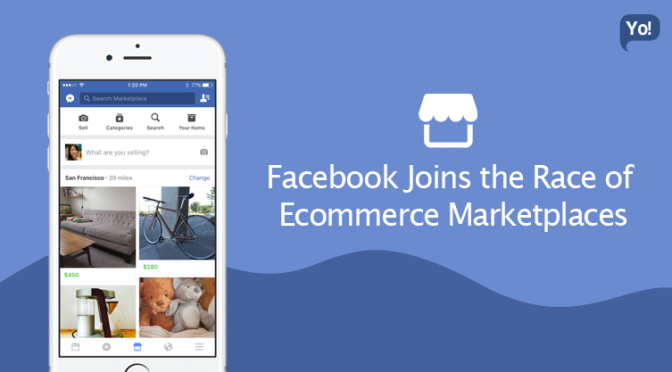
Facebook-market-place

Facebook’s Marketplace launched to compete with eBay, Craigslist, OLX, Quikr, etc…

The news…

As we all know, Facebook is where 1.71 billion people connect globally with each other. In the recent years, the platform has further evolved into many other diversions, one being where more people are seen to be using Facebook to connect in another way: buying and selling with each other.

This activity, which started with Facebook Groups, has further grown substantially and has now evolved into their newly launched product – Marketplace!

In the beginning, it will only be released in the US, UK, Australia, and New Zealand markets for beta testing on the Facebook app for iPhone and Android users. Marketplace has set the bar at 18 years.

Even though, this is a newly developed feature/tool/hub, users have long been able to buy and sell things through the platform.

Remember Facebook Groups (to buy and sell), where you regularly saw a lot of people create for-sale posts and share them with their friends or inside a group? More than 450 million people visit these groups to buy, sell, trade, and barter each month. These include families in across local neighbourhoods to collectors around the world!

Yeah, well Marketplace now formalizes that process and puts the concept of classifieds in one place!

For now they won’t be adding pages on marketplace, but Facebook potentially does intend to generate ad revenues by letting businesses or people buy News Feed ads or sponsored placement for what they’re selling.

Facebook, with this move is officially entering into the listings space with a few product categories, and is directly attacking all the companies with the likes of eBay / Craiglist-like marketplace model across the world.

Although they aren’t launching their product globally, but once they do, they will also be picking a direct fight with a lot of other (country-specific) market leaders in this space, such as Mercari in Japan and Olx and Quikr in India, and so on as well.

In fact, just with the launch of the product Facebook’s shares jumped marginally higher at $128.39 on Monday in the US, while shares in eBay fell by more than 1% on the NASDAQ.

What is Facebook’s Marketplace?

As the name itself suggests, ‘Marketplace’ is a tab on Facebook app that helps you to discover, buy and sell items with people in your community and outside.

Yes, Facebook in its essence, is a social network that connects people with each other! But what they had noticed in the recent years is that, more people had been using Facebook (more specifically, Groups) to connect in another way i.e. buying and selling with each other!

And to help people make more out of these connections, Facebook essentially decided to introduce Marketplace!

Anyway, it will be replacing the messenger on the navigation row. Clearly, Facebook is betting really big on Marketplace!

The listings you will see on the app would be ranked based on relevancy, which would be collected, with the help of the tags that people add to their listings and Facebook’s text analysis AI (Artificial Intelligence) which would be combined with what Pages you Like and the material you browse on Marketplace.

Additionally, pre-made messages like “Is this item still available? and What condition is this item in?” would further help you to make simpler negotiations.

On the marketplace – users will see photos of items and get to browse through what’s available on this hyperlocal in categories including household, electronics and apparel that people near them have listed for sale. One can also use the search bar to filter results by location, category or price.

But what differentiates this from their old groups is that – there is a sense (or at least the illusion) of being part of a semi-controlled community. Users are often seen to have created closed groups of niche communities on Facebook.

On the whole, these groups are pretty much similar to dating apps like Coffee Meets Bagel, and only match you with someone with whom you share at least one mutual friend on Facebook.

So, Marketplace will most likely appeal to mostly only those who are comfortable in interacting with people who they have some sort of connection with or at the very least, if they are able to get a quick scan of people’s profiles and get a general sense of who they are.

What all can you do on the app?

For starters – you can visit the Marketplace with just a tap on the shop icon on the Facebook app and start exploring.

Facebook Marketplace has two main features:

  1. Discover
    • The Marketplace opens to the photos of items that people near you have listed for sale – you can search something specific, from the top of the section.
    • Additionally, you can also browse from what’s available in a variety of categories such as Household, Electronics and Apparel.
    • And when you find something interesting – you can tap on the image to find more details, including – basic seller details, product description, general location, etc too.
    • Once you have decided what you want you can send the seller a direct message from Marketplace and from that point onwards, you and the seller can take it ahead.
    • Facebook does not facilitate the payment or delivery of items in Marketplace.
  2. Sell Your Stuff– Rather than having to set up a new profile, you can easily sell an item in Marketplace. Simply:
    • Take a photo of your item, or add it from your camera roll
    • Enter a product name, description and asking price
    • Confirm your location and select a category
    • Post

How is it different than its closest competitors Craigslist or eBay?

Quite honestly, it is different in so many ways!!

For starters – unlike all other such marketplaces, people don’t need to download a new app here to get involved.

At most marketplaces, you don’t really know the anything about the buyer or seller beyond what they say in their listing and your direct communication. But it’s different with Facebook, their profiles tell you tons! It will be easy to point out the scammers and avoid the risk of meeting such people in person. Additionally, there’s more accountability and people behave better if they think you could give their details to the police, track them down, or shame them on social media.

People usually visit a marketplace when they want something specific, but with Facebook it’s the opposite. People already spend around 50 minutes per day on Facebook, Messenger, and Instagram. And Marketplace is being intelligently placed on the navigation tab, being just one tap away inside Facebook, rather than getting buried in the More tab like many features; giving users all the more reasons to keep visiting it. Users might just stroll through the Marketplace simply because they’re bored.

Due to the popularity of the Messenger, buyers and sellers don’t have to risk out their contact details beforehand and can easily chat without phone numbers. But funnily, a competing platform still might have to rely on Facebook for communication.

Other marketplaces are too inclined on forcing tons of text listings onto a page, plus without having the knowledge of behaviour and interest of the users. But, Marketplace on the other hand, is built-mobile first with a primary focus on photos, and the browsing too, is made efficient and gratifying by keeping in mind the relevancy. These only further boost random browsing, in hopes to stumble upon massive discounts, making Marketplace something like a treasure hunt.

The past of Facebook’s Marketplace…!

It all dates back to 2007!

Facebook has been trying to win local commerce for almost a decade. It had first tried out a “Marketplace” (using the same name) for classified listings about things for sale, housing, jobs, and so on, in 2007.

When it had first launched, Marketplace’s main competitor was Craigslist, when Facebook had just a petty 50 million active monthly active users.

The Marketplace, for several reasons was not able to gain mass appeal and this iteration met with a lukewarm (or nonexistent) response. After running it for about a year and a half, in 2009, Facebook decided to revamp it and transferred the control to Oodle, the commerce platform that powered it to further expand the functionality and breadth of the application.

But this time it was different! They now had a whopping 1.71 billion monthly active users (with 1.57 billion monthly active users on mobile itself), and the breadth and scale to give it another go-round.

In 2014, after this version eventually vanished from the site, because it couldn’t gain enough traction; this Marketplace concept was transformed by Facebook to “For Sale Groups”, that allowed individuals to create groups to buy and sell items online.

This further extended to Facebook testing a “Local Market” feature in October 2015!

A number of Facebook users had reported seeing a new feature called “Local Market” that had appeared briefly on their Facebook app, sometimes in place of the “Messenger” button.

Those who dug in further, even found this new section also included both – Buy and Sell interface, along with a way to search across the marketplace using keywords. They also saw items available for sale would be categorized and would include photos and prices.

And eventually, for-sale groups grew into the testing of “Marketplace”, and this testing evolved into the Marketplace that got launched.

Having said that – it is also important to note that Facebook is not the only one that wants to defeat Craigslist!

Many have come, and many have gone!

The biggest name between countless start-ups includes the giant of all – Google! Almost 10 years ago, Google had tried to combine classified ads with other crowd-sourced content in a website called Google Base, but the service never took off, and it now redirects to a site soliciting retailers to list on Google’s shopping search engine.

Many investors, entrepreneurs, guru’s, experts, etc will tell you how important it is to have a user-friendly product with smooth design that’s built with smartphones in mind.

But proving all of them wrong, Craigslist on the contrary, arguably being one of the ugliest sites on the Internet, has managed to not only survive, but has also remained undefeated! Seriously, nothing has changed in 10 years.

Hence, it would be really interesting to see Facebook tackles this one!!!

Scripbox

Scripbox: Your online wealth management tool!

Indians have a tendency to save but not many invest. Only 2% of Indians invest! But the case is reverse in the US, who follow Robert Kiyosaki’s philosophy of – “Make money work for you”. They believe in investing more than saving.

And it makes sense too! Think of it – since there is continuous inflation, the money that is idly kept lying in a bank account, would lose its value naturally. Hence, ‘invest’ should be the mantra!

Having said that – the investment market is seen to be growing drastically!

Even though fixed deposits, gold and realty continue to dominate investments in India, there is a growing number of the population who believe in the equity market and other financial instruments.

With an intention to tap such customers – Scripbox has been initiated!

What is Scripbox.com?

Incorporated in January 2012 and launched in January 2013 – Scripbox is a (Old Airport Road) Bangalore-based company that in simple, allows users to invest in mutual funds.

Some of their unique features include: tax-efficient re-balancing, capital gains statement for income tax return filing, etc which makes your life easy.

Scripbox offers a lot of systematic investment plans that also gives you the option to choose the amounts you want to invest in each scheme, along with the calculation of capital gains tax that would be charged, which is useful at the time of filing your tax returns.

The firm has been incubated by Probe Equity Research – an equity research company that specialises in providing research to companies, private equity firms and so on.

Scripbox (which is also the name of their wealth management tool), mediates your money into a basket of MF schemes. Whether you are a seasoned investor or a beginner, Scripbox is an investment service that helps you save and grow your wealth without confusing you with complex financial terms, and along with clear options and powerful tools.

Now, if you are unaware – A mutual fund is an investment instrument that is made up of a pool of funds that is collected from several investors for the purpose of investing in as stocks, bonds, money market instruments and similar assets. Mutual funds provide the best way to participate in equity, debt and tax-saving asset classes. Ideal for individual investors!

Other than several other factors, Scripbox only considers diversified equity funds that have more than five years of track record or more than ₹250 crore assets. We only look at because that is in line with the profile of our target investors.

What’s makes Scripbox different from the others in the market is their focus that goes beyond just the transaction, and they literally track your portfolio, provide annual review and re-balancing services, and also assist you in making your money work hard for you.

Plus, there is a big difference in approach as well!

Others look at the investing experience from a distributors point of view, and approach the problem of investing by providing more tools and more data.

On the other hand, Scripbox wants to create a transparent jargon-free experience for customers and looks at the investing experience from a customer’s view point rather than a distributor’s, and takes the approach of reducing the scope of the decision making, and lets that part be dealt by applying scientific principles of investment selection (algorithms).

Additionally, if you are looking for automated best practice investing, Scripbox is your answer! Interestingly, instead of manually doing the selection of the schemes, they have adopted a selection algorithm (of MF schemes) that is completely “untouched by hand”, and completely relies on a rule book that comprises of quantitative parameters, which makes them un-manipulatable by any individual. The algorithm also looks at the consistency of the performance while selection. Basically, there is no human element involved in this whole process.

Other than the regular checks that they perform to keep a track of the changes to the fund; they officially, also have a once a calendar year review process irrespective of whether there are any changes that affect the funds or not. And if there are any adversely affects, then they would change that fund.

Additionally, every once a year, they rebalance and change funds, making the new money go into the newer funds.

What is their operating model?

Let’s begin with how they function: –

They only cater to mutual funds, and moreover, easily explain the financial concepts as well. This clears the gap that most investors feel otherwise.

Additionally, a lot of investors also find it exceedingly difficult to decide which mutual funds to invest in out of the 8000+ too.

That’s where Scripbox comes into picture! Scripbox offers a portfolio of 10 scientifically pre-selected funds that is spread across 4 categories ––– 4) long-term money funds (equity), 3) short-term money funds (debt), 2) tax-saving funds (equity with 3-year lock-in) and 1) daily spending money fund (any time cash fund with debit card).

They help you in investing in these funds through their portal. You can set up automatic monthly investment plans, post which Scripbox keeps a track of how your money is doing and sends you regular alerts and statements.

And then based on the review of the fund performance of a particular year, they review the selection of funds for the next year and recommend changes if better funds are available.

These changes are pretty much instant. Also, when they help you make the change, they track your old fund holdings and ensure the change is triggered only when you don’t lose money.

And all of this – without any added cost, fees or charges to you!

To be able to create a Scripbox account, you need to be:

  1. Investing as an individual (Scripbox is not available to companies, trusts, firms etc)
  2. You have to have an Income Tax Permanent Account Number (PAN)
  3. You are a resident citizen of India; or a non-resident (NRI), foreign citizen holding a Person of Indian Origin (PIO), or an Overseas Citizen of India (OCI) card , not living in the US or Canada, and have NRO or NRE account with a bank in India.

If you match the aforementioned criteria, all you need to do is: –

  1. Visit Scripbox.com
  2. Click on “REGISTER” and sign-up online
  3. Sign the pre-filled application that is sent to you and send it back to them with the required documents
  4. And done! Then all you need to do is, tell them how much and how often you want to invest.

Who is their targeted audience and what kind of strategies have they adopted?

Scripbox is meant for anyone who wishes to invest in mutual funds, but struggles with the research and selection of schemes to invest in.

Their fund selection methodology is largely driven by an investor profile that is the online-savvy audience in the earning phase (22-50 years of age) of their life and is planning to invest for the long term.

To add to that, Since Scripbox is completely an online-based, it is more convenient for those who can buy funds by merely transferring money over the Internet.

Additionally, since Scripbox only considers diversified equity schemes, including large-cap schemes, which leaves out all other schemes including mid-cap, balanced, debt and even equity-linked saving schemes, as well.

All of this leads narrows down the target investors to, people who want to save for their retirement and will remain invested for a long time. To be precise – they target people that are looking to invest ₹2-5 lakhs, or someone that saves anything between ₹10 and ₹25k a month.

To target this audience – Scripbox makes use Content Marketing!

Scripbox greatly makes use of the power of content to help the audience understand the need for the product. The theme that Scripbox’s content marketing efforts relied on, mainly included relevant, engaging, and focus.

As a matter of fact – even after being just a 4-year-old company; Scripbox has been ranked #2 among the 50 most effective financial services brands after Citibank (that includes: Allianz, ABN Amro, American Express, Wells Fargo, BlackRock, JP Morgan, Morgan Stanley and Canadian company Payfirma), in terms of using the LinkedIn platform to engage, educate, and inspire its target audience.

This LinkedIn list was prepared using the LinkedIn Content Marketing Score (CMS), which is calculated by measuring the ratio between the total target audience and the unique users that engaged with the content in 2015.

Furthermore, it also evaluates all content-based activities on the LinkedIn platform, including: company page updates, employee shares, sponsored updates, and influencer and employee posts through self-publishing on LinkedIn too.

Who leads the show at Scripbox?

Scripbox was founded by Sanjiv Singhal and is currently run by Ashok Kumar as their CEO!

Ashok brings in an experience of 20 years of building high growth businesses that are customer obsessed. He has held working at several leadership positions at IT, Telecom & Hi-tech companies such as Wipro, Intel, Airtel, Nortel and Cisco. He has completed his Bachelors of Engineering in Computer Science from Thiagarajar College of Engineering and PGDCM in General Management from IIM (Kozhikode)

Talking about the founder….

Sanjiv Singhal

Sanjiv acts as the Founder and Head of Product Strategy at Scripbox!

He has completed his Bachelors of Technology in Mechanical Engineering from National Institute of Technology Kurukshetra, along with MBA in Finance and Marketing from the IIM (Bangalore).

Overall, Sanjiv holds a working experience of roughly 20 years that revolves around finance and technology.

This includes a good 4 years with Kotak Mahindra (Vice President), 2 and half years with Matrix Information Services (Business Manager) and CyberCash (CEO), more than a year with Orbitech Solutions (Product Manager/ Senior Vice President), 2+ years with Polaris Software (Product Manager/ Senior Vice President), and 4 years with Herald Logic (Director).

During this phase, he had also founded Strategis.in, a consulting firm specialising in strategy & technology solutions for financial services, which he ran for almost 4 years from 2005 to 2008 as well.

How has their growth been so far?

The company that had started with merely 400 users, and was incubated within Accel Partners backed – Probe Equity Research, grew on to a point where it offered an unbiased selection of mutual funds to customers and had also become one of top 100 distributors in India by net inflow in FY 2014-15.

Furthermore, they also received their Series A round of investment of ₹16 crores in 2015 from from Accel Partners and a group of leading angel investors. Scripbox offers. This round of investment follows an earlier seed investment of INR 4 crores made by Accel Partners and Balakrishna Adiga (IT Industry Veteran); Dr H S Nagaraja (Educationist) and S. Sriniwasan (CEO, Kotak Realty fund).

Using this fund, Scripbox decided to further consolidate its presence and expand its customer base.

Over the period of time, Scripbox today accounts for a customer base that spreads across 370 cities and towns and has expanded by 10-fold in the last 18 months as well.

They currently manage a corpus of about ₹160 crores in investments from its customers, 70% of whom are first-time investors in mutual funds.

With a household penetration of mutual funds of only 3-4%, against mature markets like the US that stand at 45%, we have less than 1 crore people investing in mutual funds in India.

What many don’t realise is that, unlike inflation-par instruments like FDs or gold, the options that Scripbox offers are inflation-beating instruments such as – Equities, that will give you a 14-15% return compared to traditional forms of investing.

Hence, their primary goal now is to encourage young Indians to develop a long term investing habit, given that individual customers use Scripbox’s services to build systematic investment plans for as little as ₹500/month.

More recently, the company also raised an undisclosed amount in funding led by Omidyar Network in June 2016. A support from Omidyar Network (started by eBay Inc. founder Pierre Omidyar), will come as a “tremendous boost” to Scripbox, in several ways.

The company plans to use the fresh capital to scale-up its operations in 1,000 cities by 2020 and to educate young working professionals on savings.

Allo

Everything you need to know about Google Allo!

As we have been seeing, Google seems to hold some kind of fascination towards communication apps, many of which have successfully managed to fade into Google history.

Having said that – they seems of have cracked the code this time, and have launched their very best – Google Allo!

What is Google Allo?

Announced at Google I/O (18th May 2016) and launched on the 21st September 2016 – Allo is Google’s smart instant messaging app that includes a virtual assistant and a “smart reply” function that allows users to reply without typing. It has been made available on both the platforms – Android and iOS.

Allo makes use of artificial intelligence, machine learning and Google’s natural language processing advances from their search to help you with your queries.

Interface being Google’s forte, given that it is known to keep the interface of all its products user-friendly; they have also kept the overall interface of Allo pretty basic and seamless for any user to get acquainted to.

Having said that – NO, this is not Google’s replacement for Hangouts. And although, you can’t set it as the default SMS client on your phone, but it does offer the ability to message a contact that doesn’t have Allo installed, helping you to talk to contacts over SMS, with the message being routed through Google’s servers. But Allo isn’t an SMS service by design, that’s as far as one can go! It is similar to the likes of WhatsApp, iMessage, Facebook messenger, etc…

The registration signup and account creation of Allo is very simple, very similar to WhatsApp, in fact. A few basic self-explanatory steps, and you’re ready to use the app!

More recently, it was reported that Google Allo has already surpassed the 5 million downloads mark on the company’s Play Store, in less than a week. In fact, they are crossed the 1 million downloads mark four days back only. It was also the top free Android app in the US this past weekend as well.

What sets Allo apart from iMessage, Facebook and WhatsApp?

Allo, as you must have heard, comes with a whole range of features, some of them being: –

  1. Smart Reply: using this feature, one can respond to messages without typing a single word. It also learns over time and suggests responses to text and photos, in your style. Similar to auto correct, but more advanced! For instance – it learns if you’re more of a “haha” or “lol” and accordingly offers suggestions. Allo also offers Emoji responses based on your personality. As a matter of fact, not many people are aware that, their smart reply feature was first built for Inbox.
  1. Shout or whisper: Well, figuratively of course! Basically, you can add more meaning to your words by adjusting the size of your text. This is when you need more than just ALL CAPS, to show your anger, or otherwise to whisper.
  1. Turn any photo into a work of art: You can get creative with the photos you send by doodling on them or adding text, or by just drawing a smiley face, etc…
  1. Perfect Sticker: Stickers and expression are also an important part of the Allo experience. There are currently around 25 sticker packs available to download in Allo, and many more are on their way. Stickers in Google Allo are designed by independent artists and studios from around the world, with options, enough to fill your appetite.

Google Assistant

A crucial difference between Allo and the messaging apps offered by Apple and Facebook is its virtual aid – Google Assistant that can answer questions and make suggestions.

A virtual assistant chatbot – Google Assistant is Google’s way of offering Siri-like experience for all the Android users!

Although, the chatbot is still in its preview phase; suggesting replies in conversations, offering recommendations on nearby points of interest, telling bad jokes, playing games with you, etc are some of them any features that it comes with!

While many texting apps and keyboards can suggest words as you type, in the form of auto-correct, but Allo goes a step farther by offering up full replies based on the message you’ve just received.

There are two ways to interact with Google Assistant: First – In a messaging thread, you can call out to Google Assistant at any time by just typing “@google” in Allo, even during an ongoing conversation, without leaving it. So for example – if you and your friend are making plans to go for a movie, you can just type @Google and then your query in the same chat window, and the results shall be up without having to leave the chat.

If a sibling sends you a family photo, Allo might suggest something like “Aww!” or “How cute!” in response! These suggestions are on point and natural-sounding.

And second, you can chat with Google Assistant one-on-one as well, to set alarms, ask questions, jokes, news, to remember information, and so on…

With Allo, you can also hunt for nearby restaurants and browse movie times without leaving a text conversation, but you can’t book a table or buy tickets for now.

Google Assistant adds a lot of convenience to texting by making it easier to retrieve information without having to juggle multiple apps.

It also has an Incognito feature for private chats, with end-to-end encryption. It also comes with an expiring chats option so you can control how long your messages stick around; a one-of-a-kind self-destruct option, indeed!

Additionally, it can also get into your Google account, and perform several tasks, such as – reaching into your Gmail and show you mails, meetings scheduled on Google calendar, perform Google search, and so on….

Unlike Google Now, interacting with Google Assistant feels more personal and conversational!
And this artificial intelligence-powered feature is what makes Allo different than WhatsApp, iMessage or Facebook Messenger!

Where is Google heading with Allo?

Google’s love the Indian market! That’s no secret.

Plenty of Google projects have been targeted towards India: Android One phone (Google’s cheap, high-quality Android phones) was first launched in India, they started a free Wi-Fi program by installing high-speed access points across most popular train stations in India, they launched a custom version of YouTube called “YouTube Go” that is designed to be “offline-first”, for India, and if that’s not enough proof, then read the op-ed recently published by Pichai in The Economic Times of India that clearly explains how Google is heavily targeting India.

Now the next most obvious question that comes to mind is – Why?

Well, as most of you must be aware – Google is all about scale and having huge numbers of users! Now if you look at the top three countries with the most population, it’s China (1.38 billion people), then India (1.32 billion people), and then it’s United States with (324 million people).

If Google inclines towards China that would mean dealing with the censorship of the Chinese government, leaving them with the next best option i.e. India. In addition to that – India is also the home country of Google CEO Sundar Pichai.

According to data from Dutch research firm TNS Infratest (March 2015) PC usage in the US and UK were both around 75%, whereas, the PC usage in India stood the second-lowest amongst 59 countries, at just 15 % percent.

While on the other end, smartphones achieve 33% usage by adults in India. Growth numbers since March 2013 favour smartphones, too. Additionally, smartphone isn’t just the primary computing device, but in fact it is often the only computing device in India.

As per Google Public Data statistics for March 2015, the US and UK both average around 3.3 connected devices per adult, but it’s a different story in India, the country only has 0.8 connected devices per adult. On the other end, 51% of the UK and 39% of the US adult population use a tablet, but only a 4.8 miniscule percent of adults have a tablet in India.

Goes without saying – in India, the dominant computing device—now and in the future—is the smartphone!

Now, all this does not necessarily has to be wrong!

The one-device limitation may be a deal breaker for many in the developed world, but it’s quite normal in India. And quite honestly, it can be a boon for the companies as well, simply because––to be successful in the US and UK, they would need to support multiple devices, but not in India. It’s just going to be one device here!

Coming to the topic in hand – Allo, clearly is an India focused product, given Google’s decision to not give Allo a Web or desktop client.

This gets validated furthermore, when you notice how Google has smartly played with their signup process! What they have done is that – to sign-up or sign-in for Allo, you don’t need to have a Google account, but instead, you “sign up” using the carrier’s cell phone number. Similar to WhatsApp!

Even if you’re a first time internet user via your smartphone, you probably won’t have an e-mail account or a Google account, but you definitely will have a phone number, since that’s how you’re paying for Internet service.

Some more evidence to prove Allo’s focus towards India is that: Allo was first launched in India, and almost half of the Allo sticker packs are by Indian artists, and many have Indian themes like “I <3 India” and “Modern Parivar” as well. Moreover, Google just also announced that Google Assistant will soon be learning a second language (Hindi) after English.

Hence, all of these points clearly prove that Google is heading on create a suite of mobile products that are interconnected to each other, and are focused and targeted towards the ever-growing Indian audience.

Snapchat

First rebranding, and now spectacles: where is Snapchat heading with all this?

The news….

On 24th September of this year – Venice (California)-based Snap Inc (earlier known as Snapchat) announced that – they’ll be launching a totally new type of camera, which they like to call – Spectacles!

Yes! As the name suggests, “Spectacles”, launched by this millennial-friendly messaging service + social network + video hub, are nothing but one of their first move into the hardware industry!

Spectacles are nothing but sunglasses that are integrated video camera that makes it easy to create Memories.

One can shoot first-person video clips, or Snaps, that you can transfer directly to the Snapchat app, using these sunglasses. Snap has created one of the smallest wireless video cameras in the world that are capable of taking snaps worth a day on a single charge, which have been integrated into a fun and cool pair of sunglasses, that help you to take the feeds.

What if you could go back and see those favourite memories of yours? That’s the primary motive of building Spectacles!

Interesting, right?

Evan Spiegel (CEO, Snap Inc) had made and launched the product in quite an interesting way too!

In 2014, Snapchat had bought a start-up that made Google Glass-like eyewear that recorded video of whatever the wearer saw. It was called Vergence Labs! And soon Snapchat was seen to be recruiting hardware experts for a stealthy new project as well.

In 2015, Snapchat assembled also a team composed of scientists and software engineers that specialized in computer vision and machine learning, and began building Snapchat Research. Furthermore, the company also raised a total of $1.81 billion funding round earlier this year.

And eventually, on a quiet side street just off the beach in Venice (California) inside his office, Evan stood in a small conference room, in front a really small audience, holding a towel that was covering a mysterious object sitting on a table. In a full on dramatic scene from the movies – Evan asks: “You wanna see it?” And the towel is off, and – “Boom”!

Simple, yet stylish – Spectacles come in the same price range as a pair of Ray-Ban’s. At a price of $129.99, Spectacles is currently being launched with limited distribution, and won’t be relied upon for significant immediate revenue. They will be made available this fall! It’s being launched more off like a silly game for now, that would be used more like a toy at parties or outdoor concerts. They’re taking a slow approach to roll the product out them out, and want to understand where and how exactly, would it fit into people’s lives and seeing how they find it.

Having said that – there a side benefit to this as well! Instead of making the app a slave to your Smartphone’s built-in lens, Spectacles will empower them to control a physical camera.

About: Spectacles?

Formally speaking – they are sunglasses that are integrated with world’s smallest camera which records video snippets that get saved to your Snapchat Memories.

It is a one-size-fits-all pair of glasses that will be made available in black, teal or coral colours, and will be coming with a camera that has a 115-degree lens that is somewhere close to how humans see. The video it records is circular, more like human vision.

These will be directly connected to your Snapchat app, and instead of holding up your smartphone like everyone else, the videos will be fundamentally different here.

Spectacles connect directly to Snapchat via Bluetooth or Wi-Fi and transfer your Memories directly into the app.

The beauty of this app is that, even if you don’t have your phone, it will store all the snaps until you return to your phone. Meaning – you can use the glasses as a standalone device as well.

How to use them?

All you need to do is – tap the button on the top left-hand corner of the sunglasses to begin recording a snap! The recording will automatically stop after 10 seconds, but if you want to record more, then you can tap again to add another 10-second increment. The max that you can record up to is 30 seconds at a time!

And to know if the recording is on or not – you need to see the lights! The inward-facing light will turn on when you’re snapping, and the outward-facing light will turn on to alert anyone in your field of vision.

The Spectacles come with a one day battery life, and the outward-facing light is also a battery indicator, which will show you how much battery you have left.

Additionally, they come with a dedicated charging case and cable. When fully charged, the case can recharge your Spectacles up to four times.

How are they different from Google Glass?

As we all know, wearable cameras have existed for years in the market, and the most high-profile attempt made was by Google themselves, with Google Glass!

Let’s face it – Google Glass was not what we expected it to be! Google had promised the world. Revolution in many ways, by changing the way we view and share information! But, turns out – their product faced heavy criticism over privacy concerns, and intrusion.

Google’s loss may actually turn out to be Snap’s success!

To begin with – new technologies often fail the first time, only to become a hit there onwards (Take for e.g.: social network). Moreover, Spectacles are less than one-tenth the cost of what Google Glass was made for, making them much more accessible. And lastly, let’s face it – Google Glass was dorky, and Snap is cool!

Yes dorky! You can say what you want about this – but the fact remains that no matter how life-changing the technology is, you will not be able to convince a mass to use a headset resembling a cheap Star Trek prop.

Other than that – Google Glass wanted to put the experience of a smartphone inside a pair of glasses. This would not only lead to distracted conversations, since users would continually break eye contact to look at the tiny screen in the corner of their glasses, but this would also led to safety concerns, such as distracted driving.

Not only do Snap’s Spectacles look cute, but they’re discreet, oversized, colourful and impossible not to notice!

The genius of Snap was always the fact that you leave no permanent record of your photos and videos, which allows the users to be far more careless with what they upload.

And since, these are targeted specifically towards the younger generation––Someone who’d feel far more comfortable using these glasses to share their lives online, than their parents––this perceived impermanence is what may allow Spectacles to become a success!

Rebranding of Snapchat…!

Spiegel has seen to be rebranding the company, which has started with the change of the name Snapchat, to Snap! Further, they have also changed their Twitter handle to @Snap as well.

In June 2016 – Snapchat had acquired the domain name Snap.com and moved over to the corporate domain registrar and brand protection company MarkMonitor.com.

According to a blog post that the company released explaining the rebranding: –

They state that – the company has grown from being just an image messaging application (which started as Picaboo) to having several products including: Stories, Memories, Lenses, and so much more… The name – Snapchat Inc, made a lot of sense then!

But because they are now developing other products, like Spectacles, they needed a name that went beyond just one product, but at the same time, doesn’t lose the familiarity and fun of their team and brand as well.

Hence, they decided to drop the “chat” and go with Snap Inc!

Basically, the company has created a parent or an umbrella company and added two products to it – Snapchat.com and Spectacles.com, along with two different logos as well.

This only indicates that this is just the beginning and many more products are in line!

So, where exactly is Snap Inc heading with all this?

There was (and still is) a time when Facebook envied Snapchat for being able to get what they couldn’t. And even though, the offering (sharing imagery) was similar to Facebook and Instagram; Snapchat was very different.

On Snapchat, photos and videos quickly expire, making social media a far more causal experience. Celebrities also jumped onto Snapchat as well. And their numbers just seem to be growing too!

More than 60% of 13-to-34-year-old smartphone users are now on Snapchat. More than one billion Snaps are sent a day and 10 billion+ videos are watched. On an average a TV network in the top-15 manages to reach 6% of all 18-to-34-year-olds in the United States, while, Snapchat app reaches 41% of the same demographics, on any given day. A number, advertisers would kill for!

In attempts to capitalize on this, Snap also launched their ad business around 2015, and were selling ads through their “Discover” and “Stories” sections, along with their paid geo-filters and lenses too.

The situation has become such that, wherever eyeballs go, ad dollars follow. And now, this has become the heart of an ongoing brutal fight in the tech sphere right now!

Platforms like Facebook, Instagram and Snapchat are all fighting for their slice of the time people spend looking at video on phones, because advertisers will pay a bomb to insert mobile video ads inside that content.

Since, Facebook warehouses so many people’s digital identities, its core pitch is that its wealth of user information allows advertisers to micro-target. For instance: if you wish to target a suburban, French-speaking woman who does not hold a degree and recently met with an accident, Facebook can help you find her—and serve her customized ads.

Snapchat is a natural recipient of TV ad dollars as those dollars move online. Snapchat doesn’t have this facility, and tends to know more general things about you (age, gender, location, whether your phone is iOS or Android, etc… It then counteracts this by functioning, from an advertiser’s perspective, more like television.

But when an advertiser buys on Snapchat, they can be assured that they would get access to very wide group of American youth, at a place where they spend a lot of time and come back to throughout the day. Irrelevant of the ownership of the content, Snapchat app autoplays clips one after another and slip ads in between, creating an effect very much like a TV commercial interrupting a sitcom.

They have also begun to ramp up their overtures to advertisers, with attempts to offer better feedback metrics and slightly more advanced targeting options.

This has further led to an increase in their valuation as well, which has jumped anywhere from $16 billion to $22 billion. Being the beginning of their advertisements, they made a paltry $59 million in 2015, but are estimating their 2016 revenues to be between $250 million and $350 million, which they further intend to take to $500 million and $1billion, by 2017.

Basically, Snap is heading towards adding more products under its wing, to gain more advertising revenue, and also to fight a competitor who wears a strong war chest!