

snapdeal

Snapdeal re-branding just before the start of the festival season! Is it a desperate attempt to make a comeback?

The news….

Snapdeal has recently adopted a major look and identity makeover that is being reported to be their biggest repositioning since pivoting from a deals site six years ago.

They have rebranded themselves with a new logo and a campaign named Unbox Zindagi.  They have thrown their red-and-blue logo away, and has moved on to a vermello-coloured (a shade of red) box.

Snapdeal’s delivery boxes will now also be in Vermello, and all the shipments from their fulfilment centres and most of those from sellers will also be delivered in red boxes. Their delivery boys will also be wearing red shirts too.

The new brand identity has been rolled out on the app, website, and mobile site, and is being marketed across television, print, YouTube and social media.

Why Rebrand?

To begin with – according to a report submitted by Kotak Institutional equities, Indian eTailing market is expected to potentially touch around $28 Billion by 2019-20, with a registered CAGR (Compounded Annual Growth Rate) of 45% over the next four years. The number of online buyers is also anticipated to grow to 110 million as well.

According to Snapdeal, they have invested more than ₹200 crores in this rebranding move. They have also got on board big names like Prasoon Joshi and his team at Mcann, along with the musical trio Shankar Ehsaan Loy, who have put together a campaign that is aimed at building an emotional connect with the customer base.

These changes that have been brought about, have been done keeping in mind their repositioning strategy (of being more consumer-centric), and expansion of reach. Additionally, in sync with their positioning, they are also looking to upgrade their customer care services as well.

This rebranding surprisingly also comes just ahead of the big shopping season, to gear up for competing with fellow eCommerce giants. This is also a crucial point for Snapdeal, given that the company has slipped their position against its primary competitors – Amazon and Flipkart, to become the third largest company.

The key members of the leadership team of Snapdeal had travelled across the country around the beginning of the year and had met existing and prospective users from several cities like Mumbai, Delhi, Kolkata, Chennai, Guwahati, Bhopal, Rajkot, Nagpur, and Madurai.

Using the insights drawn from these interactions, the new positioning and identity was created.

Although, a lot more months had gone into the preparation of every single aspect including: design, feel, look, advertising etc., that were all perfectly timed for Diwali, but their backend processes took just three months, to go live.

Snapdeal is basically focusing their overall strategy on the next phase of growth, and is seeking to get acquainted with the set of 100 million Indian online shoppers that will be coming on board.

Beyond all that – this is also a desperate attempt by Snapdeal and its founder Kunal Bahl to avoid a possible forced merger. It is being predicted by many that if the company is not able to get back on track soon, then it would be forced to merge with either of its rivals.

However, several experts strongly feel that Kunal’s plans are really ambitious and he can still bring his company back on the track.

Having said that – their fundamental goals remain unchanged and this is just the beginning to a very long journey!

From the perspective of Focus ––

The new positioning is specifically focussed on the aspirational India. For such an aspirational consumer base, the products they purchase is what marks the difference between yesterday, today and tomorrow.

As expressed in their new brand identity as well – it is about understanding that each purchase is not just a transaction, but an opportunity to upgrade to a better life!

If you notice, progress is marked by buying an air conditioner or computer at home for a normal Indian middle class, and these new boxes that Snapdeal has started to deliver portray are milestones of such progress.

Since their initiation in 2010 when the company started off as a coupons site, to pivoting to a marketplace in late 2011, and finally, the adoption of the new brand identity that they have adopted now, Snapdeal has indeed come a long way. They have reached a certain stage and size now, wherein they’re educating people to buy online.

Now, since the industry has about 50 million users, they feel that, it is now time to build the brand, and about finding what would be more appealing and relevant to the customers.

To sum it up – their focus is clearly on delivering a superior delivery experience to the eCommerce consumers who have complained for long about the quality of service provided by the country’s eCommerce majors, and turning the spotlight  to the gaps to the supply chain and logistics operations.

And from competition’s perspective ––

The market is in a maturing phase. The next stage of adoption is with a very different set of consumers. And as they have slipped down to the third position, the rebranding is very much needed to boost their on-going race against Amazon and Flipkart.

However, the overall online retail market accounts for hardly 2% of the total retail in India. So, it is not just the online players that Snapdeal will be competing with; but in fact, they will also be holding direct competition with all the retailers as well. Due to which, it is of utmost importance for them to create a presence in the minds of the offline masses too.

Hence, they have realised that in order to survive in this cut-throat environment, Snapdeal will have to revamp themselves!

How competitive is the eCommerce market going to be in this festival Season?

The eCommerce discount wars for the festive season of 2016 is about to begin.

eCommerce sector in India has already become a battleground and all the big players are devising new ways and strategies to attract and retain the most number of users.

The last quarter of each calendar year is said to be extremely crucial for mostly all the marketers in India but for the eCommerce companies, this festive season of 2016 is said to be critical as it could change the course of the industry, and their position in it, for good.

This is probably going to be the most important season in the existence of eCommerce companies in India so far, as this festive season will determine the leaders and the followers!!

This has led to an increase in the importance of sellers on these platforms as well. Subsequently, the companies have also seen to be been making efforts to attract sellers to their respective platforms.

To make things more stringent, the government has recently implemented new rules for FDI, under which, no company can get more than 25% of sales from a single seller and nor can they affect the prices directly.

To add to that – In the past, eCommerce sales that were earlier driven by deep discounts in India, will find it extremely difficult to offer the same level of discounting, this season, given their deep losses alongside the regulation by the Indian government that bars eCommerce companies from artificially influencing prices of products sold on their platforms.

It will be interesting to see the strategy of the eCommerce companies in this festive season, particularly after the new FDI rules.

Having said that – come what may, there will indeed be a discount war this festive season! In fact, companies have already started to prepare for the same as well.

And a state of heightened activity is all too visible among Indian eCommerce companies ahead of the festive season.

Amazon has tripled its seller base from close to 40,000 last year, Flipkart is hiring 10,000 more temporary employees, and Snapdeal is offering collateral-free loans worth Rs 1,000 crore to its sellers.

The year of 2016 has especially been tough for Flipkart and Snapdeal!

The country’s largest eCommerce company saw has been seeing a series of markdowns in its valuation this year and while, Snapdeal has been in despair for quite some time now.

They not only had to shut down Exclusively.com, in just 18 months after acquiring the premium branded fashion and lifestyle products marketplace, but also has pretty much failed to sell its payments unit FreeCharge, as well. In addition to all that – they also saw a 50% drop in its sales at the end of July.

Meanwhile, Amazon seems to have built a momentum and has taken a lead over the Flipkart in terms of sales in July and August, which were a tad higher than Flipkart’s ₹2100 crore in August, as reported by Mint newspaper.

According to various industry reports – Amazon has overtaken Flipkart as the lead in the marketplace. But it all depends on which metrics you are following! If you looking at the gross merchandise volume (GMV) or overall traffic or revenues!

Other than that, Amazon also claims to have surpassed Flipkart as the most downloaded mobile app on Google and Apple stores in the first quarter of this year.

Nevertheless, Flipkart and Snapdeal already have their disadvantages which wear them down, and Amazon India seems to be in a better position at least financially.

So for Flipkart and Amazon, it’s a fight for leadership and market-share but for Snapdeal, this is another opportunity to fix the mess and get its act together, to avoid the possibilities of a forced merger.

Overall, if Amazon manages to steal the march over its rival yet again during the festive season it will seal its leadership in the market, and if Snapdeal fails to turn around its fortunes in a significant manner, it will be left with no option but to seek refuge with one of its rivals.

To add to all that – if these Indian firms (Flipkart and Snapdeal) do not grow amicably and contain their losses; there is a high possibility that there will be markdowns, which potentially, will lead to the merger of Flipkart and Snapdeal in the next 12 months!

To worsen the overall situation even more, this festive season is coming at a time when ecommerce sales, in general, have been on the steep decline in India, since the beginning of the year.

Given the heat, market pundits are expecting that Flipkart will leave no stone unturned to push sales during its Big Billion Day held around Diwali. According to several reports, it is believed that, Flipkart will be offering deals which customers have not experienced before, which will be better than any online or offline retailer in the country.

In response to that – with a $5 billion commitment by its deep-pocketed parent, Amazon is also likely to unleash an aggressive sales plan.

Meanwhile, Snapdeal, that is battling to retain the number three slot in the industry, will be using their rebranding initiative to reignite its brand recall among customers. They have also recently introduced a new service that promises free next-day delivery and other benefits to buyers who pay at the time of purchase, and have also launched their own private cloud platform named – “Snapdeal Cirrus” that will help save costs and offer performance gains across its applications.
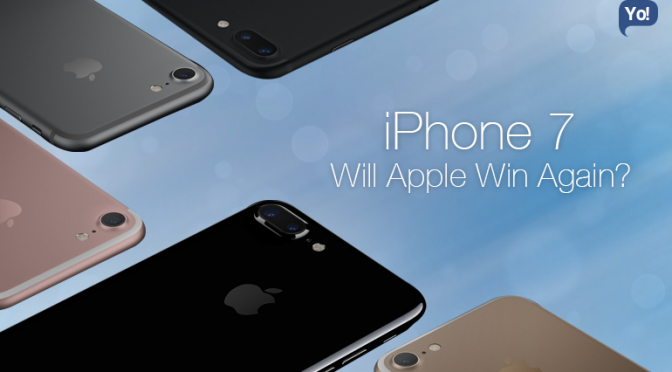
iphone 7

Do you think iPhone 7 & 7S will win again?

About: iPhone 7 / 7S and its features!

It was recently announced on the 7th of September 2016 that Apple Inc will be launching iPhone 7 and 7 Plus at the Bill Graham Civic Auditorium in San Francisco by its CEO Tim Cook.

These are the successors of iPhone 6S and iPhone 6S Plus and will launched for general public on the 16th of September 2016, with pre-orders beginning on 9th of September 2016. It will be made available in more than 25 countries. It will be available to customers in India from the beginning of 7th of October.

Although, the pricing details for the Indian market haven’t been revealed yet, but it is being said that, it will be somewhere around ₹60,000!

Using the iPhone Upgrade Program, customers in the US, UK and China, would get access to unlocked iPhone 7 or iPhone 7 Plus, with the protection of AppleCare+. This Upgrade Program is available at apple.com and Apple Stores in the US with monthly payments starting at $32.3

Alongside the iPhone 7, Apple will also be unveiling, Apple Watch 2, and iPad Mini 5 and the iPad Pro 2 as well.

Features

The iPhone 7 is similar in design to the iPhone 6S, though with a “mirrored” finish. But, iPhone 7 will be available in 4.7-inch screen size, and “iPhone 7 Plus” will be available in a 5.5-inch screen size. And although, the displays have identical sizes and resolutions to the 6S but the colour gamut and brightness have been increased.

The iPhone will be coming in a gorgeous design in silver, gold and rose gold finishes along with two all-new black finishes, from apple.com, Apple Stores, Apple Authorized Resellers and select carriers. It is also water and dust resistant.

Unlike iPhone 6, this model does not feature a 3.5 mm headphone Jack, and has been replaced by a second speaker grill. Additionally, a Lightning to 3.5 mm connector adapter, along with in-ear headphones that use a Lightning connector, are bundled with the device. The Lightning adapter will also be sold independently.

It no longer uses a physical home button; but instead, it uses a touch and pressure sensitive button with haptic feedback via Apple Taptic Engine.

This model uses the new Apple A10 Fusion system-on-chip that also features a hexa-core graphics chip capable of “console-level gaming”.

iPhone 7 will shipped with pre-installed iOS 10 operating system. iOS 10 comes with several features to lure its customers.

It introduces a huge update to Messages that delivers more expressive and animated ways to message friends and family. It also gives Siri more power to do more by working with apps, along with new ways to interact with apps.

This is in addition to modifications to applications including: 3D Touch, Maps, Photos, Apple Music and News apps, and the Home app, simple and secure ways to manage home automation products in one place, and so on… Both phones include support for up to 25 LTE bands, for the best worldwide roaming in the industry.

Along with that, iOS 10 also opens up incredible opportunities for developers allowing them to do more than ever with the apps.

How is it different from other brands?

The iPhone 7 and iPhone 7 Plus have landed with some big differences between them and a few other models. Goes without saying – iPhone 7 will comfortably outperform its bigger brother (iPhone 6S), but where does it stand amongst the rest of the competitors?

We’ve compared iPhone 7 with iPhone 6S, Samsung Galaxy S7, LG V20 and Asus Zenfone 3 Deluxe, on several parameters. Let’s see how it performs

DISPLAY

  • Apple iPhone 7: 4.6-inch (750 x 1334 pixels)
  • iPhone 6S – 138.3 x 67.1 x 7.1 mm (5.44 x 2.64 x 0.28 in) and 143 g (5.04 oz)
  • Samsung Galaxy S7: 5.1-inch (2560×1440 pixels) QHD
  • LG V20: 5.7-inch (2560×1440 pixels) QHD
  • Asus Zenfone 3 Deluxe: 5.7-inch (1080×1920 pixles) Full HD

OPERATING SYSTEM

  • Apple iPhone 7: iOS 10
  • Apple iPhone 6: iOS 09
  • Samsung Galaxy S7: Android 6.0 Marshmallow
  • LG V20: Android 7.0 Nougat
  • Asus Zenfone 3 Deluxe: Android 6.0 Marshmallow

PROCESSOR

  • Apple iPhone 7: Apple A10 chip (64-bit)
  • iPhone 6S – Apple A9 chipset
  • Samsung Galaxy S7: 2.15GHz + 1.6GHz quad-core Qualcomm Snapdragon 820 processor (or Exynos, depending on region)
  • LG V20: 2.15GHz +1.6GHz quad-core Qualcomm Snapdragon 820
  • Asus Zenfone 3 Deluxe: quad-core Qualcomm MSM8996 Snapdragon 821

RAM

  • Apple iPhone 7: 2GB
  • Apple iPhone 6: 2GB of RAM
  • Samsung Galaxy S7: 4GB
  • LG V20: 4GB
  • Asus Zenfone 3 Deluxe: 4GB/6GB

 STORAGE

  • Apple iPhone 7: 32GB/ 128GB/ 256GG
  • Apple iPhone 6S – 16GB 32GB and 128GB
  • Samsung Galaxy S7: 32GB/64GB
  • LG V20: 64GB
  • Asus Zenfone 3 Deluxe: 64GB/128GB/256GB

REAR CAMERA

  • iPhone 7 – Rear: 12 megapixel sensor, f/1.8 aperture, Focus Pixels, Optical Image Stabilisation, quad-LED (dual tone) flash, 4K video recording
  • iPhone 6S – Rear: 12 megapixel sensor, f2.2 aperture, Focus Pixels, Software Image Stabilisation, dual-LED flash, 4K video recording
  • Samsung Galaxy S7: 12MP with LED flash
  • LG V20: 16MP, 8MP wide
  • Asus Zenfone 3 Deluxe: 23MP

FRONT CAMERA

  • Apple iPhone 7: 7MP sensor, f/2.2 aperture, 1080p recording
  • Apple iPhone 6S: 5MP Front Camera, f2.2 aperture, 720p video recording
  • Samsung Galaxy S7: 5MP
    LG V20: 5MP
  • Asus Zenfone 3 Deluxe: 8MP

SPECIAL FEATURES

  • Apple iPhone 7: IP76, fingerprint sensor
  • Samsung Galaxy S7: water-resistant, wireless charging, fingerprint sensor, heart rate sensor
  • LG V20: Rear cover release key; both cameras capture wide-angle images; secondary screen on top, fingerprint sensor
  • Asus Zenfone 3 Deluxe: fingerprint sensor

BATTERY

  • Apple iPhone 7: Not Available (However, Apple CEO, Tim Cook has claimed that it offers longest battery life ever) Built-in rechargeable lithium-ion battery. Talk time of up to 14 hours on 3G. Two hours longer battery life than the existing iPhone 6s
  • Samsung Galaxy S7: 3,000mAh (non-removable)
  • LG V20: 3,200mAh (removable)
  • Asus Zenfone 3 Deluxe: 3,000 mAh (non-removable)

PRICE

  • Apple iPhone 7: Price to start at Rs 60,000
  • iPhone 6S – 32GB ($549), 128GB ($649)
  • Samsung Galaxy S7: Rs 50,900
  • Samsung Note 7: Rs 59,990
  • Asus Zenfone 3 Deluxe: Rs 62,999
  • LG V20: Not Available

What strategies have been adopted by Apple?

Have you ever wondered, “How in the world did Apple attain so much success, in such a short time?”

Clearly, they weren’t the first company to invent the personal computer, portable music device, the tablet, the smartphone, software to download music, or the set-top box to name a few.

Yet, they have managed to amass a brand loyal following that is backed by significant sales, market share, and profitability, like no other brand. The company has managed an unparalleled revenue growth from $8 Billion in 2004 to a whooping $180 Billion in 2014.

And not only that, but Apple has successfully managed to do this several times over. During the iPod, the iPhone, the iPad, and so on…

They have been creating revolution in the given space, time and again! Even after receiving strong criticism from the commoners.

They have successfully managed to move past beyond the “computer brand” label! As a matter of fact – Apple has created crazy fans that stand in line for hours and hours, just to get the first experience of any new product, the minute it’s released. They create products that their loyal fan-base believes make life better, easier, more fun and more cool for them.

They successfully transform their casual purchasers into brand ambassadors. And surprisingly, these secrets can be applied to just about any business in any niche or industry.

Speechless!?!

So, how does Apple do it? What’s the secret behind their success?

Out of the many strategies that they use; Consumer Behaviour insights and Emotions continue to be of prime focus of their branding strategy!

Beginning with Consumer Behaviour – even though Steve Jobs and Apple did not use the traditional consumer research methods in the initial development of most products; Consumer Behaviour plays a huge role in their marketing and ultimately the success of the company.

Consumer Behaviour research is the primary driver at the core of any good strategy, that helps with you actionable insight to ensure business success.

In the present business environment, Consumer Behaviour marketing is said to be one of the core competencies of any successful company. Once a consumer purchases a product or downloads iTunes, Apple gets access to customer data and they leverage from it to gain significant insight into the consumer and what drives their purchase behaviour.

Additionally, Apple also uses its integrated channels including online, retailer point of sale, and iTunes to capture detailed information about consumer behaviour as well.

Talking about Consumer Emotions – it starts with a “how an Apple product experience makes you feel?” They present themselves as all about lifestyle, imagination, liberty regained, innovation, passion, hopes, dreams and aspirations, and power-to-the-people through technology.

And goes on to making consumers believe that Apple is a really humanistic company with a heartfelt connection with its customers and their brand personality is about simplicity and the removal of complexity from people’s lives, that has people-driven product design.

All of these help them to thoroughly analyze their consumer’s behaviour more effectively and tailor their products and brand messages accordingly. And using these qualities; Apple positions itself as being extremely helpful to people (and businesses) as they strive to achieve their goals.

They create a consumer environment (that is based on the social and physical attributes of the world around including: spatial relationships, physical objects, and the social behaviour of other individuals) to position themselves. This includes creation of Apple Branded Stores, Digital/Mobile Environment, How Apple Communicates, etc…

And this is how, Apple uses Consumer Behaviour and Consumer Emotions to win its customer!

In sync with the aforementioned – Apple uses many Above the Line (ATL) and Below the Line (BTL) advertising strategies to promote themselves.

ATL advertising is where mass media is used to promote brands, and BTL advertising is more of one to one, and involves instruments like – distribution of pamphlets, handbills, stickers, promotions, brochures placed at point of sale, etc…

But, since they are targeting the premium segment, the presence of Apple iPhone is higher in the ATL segment than in the BTL segment.

Their ATL’s usually include – Whenever a new phone is being launched, all you will see is iPhone, just about everywhere, on each and every platform. Promotions strategies would range from full front page ads, promotions on the radio, the television and so on, during the launch of the product. There are whole websites devoted to nothing but Apple products and Apple marketing. Even high-end journalistic publications like ‘The Atlantic’ write endlessly about the company, dissecting what it does and how it does it. Along with these, include their interesting taglines for the new phone in the newspapers.

And for their BTL’s (which although is very low) – iPhone uses out-of-home advertising, along with hoardings and point of sale advertising at major retail outlets, and various forms of sales promotions and exchange offers, as well.

Lastly, to sum it up – Apple has majorly used the following strategies to become the #1 company in the world: –

  • Always be ready to rethink your Advertising strategies
  • Keep your marketing and your products Simple
  • Know your audience and communicate to them in their Language
  • Create a better Customer Experience
  • Aim your strategies at your consumer’s Emotions
  • Avoid price wars by highlighting your Unique Value Proposition
  • Build a Community of users and / or customers
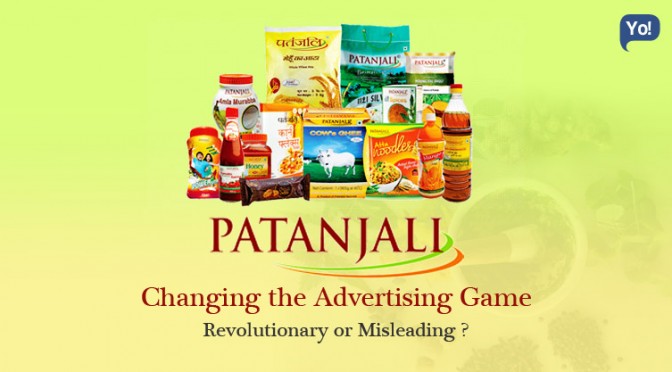
Patanjali

Patanjali changing the Advertising game! Brings out the swadeshi card.

About 10 years ago, during general chit chat with a group of farmers from a village near Haridwar, Baba learnt that they wanted to sell their amla (gooseberry) trees because they made no money.

Baba Ramdev offered to buy all of them and started producing and bottling amla juice under the brand name of Patanjali. He used to take it to his yoga camps, and to all his millions of followers.

One thing led to another, and in no time, they were now distributing other products such as: nutrition supplements, toothpaste, hair oil, shampoo, soap, cookies, and even noodles.

The company is no time had grown into a ₹2,000 crore (in annualised revenue) entity which now held a 150-acre food park in Padartha (Haridwar). Latest data indicates that the company grew by 150% from 2015 to 2016, with an annual turnover touching around $ 745 Mn (₹5000 crores).

They are aiming to close the current fiscal with a turnover of $ 1.5 Bn (₹10,000 crores), which would effectively take them past two decades-old companies – Nestle and Procter & Gamble, leaving Patanjali second only to Unilever in India; and all that in just about 10 years.

This is the story of Patanjali, in short!

Having said that – this unprecedented growth of the company begs us to question the reasons behind the company’s success?

Advertising & Positioning!

What are the Advertising and Positioning Strategies of Patanjali that led to their success?

Well, to begin with – Patanjali owes its fortunes to Baba Ramdev! Designation-wise, he is neither a chairman, nor a shareholder or a director; a nobody in Patanjali. But in actuality, he is everything!

He has not left any opportunity to promote the products of Patanjali at his camps, on television channels, and everywhere else he could, using the plank of health benefits, often with a dash of Swadeshi crusade.

Moving on!

What makes Patanjali a credible threat is that it is not trying to defect other FMCG companies at their game; but instead, it has changed the game for them!

Unlike their competitors — Colgate, Procter and Gamble, Unilever, etc., who sell several brands under different brand names; thus, alienating the consumer from the parent brand — Patanjali sells all its products one Brand name, giving relatability to the Patanjali. They are using a single brand strategy!

Aside that – Patanjali has grown because of three distinct reasons: –

  • The identity of Patanjali products resonates with the cultural identity of a large proportion of the Indian population
  • Patanjali promised and offers high-quality products at a reasonable price
  • The aggressive distribution pattern undertaken by the company for its products

To put the aforementioned into context: since the Indian market still has an inclination towards culturally rooted products; the products that Patanjali manufactures are marketed as historically and culturally local products.

They have positioned themselves in the minds of the Indian consumer as a brand that is extremely “Indian”. In addition, they also advertise their products to be all-natural and do not have any synthetic ingredients.

And the best example for this is their latest TV advertisement of Patanjali toothpaste, which talks more about why the competitors are inferior and how they are misleading consumers. They are directly and openly declaring that these competitors are misleading consumers and providing them unhealthy and low quality high-on-chemical products.

Their new advertising campaign compares its multinational rivals to the East India Company during the British Rule in India.

The print ad read that – “though we got political freedom 70 years back, economic freedom is still a dream. The way East India Company enslaved and looted us, multinational companies are still doing the same by selling soap, shampoo, toothpaste, cream, powder and similar daily items at exorbitant price.”

In the commercial – Baba Ramdev has depicted the Holy Cross of Christian faith, while referring to the East India Company, and called upon Indians to boycott all foreign products.

Patanjali had been broadcasting these messages through all leading radio stations, newspapers and television networks, and was even particular about the placement of its TV spots, which run for long hours during prime time and are only telecasted during shows which are not foreign, vulgar and / or violent.

The campaign was telecasted 21,923 times during the first week of August, making it the biggest television advertiser, according to data on the Broadcast Audience Research Council (BARC) India website.

He basically, pitched MNCs as `thieves’ and himself as Swadeshi. These ad campaigns are injecting a sense of nationalism in the consumers!

This is where the ‘underdog’ card is being played so well. They are successfully developing a strong sense of association between consumers and this “National underdog” that is fighting against the ‘foreign’ brands owned by their ‘former oppressors’. Their association is getting so strong that consumers are cheering for Patanjali just as they cheer on the Indian cricket team.

And now add to all this, the perception that Patanjali stands for ‘Purity and Health’! The mixture brings out a viral brand.

Is it wrong? Or is it right?

That’s just a matter of perception!

But is Patanjali trying to be like MNCs or propagating Ayurveda?

Well to begin with, goes without saying that – there no longer a question of whether Patanjali will challenge large listed companies; they already are!

What still remains unanswered is that which ones will be affected now, and how seriously?

Many who have tried Patanjali soaps, toothpastes, shampoos, ghee, honey and a host of daily-use products, have not gone back to regular MNC brands. Their millions of consumers have blind trust on Patanjali’s product quality and pricing.

But if you try matching their statements with actions, things get rather confusing! They say that their goal is to propagate Ayurveda, but in reality, Patanjali is having a fierce competition with the MNC’s.

Their success is largely due to Baba Ramdev’s successful projection of Patanjali as an exact opposite to ‘foreign’ brands, and as a ‘Nationalist underdog’. They have been aggressively marketing to project Patanjali as superior and ‘foreign’ competitors as inferior.

Take for example: their recent fruit juice advertisement, it says – “your shops as well as your hearts” and “together we can turn the SWADESHI dream of Mahatma Gandhi, Bhagat Singh and Ram Prasad Bismil into a reality.”

If Patanjali’s aims are to target the pure and healthy food segment that incorporates the benefits of Ayurvedic herbs and medicines; then great! But turns out – they aren’t doing anything different, and selling the same thing, with packaging similar to that of MNC’s like Dabur.

And, what in the world is so ‘Ayurvedic’ about noodles, cornflakes and biscuits, which are manufactured just like every other MNC. All that is different between the two is Patanjali has ‘whole wheat’ to offer as the health proposition!

Then there are those adverts about products such as: Patanjali Kesh Kanti Natural Hair Cleanser and Oil, Patanjali Kachi Ghani Mustard Oil, Patanjali Herbal Washing Powder, Cake and Dishwash Bar, etc., that have complaints on them as well.

Having said that – we are not here to bash Patanjali!

Undoubtedly, Patanjali has successfully managed to disrupt the Indian market and is giving several MNC’s a run for their money. With their arsenal of 500+ products, Patanjali is said to be a direct threat to a wide range of giants from P&G, Colgate and Unilever to Nestlé Rickett Benkiser, Dabur, Emami, Marico, Godrej and many others.

As a convert to Patanjali products (like the many millions), if swadeshi is your propagation then, rather than imitating MNC biscuit brands like Marie, and Monaco, we would rather see Patanjali making products which are nutritious and hygienically produced Indian foods that discard all the high sugar and sodium content in it, along with all the chemicals that are used that give the slick look and tempting feel to mass-produced food. That would really be about “taking Indians back to their roots!

And on the other end, it would be highly appreciated, if they use some non-MNC advertising strategies to promote their products. Let your product speak for you; rather than the other way around!

What are the contributions made by the MNC’s towards the Indian Economy?

India has come a long way since its independence in 1947! All set to become the next super power in the next decade, India has seen to be bringing about changes accordingly.

Prior to 1991 (in the pre-reform period), Multinational companies did not play much role towards the Indian economy, which was mainly dominated by public enterprises. But post the adoption of industrial policy of liberalisation in 1991, MNC’s have played a pivotal role and privatisation rote of private foreign capital has been recognized as important for rapid growth of the Indian economy.

Let’s point out some of the major contributions of MNC’s towards the Indian economy!

Foreign Direct Investment

MNCs can bridge the gap between the requirements of foreign capital for increasing foreign investment in India.

Post the liberalization of the economy, MNCs were allowed to make investment in India subject to different ceilings fixed for different industries or projects.

During the pre-reform period, FDI by MNCs was highly discouraged, and we relied heavily on external commercial borrowing (ECB) which was of debt-creating capital inflows. This led to the drastic increase of the external debt of the nation and debt service payments reached the alarming figure of 35% of our current account receipts.

This created doubts on our ability to fulfil our debt obligations, which led to the balance of payments crisis in 1991. By using the FDI medium, we avoid the liability of debt-servicing payments.

Thus, MNCs can play an important role in reducing stress!

Talent

There is an acute shortage of jobs in India. And MNCs greatly help in the creation of thousands of jobs.

For example, due to Suzuki firm’s investment in Maruti Udyog, jobs are not only created in the immediate company, but the employment opportunity also extends to the dealer firms who sell Maruti cars as well. Additionally, many intermediate goods are supplied by Indian suppliers to Maruti Udyog and for this many workers are employed by them to manufacture various parts and components used in Maruti cars.

On the other end – India is home to about 200 wholly-owned Centre’s of multinationals that offer IT and ITeS services. Ten new centres have already been set up over the last two years and soon, close to 50% of the Fortune 500 companies will have their facilities in India as well, leading to more jobs.

Technology Transfer

Another important role of multinational corporations is that they have helped us in gaining the transfer of high sophisticated technology to India.

Whenever, multinational corporations setup their subsidiary production units or joint-venture units India or any other nation, not only do they import new equipment and machinery, but they also transfer the embodying new technology, along with skills and technical know-how to use the new equipment and machinery, as well.

As a result, the Indian workers and engineers come to know of new superior technology and the way to use it.

In India, the corporate sector spends only few resources on Research and Development (R&D), and it is the giant MNCs that spend a bomb on the development of new technologies. These can greatly benefit us in many ways!

Therefore, MNCs can play an important role in the technological up-gradation of the Indian economy.

Exports

With extensive global connections; multinationals can play a significant role in promoting exports of a country in which they invest. For example, China exports have expanded rapidly in recent years due to the large investment made by multinationals in various fields of Chinese industry.

Talking about India –– multinationals had made large investment in plantations whose products they exported. In recent years, Japanese automobile company Suzuki has made a large investment in Maruti Udyog with a joint collaboration with Government of India, and now, Maruti cars are not only being sold in the Indian domestic market but are exported to the foreign countries from India itself, in a large number.

This helps the country earn, a great amount of foreign exchange!

Overall – this only shows just how important MNCs are to a nation, and whether you like it or not, we need them. So random public bashing, for the motive of self-success is not favourable and will do no good!

What do you think?

Premji Invest

Premji Invest: the secret family investment of Azim Premji that manages a $2 Billion portfolio

What is PremjiInvest?

Founded in 2006, PremjiInvest is the family investment office of Wipro’s founder and one of India’s billionaire – Azim Premji. Azim Premji routes all his non-Wipro investments through PI.

It is a private equity fund that manages more than $2 Bn of Azim Premji’s personal wealth, by investing in capital markets and also by picking up minority stakes in start-ups across India, the US and China. It is known for making investments in the range of $20 Mn to $60 Mn.

The portfolio includes a unique mix of 40 public and private companies that range from sectors such as technology, eCommerce, financial services, retail, fashion, healthcare and consumer goods.

PremjiInvest (PI) operates from a two-storeyed building in the Sarjapur campus that also houses Wipro Ltd’s corporate offices.

Prakash Parthasarathy (Chief Investment Officer – CIO)

The firm is managed by Mr. Prakash Parthasarathy!

A Bachelor’s Degree holder in Computer Science from Birla Institute of Technology & Science, and Post Graduate Diploma holder in Business Administration from the IIM (Bangalore); Prakash brings to the table a strong iBanking experience.

He has also worked as an investment professional in the global securities industry, an investment banker and an operating manager running a business vertical, as well. Additionally, Prakash also has an international experience of working in San Francisco (a Principal at Banc of America Securities) and Hong Kong (Investment Banker at BAS Investment Banking Group).

Currently, he serves as the CIO at PremjiInvest, as a Non-Executive Nominee Director at HealthCare Global Enterprises Limited and Carnation Auto India, and has also been a Shareholder Director of National Stock Exchange of India since May 2012, as well.

What are the kinds of investments made by PremjiInvest?

With over $2.5 billion under its management, PremjiInvest has invested in more than 40 companies. Their investments range from fixed income instruments to real estate and listed equities.

They have successfully maintained a fine balance between offline and online ventures. On one end there are companies such as Snapdeal and Myntra, while on the other end there are companies Kishore Biyani’s Future Lifestyle Fashions, Tata Group’s Trent, Koutons, Shoppers Stop, Fabindia, and so on…

Their investment portfolio is analysed in the following manner:

  • Till date, more than 60% of their total cash has been invested in the capital markets to buy stocks of firms
  • The rest 30% is utilized to pick up minority investments in start-ups

Talking about their equity investments, some of them include: –

2006

  • 37% stake in Himatsingka Seide
  • 63% stake in Rallis India
  • 55% stake in Pfizer
  • 2% stake in JM Financials
  • Shares of Satyam Computers and SBI

2008

  • Purchase of 10% stake in low-cost retail chain Subhiksha for around ₹230 crore
  • Investment of ₹ 80 crores in Carnation Auto (a company started by Jagdish Khattar – former MD of Maruti Suzuki India)
  • Investment of $20 Mn in HealthCare Global, an oncology care hospital chain
  • Purchased 2% stake in Koutons Retail for roughly ₹20 crores ($5 Mn)
  • Invested about $10 Mn (₹40 crores) in Cicada Resorts (Bangalore-based eco-tourism operator)

2011

  • In his first investment overseas, Azim PremjiInvested around $15 Mn of his personal wealth in Vinod Khosla’s clean-tech fund in the US. Khosla’s green fund investments range from Range Fuels (cellulosic ethanol firm) and LS9 (designs microbes to produce bio-fuels).

2012 

  • Acquired 4.91% stake in Trent for ₹122 crores
  • Acquired 7% stake in Fabindia for ₹125 crores
  • Invested $35 Mn in JSM Corporation which runs Hard Rock Cafe and California Pizza Kitchen restaurants
  • Purchased stakes in Hyderabad-based Heritage Foods

2013

  • Acquired ‘non-voting preference shares’ in Tata Capital for ₹75 crores

2014

  • Invested $50 Mn in Myntra
  • Purchased Future 10% stake in Kishore Biyani’s Fashion firm – Lifestyle Fashions (FLF) for around ₹125 crores
  • Invested ₹350 crores in Payments processor FSS (Financial Software & Systems)
  • Purchased 1% shares of HDFC Standard Life insurance for $31 Mn
  • Invested $106 Mn in DataStax – which delivers Apache Cassandra, the leading distributed database technology, along with 8 others investors

2015

  • Invested $15 Mn in Amagi Media Labs (Bangalore-based tech and media start-up that facilitates geographic targeting of TV advertisements)
  • PremjiInvest also has now made several investments in the US. These include: –
    • Anaplan – enterprise planning cloud firm ($100 Mn)
    • Cyanogen ($80 Mn funding)
    • Zuora – subscription billing ($115 Mn)
    • Service-Max – field service solution company ($82 Mn)
  • Invested around $40 Mn in PolicyBazaar
  • Invested an undisclosed amount in Hygienic Research Institute that owns brands like Super Vasmol and Streax
  • Invested $100 Mn in Snapdeal along with 4 other investors

2016

  • Invested a total of ₹653 crores along with a bunch of 16 anchor investors in Equitas Holdings – the Chennai-based holding firm for the fifth-largest micro-lender.
  • More recently, PremjiInvest has also invested an undisclosed amount of funding in the eyewear marketplace – Lenskart. This infusion is expected to be somewhere close to ₹200 crores at a whooping valuation of around ₹2000 crores.

Other than these, their investments also include: – Marico Ltd (1.41%), Aventis Pharma (1.03 percent), JM Financial Ltd (2.92%), Dish TV India Ltd (1.4%), ABG Shipyard Ltd (1.01%), Shoppers Stop Ltd (1.51%), Crompton Greaves (1.09%), Novartis (2.84%), Today’s Writing Products Ltd (3.9%) and many more like these…

The family office is now looking even hungrier to invest in the US, especially after hiring Sandesh Patnam. The idea is to build a more diverse investment portfolio, beyond just India.

Sandesh, who earlier managed more than $6 Bn (about ₹36,000 crores) in investments while working at Seligman Technology Group, brings in local connections to the firm.

What kind of investment mechanism do they follow?

Azim Premji has built this parallel empire alongside leading his IT Company – Wipro, and prefers to stay mum about their operations and have constantly avoided a public profile.

But then again, that’s what one would expect from the firm of a person who personally is famous for maintaining a low profile. They believe in letting their work speak for itself! And with names like Premji and Wipro backing them, they don’t really need to make it to the headlines to show their presence.

PI’s investment focus is broader. They invest in listed firms and debt, but at the same time they, being a VC and PE firm, PI also makes early stage and late-stage investments as well.

Having said that – even though their investment portfolio has remained under the wraps, it is said to be a unique mix of companies that range from sectors such as technology, eCommerce, financial services, retail, fashion, healthcare, consumer goods, etc…

This diversification of PremjiInvest’s portfolio may just be the billionaire’s forte, given that he transformed Wipro from an edible oil manufacturer to India’s third largest IT services company in just three decades; and not to forget, the name that they built for themselves in the consumer goods and electronics segments.

Although, they are hesitant to talk about most of their investments but the logic they follow while choosing a company and the role PI seeks to play in them is as follows:  —

  • To begin with – PI is an “Evergreen” fund that operates without a pre-set time period or limits, and does not need to raise funds, as well. Its source of funds is Azim Premji.
  • Having said that, PI has autonomy to pick its investments, and Premji maintains a very minimal say in the decision making! PI has a team of 12 people who help them to find investment opportunities and monitor their investments.
  • PI makes small and large investments, but mainly in sectors where Wipro is not present, but keeping in mind the market opportunity and the management team of the company.
  • Two factors close to their heart while deciding on funding a company include: “significant returns” and “being in a position to build a great organization”.
  • Unlike other venture funds, PI has the leverage of being under no constraint to make either any given number of deals or invest an allocated capital. Their investments happen only when they see an actual opportunity! This also gives PI the luxury of time.
  • The stakes may vary from less than 1% to between 25% and 30% in a portfolio company. Although, special preference is given to a “significant minority stake”! This helps the company to maintain a sufficient amount of capital in hand for any lucrative future deals.
  • Lastly, their style of functioning and the secrecy also extends to their exits, too. They don’t follow any standard exit routes, and follow an investment window of up to seven years.

Who is Azim Premji?

With a net worth of $16.5 Bn –– Azim Hashim Premji is an Indian business tycoon, investor, and philanthropist. and is informally also known as the Czar of the Indian IT Industry.

He is the founder & chairman of Wipro Limited, and has single handedly guided Wipro to become one of the global leaders in the Software Industry. As of date, Azim Premji owns 73% of Wipro!

He has not only been voted among the 20 most powerful men in the world by Asiaweek, and has been listed among the 100 most influential people by TIME Magazine, but also accounts for several accolades as well.

Aside Wipro, Premji also owns a PE fund called PremjiInvest, which manages his $2 billion worth of personal portfolio.

The story

Azim Premji was born on the 24th July 1945 in Bombay, to a family that originated from Kutch in Gujarat. His father was a noted businessman and was known as Rice King of Burma.

His father had rejected the invitation of Jinnah to live in Pakistan after partition, and had chosen to remain in India.

Azim Premji holds a Bachelor of Science in Electrical Engineering degree from the Stanford University in the USA. He is married to Yasmeen and has two kids: Rishad and Tariq.

In 1945, his father had incorporated Western Indian Vegetable Products Limited, which was based at a small town in the Jalgaon district of Maharashtra. His primary business was to manufacture cooking oil under the brand name Sunflower Vanaspati, and a laundry soap called 787, a by-product of oil manufacture.

After an untimely demise of his father in 1966, the then 21-year-old Azim Premji returned home from Stanford University, and took charge of the company.

Over the period of time, Azim Premji successfully diversified the company to several other products including bakery fats, ethnic ingredient based toiletries, hair care soaps, baby toiletries, lighting products, and hydraulic cylinders, as well.

By the 80s, Azim saw the growing and emerging IT sector and decided to take advantage of the vacuum that was left behind by the ejection of IBM from India. And with that, they formally entered the high-technology sector!

The company name was changed to Wipro. They began by manufacturing minicomputers under technological collaboration with an American company ‘Sentinel Computer Corporation’, and gradually shifted their focus from soaps to software.

Over the period of time, Azim has successfully managed to turn around, what was earlier a $2 Mn hydrogenated cooking fat company into a company with a market cap of ₹1.37 lakh crores and a diversified portfolio of IT, BPO and R&D Services, that holds presence in 58 countries.

reliance-jio

Reliance Jio 4G: an attempt to fulfil the Digital India dream of Prime Minister Narendra Modi!

The news….!

Six years after re-entering the telecom space RIL (Reliance Industries Limited) chairman – Mukesh Ambani has taken the telecom industry by storm by the big bang launch of Reliance Jio (which would have the cheapest 4G rates and unlimited voice calls) at the company’s 42nd AGM.

He dedicated the much-anticipated Reliance Jio 4G service to the nation as an attempt to fulfil the Digital India dream of Prime Minister Narendra Modi.

Jio will be introducing 10 different tariff plans starting from ₹149 a month and will go upto ₹4999 per month, with speeds up to 135 Mbps to its premium customers. Jio will be offering a base rate which is 1/10th of market rates: 5 paise per MB or ₹50 per GB

These Jio tariffs are built on three principles: customer should play for only one service — voice or data. Data must be affordable. More you use, the cheaper it gets!

At the Annual General Meeting, Mr Ambani revealed Jio’s tariff plans and other details. Some of the key take points include: –

  • Free voice calls
  • Zero roaming charges
  • Students to get 25% more data
  • To be formally launched on 5th September, 2016
  • Free services till 31st December 2016
  • e-KYC based activation of SIM (will give you a working connection with Aadhar card in just 15 minutes.)
  • 4G enabled LYF smartphones starting at ₹2,999
  • Future-ready and can be upgraded to support 5G or 6G
  • Jio claims to have the lowest data rates in the world
  • Jio-fi personal Wi-Fi router solution for 2G/3G

They have also created several lucrative enterprise packages that will primarily cater to businesses and start-ups, providing them with fast-speed internet connectivity.

Fourth generation [4G] technology allow consumers to leverage more bandwidth and better output. And consumers with 4G devices can access high-speed data, high-definition voice and do real-time video conferencing.

Mr. Ambani taking a dig at other networks during the launch, said that – “the Reliance Jio network is running entirely on 4G – not “mostly 2G, sometimes 3G, and once-in-a-while 4G.”

Reliance Jio is also a 100% VoLTE network – the largest in the world, and to access the Jio network, you need a 4G compatible phone with VoLTE support! VoLTE stands for Voice over Long Term Evolution, using which one can make voice calls over the data network, which means an end user will dial a number just like they always, but at the backend, even voice calls use data. They will also be offering Lyf devices with prices starting at Rs 2999, to support these requirements as well.

Reliance Jio Infocomm has already informed the Department of Telecommunications (DoT), the Telecom Regulatory Authority of India (TRAI) and security agencies that it would start commercial services on Monday (05.09.2016)

Although, Reliance Jio plans have been revealed, everything (including: data, voice, and video along with the full bouquet of applications and content) will be completely free for users until 31st December 2016. Mr. Ambani called this Jio’s ‘Welcome Offer’, to enable everyone to try out Jio without spending any money.

This ambitious project of Mr. Ambani holds the potential to make Reliance the most comprehensive provider of telecom and Internet services across India and give it exclusive access country’s untapped ‘big data’ i.e. how millions eat, shop and have fun. Unimaginable position!

Within just 45 minutes Mukesh Ambani’s RIL costed telecom companies like Bharti Airtel and Idea Cellular a loss of ₹13,165 crores of market capitalisation. Bharti’s shares dropped down 6.37% that wiped off a market cap of ₹8454.50 crores, while Idea’s shares dropped 10.48% wiping off a market cap of ₹3,528 crores.

What is Reliance Jio?

Reliance Jio, the telecom leg of Reliance Industries Limited is an upcoming provider of mobile telephony, broadband services, and digital services in India. It aims to provide 4G services on a pan-India level using LTE (long-term evolution) technology.

Some of the key people in the company include: Sanjay Mashruwalla (Managing Director), Jyotindra Thacker (Head of IT) and Akash Ambani (Chief of Strategy).

It will offer data and voice services along with add-on services like instant messaging, live TV, movies on demand, news, streaming music, and a digital payments platform, along with LYF Smartphones (cheap [starting at ₹2999] 4G handsets enabled with voice over LTE [VoLTE] that supply with the help of domestic handset maker Intex). These include: 300 TV channels, 6,000 movies, 2.8 million songs in 10 languages via its app.

They will also be offering Jio-Apps bouquet, which is worth ₹15,000 for an annual subscription – will be complimentary for all active Jio customers. These include: MyJio, JioChat, JioPlay, JioBeats, JioMoney, JioDrive, JioOnDemand, JioSecurity, JioJoin, JioMags, JioXpressNews, Jionet WiFi, etc…

Talking about their much-hyped about Tariff Plans, Jio offers 7 packs: – Rs 149 Pack (300MB 4G data), Rs 499 Pack (4GB 4G data and 8GB JioNet WiFi Hotspot access), Rs 999 Pack (10GB 4G data and 20 GB JioNet WiFi Hotspot access), Rs 1499 pack (20GB 4G data and 40 GB JioNet WiFi Hotspot access), Rs 2499 Pack (35GB 4G data and 70GB JioNet WiFi Hotspot access), Rs 3999 pack (60GB 4G data and 20GB JioNet WiFi Hotspot access) and Rs 4999 (75GB 4G data and 150GB JioNet WiFi Hotspot access), along with Unlimited 4G data during night, Free unlimited local/STD voice calls and local/STD SMS and Free Jio app subscription worth Rs 1,250 for all packs(expect Rs 149 pack).

What’s their story?

So their story dates back to the year 2002!

In 2002, when Dhirubhai Ambani died, there were several major ownership issues between his two sons – Mukesh and Anil Ambani, along with public dispute for the control of Reliance empire.

The business was finally split in two parts in 2005, after the intervention of their mother, who gave telecom, power, entertainment and financial services businesses to Anil, while Mukesh Ambani received Reliance Industries and IPCL.

Now the problem was that, Reliance Communications was started and Indian mobile industry was revolutionized (literally) by Mukesh Ambani. He made mobile phones affordable to Indians. It was his baby! Anil didn’t even have a seat on the Board of Directors.

And that wasn’t it. To prevent Mukesh Ambani from starting another telecom company and to compete with Reliance Communications, a non-compete clause was also inserted in the agreement as well.

In 2010 – the non-compete agreement was scrapped/expired, and in no time Mukesh Ambani bought 96% stakes in Infotel Broadband (IBSL) which had won 4G spectrum in all sectors in India, for ₹4800 crores.

IBSL was the only firm to win broadband spectrum in all 22 zones in India in the 4G auction. Later, they renamed it to Jio, and started building Fiber optic network around the country!

The company has gone on to build a network of more than 250,000 kms of Fiber optic cables in the country, over which it will be partnering with local cable operators to get broader connectivity for its broadband services. They have spent about ₹1.5 lakh crores on the venture, so far, and claim to offer high-speed 4G data connections that are 10 times faster than those of current service providers at one-tenth the cost.

In 2013, Reliance Jio became part of a global consortium that includes firms like Telekom Malaysia (Malaysia), Vodafone Group (U.K.), Omantel (Oman), Etisalat (UAE) and Dialog Axiata (Sri Lanka) for establishment of the Bay of Bengal Gateway submarine cable system connecting India to the rest of the world.

How will the entry of Jio affect the overall market?

To begin with – many believe that the entry of Reliance Jio may hurt the growth prospects of present telecom operators. But contrary to popular belief, the entry of Jio in the telecom market is going to be a win-win for all (Reliance, competitors and consumers).

Let me explain!

There are three sets of Indians consumers in this space: – 10% – those who use the Internet extensively and are well-versed with its uses; 30% – those who use internet in a limited way because of high prices and limited connectivity; and Rest – those who are yet to explore the Internet!

The company has announced free voice calls, proposed tariffs and other offers that are quite aggressive and cheap, using which, an average monthly mobile bill could come down by a good 50-60%.

So the new entity will only help to expand the size of the market drastically, and this, in turn, will benefit the other competitors in the space. They will gain from increased demand for data, which will boost revenues, margins and returns.

Additionally, Internet connectivity issue, which is most significant in tier II and tier III cities (the Targeted Groups) of many, will also get solved, which in turn, will help to create more new users and existing users.

Additionally, lower data prices and improved data speeds will enable higher consumption and better online experience for consumers as well. This will also lead to more people upgrading from feature phones to smartphones.

And for the eCommerce firms that have been desperately struggling to attract new shoppers, may get the much-desired market expansion push that companies and investors have been seeking since the start of the year, with the launch of Reliance Jio.

So if you look at the overall scenario – at this point, roughly 20% of mobile phone users in India consume data, that too an average of 600 MB. In about a decade, this number would easily go on to become 80%, with an average data usage of 3 GB or 4 GB. That’s because Reliance Jio’s launch has made data and data phones very affordable, which will massively expand the market, eventually!

How are the other players preparing for it?

The entry of Reliance Jio with their attractive offers, has just unleashed a pricing war in the sector.

And guess who’s going to be the one to benefit the most?

The consumer! To counter Reliance’s offers, telecom providers are now doing everything to ensure their customers don’t switch

Airtel recently revised their data pack plans for their prepaid and corporate customers, and also slashed its internet prepaid tariffs to 80% (₹51/GB, roughly) and over 150% (₹99.5/GB, roughly).

To put that into perspective, one would spend ₹1498 for 1GB 3G/4G data and post exhaustion, they would enjoy 1GB 3G/4G for just ₹51.

On the other hand, Vodafone is giving 1GB data (3G/4G) for Rs 297 with validity of 28 days, and Idea Network, will be shelling out 1GB (3G) at ₹249 for a validity of 28 days.

Catching up with competition, the State­owned BSNL will be offering 1GB (3G data) at ₹198.

While, with the entry of Reliance Jio is going to make competition even more fierce and ruthless, but like we said, at the end – it’s going to be a win-win!