
Chaayos: an organized chain of Chai Cafes that serves 25 different types of tea, customised in 12,000 ways

Let’s face it – India is a Chai (Tea) crazy nation, and tea it is a part of our every social setting! Be it, after waking up from the bed in the morning or during breakfast, during office hours, while meeting friends, while smoking (which of course, is very bad for health), tea happens to be the sun of our universe.

But even after India being a Chai drinking nation of over a billion people; getting a good cup of tea outside the house is difficult. All we have are the unhygienic tapri (roadside) Chai, the teabags or the office vending machine Chai; all of which, of course are not up to the mark.

But with the rise of coffee culture, Tea has seen to be taking a backseat since the past few years.

And statistically speaking, there are over 2,000+ coffee outlets whereas there are not even 100 dedicated organized cafes for Chai. When Café Coffee Day had opened their first café in 1996, no one in their wildest dreams had thought that two decades later they would be running more than 1500 cafes, and would be making ₹1,326 crores.

Industry experts point out that the tea business offers high margins that go up to nearly 50%, and also costs less as it requires less milk and sugar, as compared to coffee.

Even after the having such huge potential, this $10 Billion space in India that has a domestic consumption of more than 900 million kgs of tea, still remains majorly unorganised and untapped.

Enter – Chaayos!

What is Chaayos?

Promoted by Sunshine Tea House, Chaayos is a Chai company that is revolutionizing the way Indians drink tea, which is a chain of 25 cafes that serves 25 different types of tea, customized in 12,000 ways.

It was founded in 2012 with a USP of customization – Chaayos “Experiments With Chai”!

They want to give people the opportunity to have their “meri wali chai” (my type of tea) and tweak it too! Their varieties range from desi chai, classic chai (green tea, earl grey, dargeeling first flush, camomile, jasmine tea, etc), speciality teas (gods chai, cinnamon green, pahadi chai, lemon green, mint and lemon green, Moroccan mint, etc), Homemade ice teas, to real fruit shakes, along with some munchies like sandwiches, etc….

“Don’t be surprised. No one offers tea in a more personalized manner – be it ingredients, less or more milk, various flavours or mixing flavours, you get everything! They allow their customers to customize their version of tea with 12 add-ons such as tulsi, adrak, masala, saunf and kali mirch, and vary the milk, chai patti and sugar levels, all according to their taste.

They take pride in offering freshly made Chai that is made using the best quality ingredients from across the country, only after you place the order.

What is their Business and Operating Model?

Chaayos follows an omnipresent business model of functioning Offline and Online. At one end, they provide a readymade Chai on demand service through their disposable kettles, and have also created their own blends of premium Chai’s as well. These tea blends are also sold through their cafes too.

Besides cafes, Chaayos also runs Kiosks that offer Chai in a to-go model, like a take away joint, at IT parks in Noida. They witness average transactions of about 300/day at these alone.

While on the other end, Chaayos also sells their products on several online marketplaces such as: Amazon, Snapdeal, BigBasket, etc. More than 1500 boxes are sold every month through the online feature itself. Additionally, people can also order food and tea using their Chaayos App, which gets delivered at their door step too. Chaayos has also partnered with IRCTC (to deliver teas to customers in train) and is already delivering Chai through Tiny Owl, Swiggy, Ola Café, Grofers, and the likes of them as well.

Some other of their tie-ups included many big and world renowned brands like the Shah Rukh Khan-starrer Dilwale, along with many premium multi-national brands as well.

Interestingly, Chaayos also offers a subscription model where their Chai is delivered to customers on a daily basis at a pre-defined time.

This (delivery segment and subscription model) helps them to reach out to a large set of customers, which otherwise would have been difficult to reach, in a traditional retail model.

To manage all that, they make use of technology, which is completely developed in-house; due to which, they are able to link their entire back-end supply chain with their point of sale and loyalty program. This helps them to offer better service and also gives them a much higher degree of control to track and optimise various service parameters, as well.

And lastly, to create the desired pull, Chaayos also offers a blended ambience, matching to the needs of the masses. The interiors are a mix of mocha and dark Mexican green and the sofas are made to order–with jute.

Since, Chaayos represents the “Chai way of life”, the interior design of their outlets relate to the very core concept of tea – lamps made of cutting Chai glasses, Kettles, Chai samples in taste tubes, and a lot more….

Basically, the whole idea is to create a warm and friendly neighbourhood space, where people can come with friends and family and also on work. Just like Central Perk in F.R.I.E.N.D.S!

Who is their target audience?

Chaayos targets the upcoming middle class that has decent money but is also equally conscious of the value and quality they get.

Broadly speaking, the Chai drinkers who visit their outlets are between the age bracket of 18 and 45 and are mostly working professionals. But in general, they attract families, kitty party groups, college students and the elderly.

Since, Chai is in the DNA of Indians, their brand is automatically positioned as more reasonable than most coffee chains, and their offerings too, start from a minimum of ₹49 for a cup.

How has their growth been so far?

Chaayos was started by Nitin to solve a pain point that he personally faced.

Chai (Tea) had always been a crucial part of his life. But he could never find a place in India that could offer ‘meri wali chai’ (my type of tea).

Yes, there were many roadside tea-stalls but there were no organized chains in this space. Somewhere between westernisation and coffee chains, Chai had taken a backseat and was no longer the beverage that people bonded over. Thus was born the idea of Chaayos! An outlet that would serve home-like tea; with twists!

Having thought that, he decided to go ahead and start Chaayos. The idea was to create a Starbucks for India, for tea!

Chaayos was born in November 2012, out of a basic principle – a modern version of Chai adda, that served freshly made Chai.

Chaayos was a bootstrapped concept that started with an initial infusion from Nitin of ₹25 lakhs of his savings (of which he used ₹12 Lakhs initially), with a simple premise that – he would give it 6 months, after which he would either put in another ₹12 lakh or close it down.

But to his surprise, his first outlet broke even operationally within just 3-4 months of opening itself.

Post that, Raghav Verma joined Chaayos with an equity partnership, because his online education company didn’t work out. Thus, filling the missing gap!

Raghav turned out to be lucky for the Chaayos! Soon after his entry, Chaayos received their first angel funding of ₹2.1 crores from Powai Lake Ventures, Zishaan Hayath (Co-founder of Toppr.com), etc., which was used to open more stores.

In a span of roughly two and a half years, Chaayos opened seven more outlets and had expanded to a staffing of 50. Their highest grossing outlet was now closing a turnover of ₹1 crores in annual revenues.

Since then, Chaayos has got into an aggressive expansion in all verticals. Today, they run 25 cafes in Delhi NCR and Mumbai, with gross margins as high as 65-70%, and annual turnover of ₹9-10 crores (2014-15).

The café also claims to clock 600 transactions per day with an average footfall of 700 customers per day, and have expanded to a team of 400 employees.

So far, the company has raised a total of $5 Million from past investors, along with Tiger Global Management as well. They are also in preparations to expand to all major metro cities like Bangalore, Pune, Hyderabad and Chennai, as well.

What strategies have they adopted?

The company uses some simple yet out-of-the-box operational and marketing strategies for their business.

Operational Strategies

This makes the business highly scalable, says Verma. Chaayos works on a hub-and-spoke model, wherein they manage several locations from one kitchen; thus, making the business highly scalable.

To maintain the quality, procurement for their outlets is done centrally and from the best sources. They source most of their ingredients from various fixed vendors across India, while for the food items, they have a central kitchen that supplies daily to the outlets, and finally, the dish is assembled together at the outlets itself.

On the employee end – Chaayos follows a unique model to standardize the processes!

Unlike other beverage chains since tea-making is still an art and is not mechanized, every employee at Chaayos has to attend an industrial training and certification programme that is followed by two weeks of in-store training as well.

Only after one month of this training and passing of the certification exam, the employee is then deployed at the outlets!

Marketing Strategies

The company has never been that heavy on the marketing end. They mainly believe in word of mouth. In fact, they put a lot of effort into our branding outside and inside the outlets, along with the experience that is offered, to cover for marketing.

Overall, on the online end, they make use of the social media and email marketing to keep in touch with the customers. Using the same medium they also keep them informed about the promotional activities and new additions.

On the offline front, they make use of “Below the Line” strategy, and offer dedicated loyalty programs to its customers. They also advertise on the Radio, to create brand awareness and customer acquisition as well.

Who leads the brand?

The company was founded by Nitin Saluja and Raghav Verma, and is currently led by Nitin.

Nitin is the CEO of Chaayos and also does all the Product R&D. In fact, most of the Chai menu has been designed by Nitin himself.

He is B. Tech, Mechanical Engineering pass out from IIT (Bombay) and was also a Summer Research Scholar, Experimental Economics at the University of Exeter, as well.

He started his career in 2005 as an Intern with Mercedes Benz India, and helped them set up a bio diesel refuelling station within their manufacturing facility. Post this 3 month stint, he then founded his first venture ThinkLABS Technosolutions in November 2005, an educational robotics company that enabled school and college students to learn the fundamentals of robotics via hands-on training.

In 2007, he joined Opera Solutions as a Senior Consultant to help several Fortune 500 companies to optimise their supply chain.

He went on to work there for less than 6 years, post which the entrepreneurial bug bit him again, and he started Chaayos in May 2012!

Chaayos, later found another cofounder – Raghav Verma in 2013!

Raghav manages the Marketing and Business Development end of the company. He is an IIT (Delhi) graduate in Chemical Engineering, and has also worked for companies like McKinsey & Company (Analytics Intern) and Opera Solutions (Business Analyst) for around less than 3 years.

Post that, he had also co-founded an online education company called Prepsquare, which was focused on assessment in the Test Prep space and utilized quality video content and advanced analytics to improve student performance.

How disruptive is the QSR sector in India in the near future?

The organized QSR (Quick Service Restaurant) format in India has emerged only in the last 19 years, and started with the arrival and success of McDonald’s in 1996.

Due to fast expanding middle class, urbanization, youth spending, nuclear families, rising disposable incomes, increased exposure to international cuisine and needs for elevated protein consumption, and better logistics, a large market is seen to be moving towards higher value-added products, which in turn has sparked investor interest in the F&B space; thus, paving the way for entrepreneurs to jump in and build next generation brands.

This, along with a successful example of McDonalds, has led to the entry of many national and international players in the QSR space.

According to an analysis by apex industry body ASSOCHAM (The Associated Chambers of Commerce and Industry of India), the QSR sector in India is currently growing at a CAGR (compounded annual growth rate) of 25% at ₹8500 crores, and is likely to reach ₹25,000 crore by 2020.

According to start-up analytics firm Tracxn: between 2014 – to date, there have been 23 investments worth a total of $167 million, in the offline F&B space, as well.

Investors like Tiger Global and Sequoia, who have been purely technology focused in their investment, have started to invest in the space as well. This only validates the potential of the sector even more!

 

Faircent.com: India’s largest and innovative peer-to-peer (P2P) lending marketplace for loans

What is Faircent.com?

Owned by Fairassets Technologies Private Limited and founded in 2013 – Faircent is an innovative peer-to-peer (P2P) lending marketplace for loans.

Peer to peer lending (or P2P lending) is one of the most innovative financial products of the recent times, where Borrowers and Lenders interact amongst themselves to decide a mutually agreeable rate for their transactions.

Since interests on the principle amount is one of the only source of revenues for the financial institutions like banks, they are forced to charge high interest rates to maintain their profitability, and have reached to a position where they now dictate all terms and conditions for both borrowers and lenders.

Faircent eliminates the high margins and unfair terms and conditions levied by banks, and leverages you to interact directly with fellow borrowers/lenders, negotiate terms and conditions, tenure of loans, etc, and strike a deal on your own. Without any intervention or imposition!

Such a model helps creditworthy borrowers lower their cost of loans and individual lenders to lend directly to their peers and community thereby earning higher returns.

Simply put – Faircent provides a virtual marketplace, and acts as a mediator for the borrowers and lenders.

Other than the uniqueness of the model – what attracts both lenders and borrowers to the platform is Faircent’s promise of transparency in rates, reduces costs and increases returns!

During the initial stages, the address and phone number of both the parties aren’t revealed, but they can contact each other through the Faircent messaging system and chat/email directly.

As a lender, you can start investing from ₹10,000/- onwards, and their returns usually range between 12% and 36%, and can even go higher or lower.

While as a borrower, for personal requirements, the loan amount can vary from ₹30,000 to ₹500,000, and for business purposes, the amount can go upto ₹2,500,000. Loan disbursal begins only after minimum 75% of the borrower’s fund requirements have been fulfilled.

To make sure every member on the platform is verified and registered with them, Faircent collects their personal, professional and financial details from each potential member and then authenticates the details.

But they do not, in any way, help or influence the members in making the decisions. They do not guarantee any fixed or minimum rate of returns, or for that matter, the principal amount to lenders to any lenders, as well. Their job is to facilitate the deal only.

However, Faircent does provide the lenders with the maximum interest rate at which each borrower could be funded. This is decided with the help of Faircent risk analysis, and lenders use these benchmarks while bidding to fund the borrowers.

Although, this is unsecured lending, Faircent also goes one step ahead, and also helps the lenders with smooth collection and recovery of loans.

They also help with stricter actions too. The most common legal action being, filing of a cheque dishonoured case against the borrower (who has submitted post-dated cheques for his/her monthly repayments).

How do they perform their DUE DILIGENCE?

To begin with – the company has partnered with global brands like –– Transunion, Yodlee, Lendo and Jocata, for different services.

Yodlee provides the bank scraping technology, with the help of which multiple bank accounts can be linked, along with loan accounts, credit accounts, etc. Transunion helps Faircent for completing the process of e-KYC and bureau scores. Lendo helps them with the social scoring of the borrowers, and Jocata helps with getting out the income tax details.

Interestingly, Faircent is the also the only company in Asia to whom Transunion and Yodlee are providing these services.

So once an interested individual seeks to register, Faircent performs a detailed verification process that includes following of all the KYC (Know your customer) norms, as laid down by various regulators. And all the personal and financial information that one would see on the site have been thoroughly verified by Faircent.

For Lenders, all they have to do is, complete a simple registration process, provide the required documents as mentioned on our site, and pay the registration fees; post which, they can start contacting potential borrowers on the site.

But for Borrowers the process is more stringent! They have to first complete the registration process, pay the registration fees and provide the required documents, post which the Faircent team gets in touch with them.

On the basis of the collected information, every borrower is then identity-verified, credit-checked and risk-assessed. Then an automated underwriting engine is also used by Faircent to determine the maximum recommended loan amount, rate of interest and the loan tenure at which the borrower can take a loan. Only after the completion of all these processes, a borrower can begin applying.

What is their Operating Model?

So this is how their process works…!

To use their service – visitors can either register as lenders or borrowers, but not both.

Accordingly, Faircent then performs a thorough verification of their personal, financial and professional information.

Post the success of their candidature, Lenders can make offers to fund borrower’s requirement at similar or lower interest rates than assigned (by Faircent), which the borrower can accept or refuse, or Borrowers can approach willing lenders with their loan proposals. The company as a whole, works on a reverse auction model, wherein a borrower equally has the power to accept or reject a lender’s offer.

Both borrowers and lenders can strike deals with multiple members. This way – lenders get to fund a portion of the total loan requirement of multiple borrowers (thus minimising their risks), and borrowers can seek to raise money from multiple lenders.

Once the offer is accepted by the borrower, the lender is contacted by Faircent to re-confirm the deal. Only, when both the parties give a go-ahead, the process of signing the formal loan agreement is initiated.

Post that, Faircent helps them to legalize the transaction by signing a formal contract. The borrower also has to provide the lender with PDC’s (Post dated cheques) as well. To know the exact contents of the agreement and its process, please visit here!

After all this, the loan is disbursed. The EMI period is usually between the 1st and 15th of every month.

In cases if a borrower fails to pay an EMI on time, then the borrower is charged with a penalty which is payable directly to the lender.

What is their Business Model?

Faircent does not intervene in any bilateral negotiations, and neither does it take any payments from the interest rates or EMI. Their revenue model is a little different!

From Lenders: They charge 1% for the lending amount. Simply put – they charge a listing fee of ₹1500 to invest up to ₹150,000, which is taken at the time of registration. Post that, ₹1000 is collected for every ₹100,000 that is invested.

From Borrowers: Again, they charge a one-time registration fee of ₹1500, which is also taken at the time of registration, Faircent also requires the borrower to link their bank accounts to help them to gain a read-only electronic access to borrower’s bank statement. If they refuse to link it, then an additional ₹500 is also charged. Also, in cases when the profile is not accepted then a part of the payment is refunded (~1,000).

What regulations are applicable to them?

As of now, there are no specific regulations for such a model, but it is a completely legitimate business, because the contracts are enforceable and people can lend money, people can return money, and there is a “Section 138” in “The Negotiable Instruments Act”, for that as well. Other than that, Faircent also comes under the Information Technology Act, and abides by it too.

Having said that, looking at the massive growth in the sector, RBI has proposed several regulations! Some of these include: –

  1. Registering P2P lending platforms as non-banking financial companies (NBFCs), as they follow a similar operating model
  2. P2P role must be limited to bringing the borrower and lender together, and that P2P lenders cannot take on the functions of a bank and seek and keep deposits
  3. Funds must move directly from the lender’s account to the borrower’s account
  4. The companies must have a minimum capital of ₹2 crores
  5. There may be limits on maximum contribution by a lender to a borrower/segment of activity
  6. Promoters, Directors and CEOs of P2P platforms will have to meet some criteria, and may need to have a background in finance
  7. They may be required to have a physical presence in India
  8. Platforms will need to submit regular reports to RBI
  9. Loan recovery practices will need to adhere to existing guidelines on recovery practices

Who leads the brand?

Faircent was cofounded by Rajat Gandhi and Vinay Mathews in 2013, but is currently lead by Rajat! Other than that, they have Nitin Gupta and TV Mohandas Pai on their Advisory Board as well.

Nitin has worked as the Country Manager and CEO for MasterCard (South Asia), President of GE Capital India’s Retail Financing operation, President of Rediff.com, etc. in the past, and has also been involved with early-stage companies as a mentor, angel investor and Board Director.

And Mohan is the Co-Founder of Aarin Capital Partners, through which he acts as the Chief Advisor and Chairman to the Manipal Education and Medical Group, and also serves on the Board of several Group Companies, as well.

Rajat comes with a 17+ years of work experience, and now serves as the CEO of Faircent.

This includes companies like Times Group (14 years – VP / Group Business Head / Marketing Head for brands including – Simplymarry.com, Ads2book.com, Yolist.com, Goodlife Centers, Timesjobs.com, Magicbricks.com, etc…), Zed Digital (2+ years – India Head and Senior Vice President) and Performics, (2 years – India Head and Senior VP).

While, Vinay Mathews comes brings with him a 15 years of working experience with companies like Times Jobs (A Times of India Group Company), Sify Technologies Limited, Rediff.com, etc…

How has Faircent’s growth been so far?

The company had started with an idea that hit Rajat in 2011, when he saw his friend using Facebook to arrange contributions from family and friends to buy a Royal Enfield motorcycle, because he did not want to pay high interests while seeking a loan.

The DNA of the company was to provide “credit on demand”. He wanted to do the same thing what his friend did, but on a larger scale, where even complete strangers could help one another.

The bootstrapped idea was launched in April 2013!

Within just 3 months of operations, Faircent managed to grab more than 100 Lenders and 200 borrowers, and also distributed over ₹20 lakhs of loans, as well.

In a short span, the company also managed to partner with global players like Transunion, Yodlee, Jocata, and Lendo, and also launched their Android app for their lenders to do real-time trading, as well.

By Sept 2015, they have had lent over ₹1.25 crores, had registered over 12,500 borrowers and 2,500 lenders who were committing over ₹2.6 crores, and they were at a run rate of more than ₹40 lakhs/ month.

This has further grown to 5,000 lenders, who are touching around 22,000-23,000 borrowers, as a whole the company has disbursed more than ₹2.5 crores since their existence, are at a run rate of about ₹1 crores/month, and they do not spend any money on marketing.

By the end of this year, the company is looking at an annual run rate of ₹100 crores, which they further wish to extend to ₹800 to ₹1000 crores in the next 1000 days.

So far, the company has had 4 rounds (2 disclosed and 2 undisclosed) rounds of fund, ahd have raised a total of $4.25 Million from investors including: Ashish Tiwari, Devesh Sachdev, JM Financial, M&S Partners and T V Mohandas Pai.

How peer-to-peer (P2P) lending platforms could fuel India’s growth?

Now, India is a capital starved country where the access and cost of capital are both deeply unresolved issues. As per various reports of RBI, formal bank credit in India is accessible to only 10% of the Indians.

Since most Indians don’t have access to formal credit, they end up paying very high interest rates. Plus, banks do not like to give personal loans below a certain quantum, and their loan rates vary between 13.5% and 22%, with a minimum application amount of ₹50,000. Additionally, many customers also struggle to secure bank loans because of employer credentials, salary requirements or credit history.

And the individuals who have the surplus money to help the ones in need, end up keeping their money in dead assets like saving banks.

Due to such circumstances, India has had a long tradition of relying on unorganized ways like community-based financing and lending in the forms of chit funds, thrift societies, community associations, co-operative societies and lastly family & friends.

To worsen the situation more, as per a report in 2012 by RBI, there were around ₹3.8 trillion ($61 billion) worth outstanding personal / educational / credit card loans, in India.

Now India needs about a trillion dollars in investment to ramp up its infrastructure in the next few years. And if the general population helps each other out in financing; this would potentially free up funds for nation building.

And P2P platforms like Faircent can come of great help here!

This is already a prospering industry in the developed markets such US, UK and China, and the US market alone is valued over $20 billion. Although, the market is still at its budding phase in India, but should reach about $4-5 billion in the next 5-6 years, and in fact, the Angel investors and VC’s have already begun betting on this business model too.

Didi Chuxing: the company that is making Uber bleed $1 Billion a year!

What is Didi Chuxing?

Founded in 2015 and formerly known as Didi Kuaidi – Didi Chuxing is an on-demand app for booking taxis, private rides, buses, and quite a bit more. Their business model or application is very similar to apps such as Ola in India and Uber.

It is like an all-round mobile transportation service platform that offers a broad range of mobile technology-based transportation options that also including taxi hailing, private car hailing, along with Hitch (social ride-sharing), Chauffeur, DiDi Bus, DiDi Test Drive, and DiDi Enterprise Solutions as well. Additionally, they also offer a white label bus service which is used by big names in China including Huawei and Lenovo to provide transportation for their employees.

It was formed from the merger of rival firms Didi Dache and Kuaidi Dache that were backed by two of the largest Chinese Internet companies, Tencent and Alibaba, respectively, and is now valued at approximately $28 Billion (as of June 2016).

Today, after the merger and with operations in over 400 cities across the country; Didi Chuxing virtually owns 99% of the Chinese taxi-hailing market and 87% of the privately-hailing cars market.

Overall, with nearly 300 Million customers and over 14 Million Chinese car-owners and drivers, 11 Million rides take place through Didi’s platform every day. In fact, their premium car hire service, itself operates in 61 cities with more than 40,000 drivers that service around 1.5 million calls every day.

How to call a taxi with Didi Chuxing?

Although, Didi Chuxing doesn’t have an English version of the app, but using the app isn’t really that difficult. All you need to do is: –

  1. Out of the several options in the upper navigation bar, for explaining purposes let’s go with “出租车” (taxis), where you’ll get options like – Ride Sharing, Taxis, Private Cars and Rent A Driver (in a sequence, from right to left).
  2. Next, enter your destination! You can use English here, but you’ll only be able to type one street name.
  3. Hit the orange button on the bottom of the page and your taxi will be called. The taxi driver will call you to ask for your location, and you’ll want to tell them the intersection or building name. The taxi will usually arrive with a red light (instead of a green one) on its roof. Pay attention to his license plate number, which will appear on the screen.
  4. If this is the first time using Didi, you’ll also be prompted to enter and verify your phone number.
  5. Select the button in the upper right corner
  6. Use the verification pin that you received in the text message.
  7. Type that in
  8. Hit the start button labelled “开始” on the bottom.
  9. Once your request has been accepted by a cab, they will show up on a map view with the driver’s distance and expected time of arrival.
  10. When you reach at your destination, you can select “支付” to pay your fare electronically, by using options such as WeChat Wallet. You can also pay by cash or card, but for that you need to click “完成” to end the ride and pay.

How did Didi Chuxing (Didi Kuaidi) rose to power?

The story dates back to 2012

It is hard to believe that Didi Kuaidi or now known as Didi Chuxing, a company with more than 250 million users and a value of around $28 Billion, is such a new company.

Or, is it?

Till Jan 2015, in fact, the company didn’t exist at all. At that point, there were two separate entities – Didi Dache and Kuaidi Dache, competing with each other.

Didi Dache was founded by Cheng Wei in June 2012 in Beijing, and did about 5 Million daily rides in 178 cities across China till around March 2014. They had raised more than $800 Million in total from investors including the Chinese giant Tencent, Temasek Holdings, GSR Ventures, etc., and were valued at around $3.2 Billion.

While on the other end, Kuaidi Dache was founded by Joe Lee and Cheng Wen in Hangzhou around the same time in August 2012. Kuaidi had raised about $950 Million from investors including another Chinese giant Alibaba, along with Softbank, Tiger Global and a few others. However, they were valued at $2.8 Billion.

According to a study conducted by Analysis International and cited by Reuters, it was estimated that Didi controlled approximately 55% of the smartphone-based taxi-hailing market, while Kuaidi controlled nearly all of the rest.

A prolonged price war in an effort to gain a higher market share was resulting in growing losses for both the companies.

But when they heard the news that Uber is stepping into China, a cash-rich invader, the two domestic leaders decided to rethink their brutal war.

The two founders realized that it was time to stop their brutal war with each other, and it was time to collaborate to fight the foreign invader.

Thus began months of negotiations of a merger! Cheng (of Didi) and Dexter (of Kuaidi) secretly began meeting at remote locations and discussed about the pressures, insecurities and future of their existence.

But then again, a merger between two heated rivals wasn’t going to be easy. They even received complaints from members on their teams too!

Hence, Cheng decided to recruit Jean Liu (daughter of Lenovo founder Liu Chuanzhi and a former Goldman Sachs Managing Director), and included her in the merger negotiations.

The idea worked and on Valentine’s day of 2015, the two companies announced their surprise merger!

The merger created one of the world’s largest smartphone-based transport service company – called Didi Kuaidi (later rebranded to Didi Chuxing), which was valued around $6 Billion.

It was believed by many, that the motivation behind the merger was to keep away the competition that was going to be posed by Uber in the Chinese market, and also to scale up as a combined entity.

Additionally, the merger was also a result of strong desires from investors of both companies to stop bleeding from their cut-throat money-burning competition in the market.

This was further asserted when the development was announced soon after Uber secured backing to help it expand in China, from China’s biggest search engine Baidu, in December 2014.

As a part of the merger, since Didi was the larger of the two companies based on user numbers, they took the larger stake of something between 52 to 55%, which meant Tencent ended up owning a slightly larger stake than Alibaba in the combined company, also keeping in mind the valuations of the two businesses. According to Wikipedia, Didi’s founder and CEO, Cheng Wei, now acts as the CEO of the new entity.

The expansion of the two companies also attracted many more riders, drivers, money and many more opportunities of expansion.

Additionally, when the two companies merged, Alibaba and Tencent also began working together to back Didi Kuaidi with money and technology as well.

By September 2015, the company already had grown to attain a 99 % taxi market share and 80% of the private cars market share.

Who leads the brand?

Cheng Wei

Cheng Wei is the CEO of Didi Chuxing (earlier known as Didi Kuaidi)!

The 33-year-old entrepreneur is the founder of Didi Dache that merged with Kuaidi Dache to form mega alliance firm called Didi Kuaidi (now known as Didi Chuxing).

He has completed his Bachelor’s Degree from the Beijing University of Chemical Technology.

Cheng formerly has worked for 8 years with Alibaba, which included being the positions of Regional Manager for Alibaba Group’s B2B service, and then Vice-President for Ali-pay’s B2C service.

While at it, just like thousands of white-collar Chinese, Cheng too used to find it exceedingly difficult to get a taxi. He often missed his flights just because he couldn’t get a cab during his business trips.

Fed up of this problem, he decided to get up and solve it for good. So in 2012, he left Alibaba to become an entrepreneur and enter the China’s nascent yet chaotic car-hailing app market.

Subsequently, he founded Beijing Orange Technology Company and launched taxi-hailing app Didi Dache in China’s Silicon Valley.

In 2015, Didi Dache merged with Kuaidi taxi, making it the largest taxi app company in China, and he currently acts as the Chairman and CEO of Didi Kuaidi.

As opposed to his choice of industry, Cheng does not know how to drive, and surprisingly, he doesn’t even own a car too.

How is Didi Chuxing fighting Uber?

To begin with – aside various other factors, many market experts believe that Didi is destined to stay ahead of Uber for obvious reason being: they know the nuances of the Chinese market, much better than Uber.

Uber entered the Chinese market in August 2013, but since then, it has been losing more than $1 Billion a year to compete with Didi Chuxing, a combined entity, which controls more than 80% of the Taxi calling services market.

And even though, China’s biggest search engine Baidu (a direct competitor of Alibaba and Tencent) is backing Uber to fight with Didi in China; the competitors are very huge!

To strengthen themselves even more, in 2015, Didi Chuxing joined hands with India-based Ola, Singapore- based GrabTaxi and US-based Lyft to beat back Uber. The alliance has been formed to supposedly offer seamless ridesharing coverage for travelers in India, China, SE Asia and the US.

The company even invested a total of $3 Billion in Lyft, Ola and GrabTaxi, and all the apps of Tencent and Alibaba were also made available to all allied developers, too.

Additionally, with Didi has also linked their services to an app call Wechat that is developed and owned by Tencent, and has about 650 Million active users every month. People can easily access the taxi app using Wechat.

In such a short period of time, the company has also managed to create a financially strong war-chest by raising a total of roughly a whooping $10 Billion from some of them most power-packed giants including the most recent one from Apple, China Life, China Merchants Bank, along with existing shareholders Alibaba, Tencent, Softbank and many others, as well. This has boosted their valuation from $6 Billion to a massive $28 Billion, in a matter of just more than a year.

This money would be used to upgrade their technology for big data research and operations, along with improving their rider and driver experience and exploration of new business lines and opportunities, as well.

Other than that, the company is also seen to be very keen on seeing how they can make use of Artificial Intelligence in their business, and therefore, would be investing a significant amount in artificial intelligence to make the system smarter in matching cars with customers.

Today, with close to $10 Billion in funding, 7 Million daily rides in 380 cities in China and

250+ Million users; Didi Chuxing dominates the Chinese market, by a large difference.

microsoft-acquire-linkedin

Microsoft will acquire LinkedIn: – Everything you need to know. Literally!!

THE NEWS: MICROSOFT BUYS LINKEDIN

Huge news in the world of M&A – Microsoft Corporation will be acquiring LinkedIn for $196 per share in an all-cash deal that is being valued at $26.2 Billion. Reid Hoffman, the Cofounder and Chairman of LinkedIn will get $2.9 Billion for the sale of his shares. He also happens to be the controlling stake holder in the company.

This takeover is being considered as one of the biggest acquisitions of Microsoft, who has paid $8.5 Billion for Skype in 2011 and $7.2 Billion for Nokia’s mobile phone business in 2013.

And, just the announcement itself, saw a jump in LinkedIn shares early Monday and lifted Reid’s net worth by more than $900 million too!

As a part of the deal – LinkedIn will be keeping their brand, product, culture and independence, and it will become a part of Microsoft’s productivity and business processes segment; while Jeff Weiner will remain as the CEO of LinkedIn, but will directly report to Satya Nadella directly.

The transaction has been unanimously approved by all the Boards of Directors of both LinkedIn and Microsoft, and is awaiting approval by LinkedIn’s shareholders. It is expected to close by this calendar year.

The deal, which is also awaiting approval from the regulators in the US, EU, Canada and Brazil; is being anticipated to generate an annual savings of around $150 Million by 2018.

Despite having over $92 Billion cash pile, Microsoft would mostly be paying for LinkedIn by issuing new debt and upon closing, they would also be reporting LinkedIn’s financials as part of Microsoft’s Productivity and Business Processes segment.

But if for some reason the deal does not go through, according to Microsoft’s SEC filing, LinkedIn will have to pay Microsoft a $725 Million termination fee.

Morgan Stanley and Simpson Thacher & Bartlett LLP are representing Microsoft as their exclusive Financial Advisor and Legal Advisor, respectively; while Qatalyst Partners and Allen & Company LLC and Wilson Sonsini Goodrich &

Rosati Professional Corporation, are representing LinkedIn as their Financial Advisor and Legal Advisor, respectively.

Microsoft and LinkedIn had also hosted a Joint Conference call with investors on the 13th of June to discuss this transaction. This call has been made available via webcast and the presentation for the call is available on the Microsoft News Center.

This surprise deal has also helped to renew hope in another struggling social network — Twitter — who’s share price rose by around 6% after the announcement of acquisition of LinkedIn, will be next in line to get sold too.

FAILED ATTEMPTS OF ACQUISITION OF LINKEDIN IN THE PAST…!

The problem was that Microsoft and most of its peers didn’t see the logic in buying LinkedIn. People never fully understood the value LinkedIn was creating until after they went public.

Before LinkedIn’s 2011 public listing, Microsoft and several other tech companies had entered into talks to buy LinkedIn many times.

The first time Microsoft had considered acquiring LinkedIn was around in 2008, for about $1.5 billion (an amount which, according to sources, LinkedIn would likely have agreed to), but Microsoft unenthusiastic approach, never let the deal to materialize.

Around the same time, LinkedIn had also received an unofficial offer from Yahoo, which valued the company at around $250 Million. Multiple internal meetings were also held on the matter, but since no actual bid was put forward to LinkedIn, the deal never saw the daylight.

In this whole period since their initiation, the only serious offer that LinkedIn had received was from Salesforce.com, who wanted to acquire a large stake in LinkedIn during an investment round in 2008. LinkedIn’s team decided not to take any funding from a company who was looking to acquire it. This, then led to launching of Salesforce’s own social workplace application called “Chatter” in 2010.

Clearly, LinkedIn would have been a lot less expensive, if either of the companies, more specifically Microsoft, would have realized LinkedIn’s true potential and value back in 2008!

WHAT IS THE UNDERLYING REASON BEHIND THE ACQUISITION?

To begin with, this is what both the founders had to say about the deal ––– || This deal brings together the world’s leading professional cloud with the world’s leading professional network. Jeff and I both believe we have a significant opportunity to accelerate LinkedIn’s growth and the value it brings to its members with Microsoft’s assets and scale. In fact, when Reid Hoffman, the founder of LinkedIn, and I spoke about the opportunity for us to come together, he called it a “re-founding” moment for LinkedIn and an opportunity to reach the mission the company set out on 13 years ago. – Satya Nadella

But quite frankly, we think there’s more to it, than what meets the eye!

Many experts believe that the few of the major reasons why LinkedIn went for a sell out was because: LinkedIn’s stock was struggling, the business was drastically slowing down and their future growth was becoming a big concern for them.

Even though LinkedIn had 433 million members, $3 Billion in revenues in 2015 (up by 35% from 2014) and their stock had previously been trading at a very high price,, its growth had been slowing down gradually.

Over the past few months, despite still being a sizable business, shares of LinkedIn had started to take a dive, as the share price of Facebook rose. The big shock came in the February of 2016 when the LinkedIn warned the market of disappointing revenue and profits ahead for the first quarter and eventually reported an annual loss of $166 Million, which had led to an overall fall of 42% of their share price, till just before the deal was announced as well.

It was only after this tricky period, LinkedIn shares jumped by 47% to $192.60 in New York, which happened due to the announcement of the deal!

But as opposed to the popular opinion – this deal is, in fact, not at all a story about a failing company getting scooped up by a giant.

It’s about more than just money! It is a strong message, a powerful signal of where Satya Nadella is planning to take Microsoft.

And to achieve those ambitions, Microsoft is paying a 50% premium on Friday’s (10.06.2016) closing share price to buy LinkedIn. This roughly adds up to around $250 for every active user.

And as stated by BBC – “To put the aforementioned figures into context, that’s about the market value of Sky, or eight times as much as Daily Mail owner DMGT – and they are both profitable.”

This brings us to the next most obvious question – What’s in it for both the parties?

WHAT’S MICROSOFT GETTING FOR $26.2 BILLION?

Well, to begin with – contrary to popular belief, the acquisition is a win-win for both the parties!

It’s a deal that makes sense for both companies. Since Satya is slowly changing the complete focus and course of the company and is aiming towards becoming a cloud computing business that offers all sorts of professional services to clients – that includes a social network to connect them to each other.

They are trying to ride the wave of the new technologies, and are trying to bring AI (Artificial Intelligence), Mobile and Cloud together, under one roof called – Microsoft; and LinkedIn’s social network will give it a significant foothold in this area.

And for Microsoft, this deal works as a catalyst that works as the missing piece of their grand strategy, and brings together the world’s professional cloud with the world’s professional network.

But speaking overall, Microsoft will be getting their core business of: Talent Solutions, Marketing Solutions and Premium Subscriptions, along with their Sales Solutions and their Learning & Development Unit (Lynda [that LinkedIn acquired for $1.5 Billion in 2015]).

And essentially, LinkedIn could be used as the “social fabric” for all of Microsoft’s products, giving them a far bigger reach in the social networking space and professional content, and a variety of business models could be applied from subscriptions, advertisements to social selling.

So it can safely be said that; LinkedIn, with their strong presence in 200 countries, 433 million registered overall, 60% mobile traffic, 45 Billion quarterly page views. 7 Million active job listings, a core business of recruitment ads (termed “Talent Solutions”) accounting for $2 Billion of the company’s $3 Billion revenues in 2015 – can definitely be a solid partner to fulfil Microsoft’s ambitions.

While on the other end – aside from the obvious fact that, LinkedIn is being paid a much higher price of $26.2 Billion, at a much, much higher value (keeping in mind their current market value); overall, the deal will only help LinkedIn further accelerate the growth of their core businesses.

Not only will this deal help them drastically reduce their marketing costs; but with the help of Microsoft’s network of more than 1 billion customers, LinkedIn would also be able to gain new corporate solutions customers, paid premium subscription members and increase sales of their ‘Sales Navigator’ service and advertising products as well.

koovs

Koovs.com: the online fashion house for the urban youth!

What is Koovs.com?

Founded in 2010 – Koovs.com is the one-stop online fashion store that is inspired by the international runways, celebrity looks, and on-trend street style, and offers exceptional fashion at highly affordable prices.

The company is headquartered in Gurgaon and operates under licence by Marble E-Retail Private Limited. They also have an office in London as well.

The eTailer makes browsing and strolling seamless by offering easy-to-use navigation, catwalk videos, 360-degree product view, inspiring fashion content in Style Stories, feed of interviews and news on what’s trending and what’s hot. Additionally, their newsletter also provides a weekly update of all the products that have newly been arrived at their store.

With over 150 new products launching each week, not only does Koovs stock Indian, International and its own range of clothing and accessories, but they have also collaborated with international designers to create clothing collections too.

While shopping at Koovs, one can find the most trending, stylish and a long variety of collections for all occasions, under product categories including: tops, dresses, jeans, skirts, jackets, scarves, lingerie, swimwear, etc., for women, and T-shirts, shirts, chinos, jeans, outerwear, etc for men. Other than that, they also offer a wide range of footwear, jewellery, accessories, bags and beauty collections that spans across all the latest trends and styles, for both men and women.

Who is their target audience and what kind of Brands do they sell?

Koovs.com’s main target audience is the Middle-High income, fashion conscious tech-savvy, social, affluent and young millennial online shoppers belonging to the urban areas of India.

Some of their key collaborations renowned British designers such as: Patrick Cox, Henry Holland, Giles Deacon, Mawi Keivom, along with many Indian personalities like DJ, VJ and RJ Nikhil Chinapa, designer duo Pankaj & Nidhi, etc..

Apart from private labels, you’d also be surprised to find international fashion brands including Emporio Armani, French Connection, Hugo Boss on the Koovs’s catalogue as well.

Additionally, Koovs stocks a whole range of Indian as well as International brands that includes AX Paris, Lipsy, Glamorous, Warehouse, Lavish Alice, Oasis, New Look, Dead Lovers, Forever New, Blueberry, Thursday-Friday, Oliv, etc. for women’s wear products; and Nike, Criminal Damage, New Look, Only & Sons, Addict, Majestic, Jeepers Peepers, Rare Rabbit, Voi Jeans, Blueberry Men, Jeepers Peepers and Flying Machine, etc. for menswear products.

What is their Operating Model?

To begin with – Koovs is not a marketplace! It is a fashion house that works on an inventory-led operating model.

More than 45% of their inventory is their own private label, while the rest of 55% are the brands wherein, half of the inventory from the brands is also exclusive to them, which means that, Koovs holds their inventory, photographs them and then does the presentation.

But besides that, you can’t really term then a purely transactional site, because they function more on the note of an Editorial portal that suggests what to wear, how to wear, different looks, celebrity clothing, share lifestyle stories, etc.

And quite frankly, they don’t really consider discounting as a part of their Business Model. In fact, they wish to replicate the offline model of the profitable Spanish brand Zara. That is what mainly separates them from the rest.

To sum it up – Koovs is a Lifestyle Portal attached on an eCommerce platform!

They function on a sole objective of providing a curated and on-trend line of collection that is divided into two parts. On one end – their buyers work 24/7 from their offices in London and India to bring together the best Indian and International high street brands; while on the other end, their highly talented team of designers based in their London fashion lab, work on bringing out an exclusive and trendy ‘Koovs Collection’ every month for both women and men.

From a fashion perspective, Koovs likes to consider itself on the lines of Zara or H&M online. They have two big seasons — Spring / Summer and Autumn / Winter, and offer 10 collections a year. For big collections they usually buy in advance, and the merchandise turnaround time changes, depending on the type of product. There are 4500 new designs every month at Koovs, and their monthly collections changes every four weeks.

Since they are a western fashion house, their design team is based in London, but the execution is done from India itself.

And talking about return policy and process – one can return/exchange the product within 15 days of delivery. You can do so, either by going on to your Koovs account on the portal, by calling their customer care team on 0124-6770000, or by writing in to them at info@koovs.com.

One can also self-ship the products on Marble E-Retail Private Limited, 75D, Gate No-2, Sector-18, Gurgaon – 122015, Haryana.

What kind of strategies has Koovs adopted?

Since their inception because Koovs has changed their business model several times; they have also adopted various strategies to target their audience too.

But talking about the present – apart from their unique operating model, National and International tie-ups with renowned Brands and Designers; Koovs has implemented various business and marketing strategies to attain the desired success.

At the Business end – one of the greatest moves played by the Anant Nahata (Founder Director) was to rope in British multi-millionaire Lord Waheed Alli (Chairman of $3 Billion British fashion major Asos.com) as the Chairman of Koovs.com, and Mary Turner (CEO of AlertMe.com) as the new CEO.

Together, they have managed to bring about a considerable impact by successfully refocused the commercial strategy into three immediate priorities: to create and focus more on brand awareness, to increase the range of offerings in attempts to appeal to a wider audience, and to develop a swaying fashion discovery platform with lifestyle content and social media engagement.

On the Marketing end – to support the aforementioned points, they are not only making use of digital media, but have recently launched their debut multi-media brand campaign targeting the Indian audiences “Step Into Koovs.com”, along with a music video that is conceptualised by Grey Group London.

This campaign which has been featured across all mediums including TV commercials, Cinema, Billboards, Print and Digital, seems to have struck the right chord with the Indian middle-class so much that it has increased the sales of Koovs to a whopping 210%.

Since the launch of the campaign, they have recorded sales of ₹29.5 crores during the 14 weeks, as opposed to ₹9.5 crores during the same period last year. Not only has the campaign increased their weekly traffic to more than 1 million visits per week, but has also raised their Brand Awareness from 1% to 8%, as well.

Other than these, what has greatly helped their brand visibility is also showcasing of their collections in major fashion weeks like Lakme Fashion Week, Wills India Fashion week, etc…too!

Who leads the brand?

Koovs was initially founded by Rajesh Kamra, Manish Tewari, Kanishk Shukla and Amit Shukla, and is now being run by a Board of Directors which includes: Lord Waheed Ali (Executive Chairman), Anant Nahata (Founder Director), Mary Turner (CEO), Robert Bready (Chief Creative Officer), Roy Naismith (Group CFO), Dame Gail Rebuck (Senior Non-Executive and Independent Director) and Emily Sheffield (Non-Executive Director).

Let’s give you brief insights about the team that leads the business…

– Anant Nahata

Anant is the Chief Promoter and the Founder Director behind Koovs!

He belongs to the Nahata family who owns the HFCL group and is also the Managing Director of Exicom, a leading telecom infrastructure business in India.

After pursuing his Economics degree from the University of Pennsylvania in the USA; Anant got into Investment Banking and had worked with Credit Suisse in Singapore and New York for a couple of years.

– Lord Waheed Alli

Lord Alli is the Executive Chairman of the Board of Koovs.com!

He had joined KOOVS with a vision to develop KOOVS as a leader in the highly unpredictable and competitive space of fashion and eCommerce and has successfully managed to turn it around, as well.

With an expansive knowledge of international fashion, coupled with a keen eye for innovation, Lord Alli currently acts also as the Chairman of Silvergate Media Limited, as well.

Other than that, he is also a British politician and was appointed to the House of Lords in 1998. He was the Ex-Chairman of Asos.com, a British online fashion retail giant that grew from a $4 Mn to $3 Bn within a span of 12 years, under his leadership.

– Mary Turner

Mary is the CEO of Koovs.com!

Prior to Koovs, she was the CEO of a pioneer in the “Internet of Things (IoT)” technology company called – AlertMe.com. AlertMe was the one that powers the UK’s leading smart homes solution, Hive Active Heating, which recently got acquired by British Gas last year.

Before that, she had also worked with several companies at powerful management positions which included: Tiscali UK Limited (MD and CEO), ASOS plc (Non-executive Director), BTLineOne, the joint venture between BT and United News Media (CEO), CompuServe Information Services (Senior Vice President Marketing (Europe), etc…

How has their growth been so far?

Koovs was started as Koovs Marketing Consulting Private Limited in May 2010 by Rajesh Kamra, Manish Tewari, Kanishk Shukla and Amit Shukla.

It was setup as an independent eCommerce business that operated by the domain name Koovs.com. This was the period when barely any eCommerce portals existed; not even SnapDeal or Deals&You!

They acted as a mediator in mass dealings of services and offered exceptionally great discounts of 50-90%. They were like a micro-marketing platform for Millions of small businesses (Restaurants, spas, health clinics, entertainment zones and much more) that also helped them to generate higher sales too.

Due to their uniqueness and early mover advantage, in a short span; with more than 5 lakh subscribers, they became one of the top 700 sites in India, as well.

In 2011, BenefitsPLUS – a New Delhi-based B2B rewards and loyalty program firm acquired a majority stake in Koovs for around $2 Million and become their holding company.

Post that, they also changed their business model from being a deals site, to becoming an eCommerce site that offered discounted products.

In the same year, another shift in the management took place when Infotel eCommerce Private Limited, a company controlled by the Nahata family in India, acquired a controlling stake of 44% in Koovs.

The company started with an initial capital investment of about ₹140 crores ($23 million) that was contributed by the Nahata family and other key investors, and also shifted the company’s focus to the sale of mobile phones and other electronic goods.

Soon, the promoter of Koovs (Anant Nahata of the Nahata family) realized that the model they opted for, wasn’t working. Koovs was reaching a dead end and the sales had begun to wipe out as well. They either had the option to shut shop, or change the model. And Anant chose the harder path and decided to revive the company by transforming Koovs into a high-street fashion website. He decided to make it a niche company.

He knew that it wouldn’t be easy to switch to his chosen niche, as online sellers of apparel were many. Hence, Anant decided to take help from people who knew the business better than him, and called in Lord Waheed Ali, Robert Bready and several other experts from the fashion industry, to join the management team.

And since then, there has been no looking back!

In March 2014 – Koovs got listed on AIM (formerly Alternative Investment Market), a sub-market of the London Stock Exchange, and become the first Indian eCommerce company outside of travel, to go for an (IPO) abroad. Through this public offering, Koovs raised $37 Mn as well.

In 2015 – the company appointed Mary Turner as the CEO, and Gaurav Nabh as the Marketing Director, who brought about some brilliant developments to the brand.

Due to their out-of-the-box strategies, the company has managed to climb up the chain, improved its brand awareness from 1% to 8%, has helped them to double the websites traffic to 1.5 million visits per week and has earned them £10 million in gross order value in FY2016, as well.

So far, the company has raised a total of $39.8 in 3 rounds and now competes with established brands like –– Fashionara, Fashion and You, Jabong, Myntra, LimeRoad, etc…

Yo! Success surpasses 500 Interviews ! Thank you so much for the love.

As Yo! Success celebrates its successful career of uninterrupted service to the start-up community; we’d like to take this opportunity to express our gratitude to all for helping us cross another milestone!

This is big SHOUT OUT, to all you crazy people out there; all the Entrepreneurs, Visionaries, Aspirers, Readers, and everyone else who has supported in our efforts to reach where we have. A big THANK YOU!

In such a short period, not only have we published our 500th Interview recently, but we have also grown on to become a 62K follower’s community on Facebook as well!

In the world of start-ups, anniversaries are a big deal. It not only denotes the success of our initiative but also symbolizes the amount of love it has received from the masses! It only helps us understand the amount of value we have added to your lives, and how important we are to the society.

That’s mostly because 90% of them fail midway. With immense and cut-throat competition; indeed, we have come a long way from being a start-up amongst the many giants, to reaching where we are today.

And the credit belongs to everyone one of you out there!

You have always helped us with your feedback, information and most importantly, your much-needed motivation; which has helped us, to help you better! It is because of you all, that we have managed to attain this tremendous growth and have built eminent goodwill in the community.

You have made way not only into our hearts but have become an integral part of our Yo! Family!

We would like to take this opportunity to thank, not only our readers but also our interviewees, who believed in us and gave us a chance to share their stories of success.

Together, we have made Yo! Success “Our” Success!

Let’s show you how our Journey has been so far….!

Many full moons ago, an initiative was taken!! An initiative that, in many ways, was an extension of our passion! An initiative that wanted to help the start-up community, in every way that it could!

Their Moto was to Contribute, Inspire & Embellish Entrepreneurship!

Yo! Success had initially started off as a Business Magazine that aimed to share stories of visionaries and ambitious people from all around the world, who are implementing a pioneering idea that could make the world a better place to live.

It was an initiative to build a community of Entrepreneurs, Start-ups & Industry Stalwarts to celebrate their success, but also to learn from their shortfalls and challenges. This was a step towards providing a platform to ideas of all kinds and formats, from all the fields and industries, which were aimed at bringing about a positive change in the society, and those that helped simplify life.

We wanted to create a community of the Visionaries who had and have undertaken a journey to convert an idea into reality using the path of innovation. And this Innovation that we speak of, was not only just limited to the new technology that was being created, but this was including anything and everything from a unique business model, unmatchable supply chain or for that matter implementation of new services as well.

Simply put, we wanted to be the voice of and for the crazy ones out there, who dared to take the dark road to success

But the main motive behind us launching this platform was to inspire the Ambitious Entrepreneurs and to create a one-stop platform that would bridge the gap between the established and the budding Entrepreneurs.

And that was not all!

While at it, we eventually also added something for everyone by way of our own blog! We brought to our readers, a curated piece of the most interesting Industry updates, App Updates, Expert Tips and lots more to stay connected, as well.

“…….

When we had first started, the Internet was still young and companies were just starting to take advantage of its ever-present connectivity. Since then, technology has come a long way and has transformed to become an integral part of the society. And so have we!


Many predicted that it would not even last a month in this world, that we were too unrealistic to lead it to success, and that it would eventually, end up into a “virtual” mess!


Fortunately, these people were wrong. But it was not us who proved them wrong; it was you!


Over the period of time, we evolved and grew on to become a big family, “Yo! Family” of Achievers, Thinkers, Leaders, Start-ups, CEOs, Entrepreneurs and all those who were doing their bit to make the world a better and simpler place to live!

…….”

Since the time of our initiation, till date, we have managed to capture an endless list of really motivating and inspiring stories of some of the most successful people in the country. Some of which include people’s like:

  • Ritu Kapur – a veteran of broadcast journalism industry, Cofounder of The Quint, and the wife of Raghav Bahl (Founder of Network 18 and cofounder of The Quint)
  • Sandeep Aggarwal – with 17 years of global experience in business operations, strategy and investment, focusing on Internet and technology, Sandeep is now famously known for his ventures Shopclues and Doom.
  • Dhruvil Sanghvi – with a past experience of working with Deloitte Consulting and Ernst & Young Technology Advisory, along with an extensive experience of advising a variety of Fortune 500 companies, starting from logistics companies to state and federal governments, on how to convert Big Data into intelligence; he now serves as the CEO of LogiNext.
  • Vishwas Shringi – after attaining a strong and diversified working experience of more than 20 years, with companies like Amazon.com and with various other firms, he then founded Voylla.com and is also the CEO of the company!
  • Annurag Batra – with a creative and pragmatic approach; the shrewd businessman that he is, Annurag is the Chairman & Editor- in- Chief of exchange4media and BW Businessworld.
  • Rohan Bhargava – after working with investment companies like Aladdin Capital Management and Washington Square Capital Management, he then Cofounded CashKaro.com, one of the top online brands and offers cashbacks & vouchers of popular businesses like Yatra, Jabong, Myntra, Flipkart, and dominos.
  • Sramana Mitra – after working as a Strategy Consultant in the Silicon Valley since 1994, she has gone on to found companies including Dais, Intarka, Uuma, and her most famous venture ‘One Million by One Million’, through which she offers easy accessibility to budding entrepreneurs and business aspirants to resources like methodology, knowledge and networks etc..
  • Anu Acharya – with a rich experience in the fields of Telecom, IT, and entrepreneurship, along with education from some of the most premier institutions such as the IIT(Kharagpur) and the University of Illinois; she is now the CEO and Founder of mapmygenome.in
  • Abhinav Agarwal – after completing his education from the IIT (Mumbai) and working with McKinsey as a consultant; he is now the CEO and Founder of Doormint.

And it is because of all our supporters and well-wishers; today, Yo! Success now commands a share of the dominating position in the world of media.

Again, this is not just our success; it belongs more, to every one of you! And for that, we’d like to take this opportunity to wish you a hearty congratulation on your success, in making us a success!

How do we help you?

We help you make your Business Journey heard by sharing your entrepreneurial experience.

And No, we do not have any single specialty, but instead, we work with our clients to help them navigate the digital realm and provide solutions that support their short and long term business goals. We help them to take leverage of technology and position them in the market in a way that would help them create a better image amongst the masses and their customers.

Our Process is pretty simple: –

  • We Discover Success Stories of Business tycoons, achievers, pioneers, leaders, time-honoured businesses and inspirational bodies from all domains that have a tale to inspire!
    • These stories of start-ups, entrepreneurs, SMEs, CEOs and promising businesses are a culmination of their success, Struggle, dream, vision, and perseverance.
  • We Invite Interviews, and all the interview requests, in general, are further processed based on following criteria:
    • Inspirational Story
    • Unique Business Model
    • Thought-provoking & detailed business journey
    • And a lot more…
  • We follow a very simple process after initial communication: –
    • We will share the online link to our questionnaire with you (after you are through with an initial review from our analysts and experts).
    • You would need to fill the answers and submit the form.
    • After getting the filled response our team will review and publish it on our platform.
  • An interview with Yo! Success mentions:
    • About yourself
    • Your life mantra
    • Your biggest challenge till now
    • Your qualities and mistakes
    • Your future plans and soon
  • And then we Feature them
  • By doing so, we not only help you by sharing your story, but we also help you in building your brand, by making sure that people read about you via our various channels including social networks and content sharing platforms.
  • Other than that, the Benefits to interviewees also includes: –
    • Increased online network
    • Enhance online visibility
    • Attain Reasonable media attention
    • Get Special attention on the web
    • Earn Significant Boost in Traffic
    • Own Distinguished Reputation
    • Increase Leads
    • Increase Memberships
    • Drive Revenue
    • Increase Traffic

If you wish to share your story with millions through Yo! Success, all you need to do is, just add your personal / business details along with some contact information and drop in an email at connect@yosuccess.com or connect with us via “Contact Us” form on the site and one of our team members will get back to assist you within 48hrs.

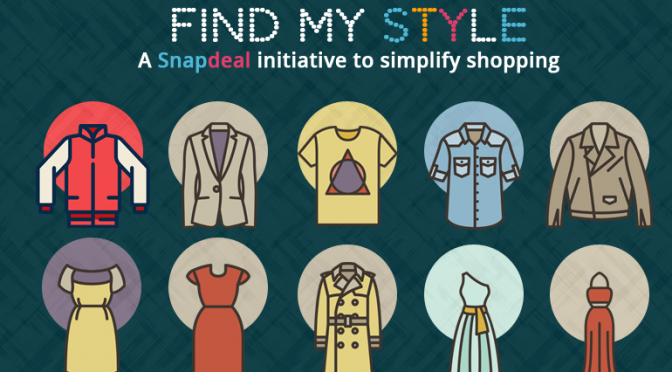
Findmystyle

FindMyStyle.in: an initiative by Snapdeal to provide the offline in-store shopping experience!

What is FindMyStyle.in?

Developed at Snapdeal’s Multimedia Research Lab (the experimental playground for their in-house engineers and scientists); FindMyStyle.in is a technology that helps to simplify the online shopping experience for the users. It offers an enriched shopping experience by bringing in-store experience online.

It has been developed by analysing customer’s browsing and purchase patterns, which has been combined with intelligent technology solutions, to forecast or foresee their needs. These are then used to offer a range of choices with minimal search!

Overall, it is a combination of Advanced Machine Learning and Image Feature Computation, which makes style discovery automatic and helps users find the perfect style.

This all, might sound a little confusing, till you understand how the website actually functions in detail; but in general, FindMyStyle.in adds a new dimension, a new feature to the product discovery and purchase phase of the consumers, simply by enhancing the user experience.

What helps them stand apart is their Search Methodology! It is very detailed and tailored to a user’s preference and helps them to discover a product of their choice with ease while saving their time and effort.

This essentially doesn’t divide the category on the basis of price, brand or size, but instead, divides the whole product segment or rather the whole filtration process altogether!

Basically, this portal adds a further layer of analysis in order to pick visual elements from a chosen product and suggest various options with similar patterns, style, etc of the chosen product.

So customers describe the product, they wish to buy, and accordingly, the products that match the given description would be shown, without having to browse through a diverse range of available products.

What is their Operating Model?

To begin with – the entire process is completely automated, with absolutely no manual curation, no tags, or anything other than Image Recognition. It’s a machine learning process! Precisely why, the technology was launched as a separate portal, instead of being introduced into Snapdeal itself.

On Find My Style you can browse through all the fashion products that are listed on Snapdeal, but using a completely ‘Visual Interface’. Interestingly, these groupings have been completely done by using an ‘Image Recognition Software’.

It has used machine learning to group different types of products together, which have been divided into five categories for men, and five for women, and on the first page, you’ll see t-shirts, shirts, heels, or sports shoes.

For a consumer who has a certain product image in mind, it becomes easier to search through options that match the image in his mind, instead of scouting through a wide, unrelated, range of products.

Once you enter into a segment, you see different styles of clothing – you’ll see striped shirts, solid colours, formal and informal ones, etc post which, you can move on to the individual products of your choice, and then eventually you will be offered with options similar to the one you’ve selected, and when you’re ready to purchase it, you would be directed to Snapdeal’s main site.

You can also choose to browse through different styles again, and if you find something that looks good but isn’t quite what you’re looking for, then you can choose to view similar looking products, as well.

The idea is basically to bring the visual curation on the internet, that an “Offline Retailer” is able to offer a customer on the basis of their preferences!

What market segment are they targeting?

Well, to keep it short and precise; the purpose behind launching FindMyStyle.in is quite simple and straight!

With FindMyStyle – Snapdeal aims to give the Offline Experience on an Online Store! Hence, keeping that in mind, other than their loyal consumer base, this portal is targeted to an audience who has a fair idea of what the internet and has a fair idea of what they want, and is someone who is also able to visually describe the same too.

Who leads FindMyStyle?

FindMyStyle is the brain-child of research scientists – Gaurav Aggarwal (Senior Principal Scientist – Snapdeal, Multimedia Research Lab), Nikhil Rasiwasia (Principal Scientist – Snapdeal, Multimedia Research Lab) and Deepti Singh (Senior Director – Snapdeal, Multimedia Research Lab).

The trio’s start-up “Fashiate” was acquired by Snapdeal in March 2015 by way of Acqui-Hire (a company that is acquired mainly for the skills and expertise of its staff, rather than for the products or services it supplies).

–  Gaurav Aggarwal

Gaurav has completed his PhD in Computer Science from the University of Maryland College Park, along with Bachelors of Technology in Computer Science and Engineering from the Indian Institute of Technology (Madras)

He started his career as a Research Intern with ‘IBM Research’ in 2006, while pursuing his PhD in New York. After working with them for over a year, he then joined ‘ObjectVideo’ in 2008 as a Research Scientist. This stint continued for a little less than 3 years.

In June 2010, he joined the ‘University of Notre Dame’ as a Research Assistant Professor for about 2 years, after which, he joined ‘Yahoo’ as a Scientist in 2012 and went on to get promoted to a Senior Research Scientist / Senior Research Manager in 2 years.

In December 2014, Gaurav cofounded his first venture ‘Fashiate’ along with Nikhil Rasiwasia and Deepthi Singh and in just over 4 months, managed to sell it to Snapdeal.

Since then i.e. March 2015, he has been an integral part of Snapdeal and works with them as a Senior Principal Scientist and Head of their Multimedia Research Group.

–  Nikhil Rasiwasia

Nikhil has completed his PhD in Electrical and Computer Engineering from the University of California (San Diego), along with Bachelor of Technology in Electrical and Electronics Engineering from the Indian Institute of Technology (Kanpur).

While studying at the University of California (San Diego), he also used to work with them as their Graduate Student Researcher.

He began his career as a Software Engineering Intern with Google in 2007 and worked for about 3 months, and after which, he moved on to join Microsoft Research as a Research Intern, again for about 3 months.

After completing his PhD in 2011, Nikhil joined Yahoo as a Research Scientist and worked with them for more than 3 years, and then he cofounded his first venture called – Fashiate in 2014!

In March 2015, he sold the company to Snapdeal and then has been working with them as their Principal Scientist, since then!

–  Deepti Singh

Deepthi has completed her Bachelors of Technology in Computer Science from the International Institute of Information Technology.

Soon after completing her education, she started her career with Adobe Systems as a Member of their Technical Staff, and in about 5 years, got promoted to a Computer Scientist in January 2009.

After working at that position for 3 years, she then moved on to join Yahoo Labs as their Principal Research Engineer in January 2012 and gave them 3 years of her life.

In 2014, she finally ventured out and Cofounded Fashiate, and in about 4 months sold it to Snapdeal in March 2015 as well.

She joined them as a Principal Data Scientist as soon moved up to become a Senior Director of their Multimedia Research Group, as well.

Together, they have transformed their ‘Fashiate’, into what we now call – ‘FindMyStyle.in’!

Why did Snapdeal start FindMyStyle?

Let’s start from the beginning…!

Apparel is one of the biggest segments in online retail, but finding the right products that suit your need, on the internet, still continues to remain a huge pain-point, and you end up browsing through a huge selection of products in hopes to find the right match. Especially, if you don’t have something specific in mind!

But on the other end, in Offline Shopping, customers have the leverage of an expert salesman who understands the customer’s need, and accordingly helps them with the best suited choices. This is something which seems to be missing in the Online Shopping space.

Additionally, just before the launch of FindMyStyle; Flipkart had launched Flipkart launched an ‘Image Search’ feature for their mobile app users. This was done to reduce the importance of, and dependence on ‘Sight’ and ‘Touch’ aspects that one looks for when they shop.

Hence, to solve the paint-point and to keep up with the competition – Snapdeal allocated $100 Million towards building in-house technology over the next three years, and created Multimedia Research Lab.

And eventually, as a part of this strategy, Snapdeal acquired Fashiate, and then launched FindMyStyle.in!

In August 2015; Snapdeal refreshed its UI/UX across Web, Wap and App, thereby enhancing navigation, browsing and purchase, which not only helped them to reduce page-load time by 25% on web, but brought down their crash rate to less than 1% as compared to the industry average of less than 4%.

And as a part of their experimental strategy; Snapdeal also announced their 11th acquisition of Silicon Valley-based “Reduce Data” in September 2015 for an undisclosed amount. Reduce Data assisted brands and advertisers with the help of artificial intelligence, real-time data and other tools.

The acquisition was made to build on the discovery platform, and associated tools for brands and sellers in their marketplace, and the same.

END NOTE

As a whole, Snapdeal has lately been investing a significant amount of time and money in enhancing the UI and UX for their website as well as mobile users.

But this is not just to keep up with the competition, given that, Flipkart too has inclined their focus towards UI and UX; but also because upon understanding their customers they have understood the pain-points they face in online shopping.

Ola Lux: the new luxury segment of Ola Cabs

Our nation is dominated by the smaller economy vehicles, given our day to day travel requirements; making the luxury vehicles market untouched! As much as we all wish to rent a luxury vehicle for our travels, there is a huge scarcity of such luxury offerings in India.Agreed, luxury vehicles for rent are not completely unheard of, but the chauffeured availability is definitely new to Mumbai.

Hence in an attempt to tap this market, Ola Cabs, has recently launched a new category on their app called ‘Ola Lux’.

NEWS: – What is Ola Lux?

Sensing the immense potential of the category; Ola Lux is bringing to you a luxury cab experience to give you the opportunity to ride across the town with style, panache and stand out amongst everything and everyone around you.

Some of their offerings in this luxury segment includes sedans like Jaguar, Mercedes, Audi, BMW, Toyota Fortuner and Honda Accord amongst other high-end sedans and SUVs.

In these beginning stages, this new stylish category has been made available across South Mumbai and gradually will be introduced to other parts of the city as well. Ola’s low-fare policy would also be applicable to their luxury segment too.

The company has decided a minimum base fare of ₹200 and then ₹19 per/km for their Ola Lux. There would also be a Ride time charge of ₹2 per minute (applicable post 5 mins)

added to the final bill as well.

Some of the top notch features offered in the luxury segment include Upfront display of driver details, SOS buttons, AutoConnect Wifi, Live Tracking and Seamless Payment using Ola Money will continue to be available on Ola Lux.

‘Auto-Connect Wi-Fi’, a proprietary feature of Ola Cabs, developed at their ‘Innovation Labs’, and allows the users to automatically connect to Wi-Fi in an Ola cab without having to enter credentials every single time.

It provides users with a one-time authentication on their phones, using which one can connect to Ola’s secure network and use the Ola Wi-Fi service on their devices whenever they take the ride.

The response and acceptance of the service has been so tremendous, that the company is planning to make Ola Wi-Fi available across all their other categories including Micro, Mini and Auto-rickshaws, as well. Furthermore, Ola Lux will also be extended to cities such as Delhi and Bengaluru in the next two months too.

The launch event held the presences of Bollywood actress Chitrangada Singh who believed that given the busy schedules and lifestyle of the population, luxury segment comes as a boon, and Ola indeed is taking the luxury travel experience a notch higher, with this new service of theirs.

WHY….

To begin with – this move from Ola Cabs of launching Ola Luxury, comes just 2 months after Uber stopped their services of UberBLACK everywhere in India, except Mumbai.

About a year ago, Uber had also successfully conducted a campaign in collaboration with automobiles’ marketplace Droom, with luxury cars like Audi and Hummer on their platform called – “Uber Supercars” in Delhi, as well.

Other than that, it has been observed that the number of young executives, entrepreneurs and professionals has drastically grown. Young adults like the flexibility of not having to drive in heavy traffic or having to park, but at the same time, travelling in a style and luxury; thus, tremendously increasing the need for on-demand luxury service.

Keeping all that in mind – their new category brings unmatched style and comfort for those who demand it, and provides superior in-cab experience, and choices to suit the need, usage occasion, and mood of its customers. Basically, it is an offering for the high-end customers!

And interestingly, the launch of Ola Lux, which is priced at almost double than its other categories, comes at a time when the company is aggressively pushing cheaper alternatives to out beat their rival Uber.

In just three weeks, they Ola Cabs had put up a category (Ola Micro) to compete with UberGO (Uber’s cheapest option).

The launch of Ola Micro was a result of the company learning the Indian market! They noticed that India is a group of micro markets, each of which come with different needs. And this is an attempt by Ola to ensure that every market is taken care of, and all their needs are catered to!

TRIVIA

What is even more interesting to note is that –– This is not the first time Ola has launched a luxury segment.

In fact, 2013 was the first time Ola Cabs had launched their Luxury Segment in Bangalore and called it “Ola Luxury”, and was further expanded to Mumbai in 2014 that included a fleet of Audi, BMW, Mercedes, and Jaguar cars.

This service was launched just ahead of Uber’s launch of their luxury service – UberBLACK and was priced at a Base Fare of ₹250, a post which the customer would be charged ₹20/km and 2/minute.

The fares are quite similar to what Uber was charging in Delhi, which asked for a base fare of ₹200 followed by ₹20/km and ₹2/min in Delhi.

Ola Cabs had introduced this luxury fleet in September of 2013 and were also claiming to process a booking in three digits.

However, it’s still not been made clear if, when and why did they shut down their service.

All of these collectively point out that Ola has opted to launch this service for two important reasons – one being to compete with their rival Uber, and the second being to cater to the different markets as well.

How does the future look like for Ola Lux? A brief market analysis…!

Indeed, the Luxury Vehicle rentals have a great demand in the Indian market, but it cannot be ignored that this opportunity only exists only in some areas and will certainly not a viable option in the Tier-II or Tier-III cities of India, given the fact that, the demand will be very minimal in these areas.

Looking at the lucrative nature of the untapped market, Uber had also launched Uber BLACK earlier, but the company had to wind up the service due to lack of demand in all the areas across India and limit themselves only to South Mumbai, where the demand for such vehicles seems to be high.

Most parts of the nation prefer a cheaper and cost effective option for their transportation, and such options clearly don’t offer that, but on the other end, upscale neighbourhoods in cities like Mumbai, Delhi and Bangalore die for such services.

So the success of Ola Lux will depend on the demand and the areas where they launch! They will have to play very strategically in their offerings and the catered areas.

If they are able to achieve that, Ola Lux won’t have a fate similar to that of Uber!

SpareFoot : The largest marketplace for self-storage rentals

It is being anticipated that from the self-storage industry will grow at an annual rate of 3.8% from 2014 to 2019.

According to a Self Storage Association, the US self-storage industry had generated over $24 Bn in Revenues in 2013, and according to a prediction made by market research company – IBIS World, the self-storage industry is further expected to surpass the $30 Bn mark for revenues by 2019, as well.

Before we begin with the information about the company, let’s update those who are aware of what Self Storage!

WHAT IS SELF-STORAGE?

As you know, there are times when we all need some extra space; which perhaps turns out to be in the garage, basement or closet, and then there are times when these become overfull too!

There could be various reasons for an extra storage, but there’s no solution more flexible, more affordable or more convenient than Storage.

Storage (better known as: ‘self-storage’, ‘storage facility’, ‘public storage’, ‘mini storage’ or ‘self-storage’) is where businesses rent a specified amount of space, at a certain location, to customers to store their valuables. There are two principal types of storage facilities available: Outdoor / Drive-up access facilities and Interior storage facilities.

The price of the storage depends on several factors like: location, quality of the facility, size of the unit, requirement of extra amenities like climate control, time of year, etc…

These are typically storage units at dedicated locations that are rented out for a definite period (ideally month-to-month). They usually come in several standard sizes and are secured either by a built-in or a separate lock, or both.

If the tenant is not able to pay the rent, the items kept at the Storage are auctioned publically, to make up for lost rent.

WHAT IS SPAREFOOT?

Founded in 2008 by Chuck Gordon & Mario Feghali; SpareFoot is a Texas-based company that provides listings for self-storage units on rent! Basically, they are a broad marketplace for self-storage rental companies and acts as a mediator between the self-storage rental operators and consumers.

Profiled as one of America’s Most Promising Start-ups by Bloomberg Businessweek in 2011; SpareFoot is known to be one of the best and the largest online marketplaces that help consumers quickly find, compare and book a self-storage unit through the internet, without having to go through the pain.

Their website gives you the leverage to compare the largest inventory of storage options nationwide and then pick the best one that fits your needs, be it – the Traditional Self-Storage or Full-Service Storage.

SpareFoot has close to 10000 facilities to compare and choose from in the US, in which some of their offerings include: Full-Service Storage, College Storage, Car Storage, Boat Storage, RV Storage, Wine Storage, MilitaryStorage.com, Storage Pricing, etc…

Not only are they the most up-to-dated website about information on storage pricing, availability, facility amenities and more, but their free marketplace partners with thousands of facilities to offer exclusive deals and to get you the right price, while enjoying exclusive discounts as well.

WHAT IS THEIR OPERATING MODEL?

So, SpareFoot (then known as Homstie) was initially followed a model of being a person-to-person website that facilitated the rental of extra storage space in private residences, but eventually re-branded (to SpareFoot) and adopted the marketplace model, wherein they allowed customers to find, compare and review potential storage providers.

They did so because they figured that there were more storage companies signing up to sell space as opposed to homeowners.

They offered the Traditional Self-Storage facility (just like any other company) and a Full-Service Storage, wherein everything from Front door pickup, careful loading, safe transport to a modern and secure facility, and prompt return delivery is included at a self-storage price.

Let’s give you a gist of how it works…

Since, finding storage is a known pain-point, SpareFoot offers an ease-of-use service. And to use their service, all you need to do is: –

  • Type in the zip code, address or intersection
  • This would provide you with all the available storage units in that area
  • You can also use their Advanced Search Filters which would help you to compare prices, locations, amenities, customer reviews and find exclusive deals at their partnered 10000 facilities nationwide
  • Once you’ve narrowed down on the storage unit that fits your needs, you can book it online for free, with no requirement of a credit card! This can also be done by calling them on 877-687-9771.
  • You have to make a payment only after you arrive at the facility and complete the lease agreement and move in
  • There are no obligations, and you can cancel at any time. You can call SpareFoot at 877-691-0042 to modify or cancel your booking, as well. The portal also has an option to change the booking online itself
    1. Click the “Manage my reservation” button in the confirmation email you received from SpareFoot after you made the booking
    2. And follow the steps

WHAT IS THEIR REVENUE MODEL?

Other than advertisements, their main revenue model is as similar to that of most other marketplaces, but with a slight modification to it! The service is completely free for the consumers, while the Businesses pay SpareFoot a ‘Finder’s Fee’ for providing them with new tenants. But this isn’t a Lead-generation model. But instead, it is a ‘Paying-Customer-Generation Model’, which means that SpareFoot does not make any money until their partners/clients do.

WHAT ARE THE STRATEGIES ADOPTED BY THEM?

To begin with – since, 1 in every 10 households in the US rents a storage unit their target market is very broad, and the only strategy that can help them in their budget, is to be wherever that person who needs storage is.

Most of their marketing revolves around education. Social networks and personal connections, basically – word-of-mouth, are known to have a greater influence on consumers than any other marketing strategies, and they try their best to make use of them, to the fullest!

SpareFoot also uses Facebook, Twitter, and other relevant social media portals on a regular basis, which although, drive a decently fair amount of traffic to their site, but then, act more as platforms for brand awareness, than conversions!

Additionally, they also use these social media portals and search engines, to spread the blog articles covering storage news, renter tips, organization hacks, storage-related surveys, interesting Infographics, closet organization, up-and-coming tech hubs, etc., produced by them.

These strategies have greatly helped them to earn them spaces in Publications like TechCrunch and The New York Times.

Other than that, they also work on to educate their audience with the help of Educational Seminars at storage industry trade shows; Email Campaigns, PPC (Pay Per Click) and other paid advertising channels, SEO and Content Marketing, PR, Blogging, etc…

They have also partnered with more than 50 relevant sites including truck rental giant Penske to promote and boost cross-portal business We have built out co-brand deals with over 50 relevant websites, such as – SelfStorage.com, Penske Truck Rental, etc…

More recently, the company has also partnered with an Austin-based ad agency called – Titled Chair, to create a series of videos to promote storing goods with its tagline of “We Can Store That”, as well.

WHO ARE THE FOUNDERS OF SPAREFOOT?

SpareFoot was cofounded by Chuck Gordon and Mario Feghali in 2008. The co-founders have also been listed on Forbes’ list of 30 Under 30 in 2011.

–         Chuck Gordon

Chuck is the CEO of SpareFoot.com!

He has completed his Bachelors of Arts from the University of California at Los Angeles (UCLA), and was a part of the Entrepreneurship Program at the National University of Singapore, as well.

He began his career by working with a couple of firms including Inetsolpro for about a year and a half, and Concentus Data for around a year, to gain the necessary experience.

Post these stints, he then moved on to join the entrepreneurship program, where he got the opportunity to learn about the start-up world, VC funding, etc. Basically, he learned some of the first steps of how to turn his idea into reality!

After completing this course, he got convinced that he was ready, and got together with Mario to launch the first venture!

–         Mario Feghali

Mario is the COO of SpareFoot.com!

He has completed his Bachelors of Science in Psychobiology from the University of California at Los Angeles (UCLA).

While at it, he had also worked with the University, first as a Research Assistant at Brain Atlas Center, to find a link between genetic architecture and brain size, and then as a Teaching Assistant, as well.

Post these stints, he then got together with Chuck and founded SpareFoot!

HOW HAS THEIR GROWTH BEEN SO FAR?

SpareFoot was founded in 2008!

Although the venture had started while both were attending UCLA, but the concept was developed a year prior to that, before Chuck left to spend a semester in Singapore.

This is how it went!

Before leaving to study abroad in Singapore, Chuck realized that he would need storage space for his furniture and other belongings.

After researching on the internet, about storage websites, Yellow Pages and even calling every location in town, he figured that the traditional storage unit would cost him hundreds of dollars and that there was no other option. This would literally, cost him much more than the worth of its contents.

Frustrated and helpless, chuck was forced to use Mario’s residence as well as space in girlfriend’s garage, to store the items.

That’s when both the future partners got the idea of SpareFoot!

Back then – the only goal in mind was: To make storage easy. Hence, after coming back from Singapore, Chuck and Mario founded Homstie!

It was a peer-to-peer storage website that helped people rent extra space for storage in private residences and was started using funding from Family and Friends.

It was a low-cost alternative to the traditional self-storage model. Yes, they managed to garner some traction, but it certainly wasn’t enough to make the business survive and succeed! They could clearly anticipate the future.

Ultimately, they realized that if they wanted to survive and grow, they would have to throw out their current business model and start over. As much as hard, that decision sounded, the fact remained, that they had to do it!

Having said that – since this was just after the recession had hit the world, they realized that a lot of mom-and-pop storage facilities were signing up for the site! This gave the brilliant idea, and the site was quickly rebranded from a peer-to-peer model to a marketplace model and was now called – SpareFoot. The site now allowed customers to find, compare and review potential storage providers.

And since then, there has been no looking back!

Between 2009 and 2010 – SpareFoot was accepted by Austin-based incubator Capital Factory, and also took over SelfStorage.com, a portal similar to SpareFoot. Later, they also partnered with SelfStorageDeals.com, SelfStorageFinders.com, and Penske Truck Rental, as well.

Last year in 2015, it was announced by SpareFoot that they have implemented Trustpilot into their business model, and would now be using this third-party portal for gathering and displaying customer reviews on the company’s website.

More recently, the site has also introduced Full-Service Storage and Valet-Storage Services to their Searchable Database as well. The company is also expected to grow to a team of around 280, overall.

And lastly, talking about their fundraisers – SpareFoot has raised a total equity funding of about $49.35 Million from 8 Investors, including – Capital Factory, FLOODGATE, Insight Venture Partners, Kip McClanahan, Monkfish Equity, Revolution LLC, RSH Ventures and Silverton Partners.