
Startup India

Start-up India 2016 – How does Government plan to boost the start-up ecosystem!

To begin with – the Chinese economy, which has been a driver of the global growth, has been rapidly slowing down, leading to a global setback. IMF (International Monetary Fund) has quoted China’s growth projection at 6.3% in 2016.

On the other hand, IMF has projected India to grow at 7.3%, and is projected to remain the fastest growing major economy in 2016. It is widely said that the 21st century belongs to India, and that India can be bigger in momentum than China in next 10 years.

The Indian start-ups hold immense potential. Currently, with a total of 4200 start-ups, India ranks 3rd in the global list, and more than $18 Bn has been pumped into the Indian start-ups between 2010 and 2015. Half of which i.e. $9 Bn, came in 2015 alone.

And to boost this further, PM Narendra Modi has kick-started Start-up India!

What is start-up India 2016?

Start-up India campaign is an action plan initiated to help start-ups with most of their requirements to boost entrepreneurship and encourage start-up ventures. Start-up India was not just a campaign to help with Investments, but was aimed at the overall development, upliftment and smoothening of the start-up ecosystem.

The campaign was organized by the Department of Industrial Policy and Promotion (DIPP), and was launched on the 16th of January 2016, by Arun Jaitley – Union Minister of Finance and Corporate Affairs at Vigyan Bhavan in New Delhi. Nirmala Sitharaman – Minister of State for Commerce and Industry, was the Guest of Honour.

It was first announced by Prime Minister Narendra Modi during his speech on the 15th of August at Red Fort, and has now been put to action.

DIPP have partnered with Invest India and Start-up ecosystem players like – iSpirt, YourStory, NASSCOM, SheThePeople.tv and Kairos Society and youth wings of FICCI and CII.

The event was an all-day global workshop on Start-up Entrepreneurship and also included panel discussions on topics such as: –

  • Unleashing Entrepreneurship and Innovation: What do Indian Start-ups Need to Grow and Prosper
  • Celebrating Women: Stories of Innovative Women Entrepreneurs
  • Show Me the Money: How do we Capitalize Entrepreneurship?
  • How digitization will change India’s future
  • Making Indian Healthcare Leapfrog
  • Financial inclusion is within reach

The panels also included representation from Securities Exchange Board of India (SEBI) and Small Industries Development Bank of India (SIDBI) as well.

There was also a unique (Q&A) session titled “Face-to-face with Policy-makers”, wherein Secretaries of Key Government Ministries and Departments answered various questions on how Government will be creating a conducive environment for Start-ups.

A virtual exhibition was also organized at the event, to showcase the unique and innovative work done by Start-ups in the country.

Google also conducted an innovative session called “Launchpad Accelerator” which involved live pitches being made by early stage start-ups to potential investors. Additionally, Nikesh Arora (President and COO of SoftBank) was also seen interacting with participants on aspects related to funding.

Other than that, the Start-up India Campaign was also seen promoting the ‘Stand-up India Initiative’, which again was aimed at promoting entrepreneurship, but amongst the SC /ST / OBC, Women, and all other Communities.

It has often pointed out that the quality of education in Indian institutions have not been found up to the mark and do not match with the organization’s standards for the required skill-set, and eventually the companies are forced to spend more on training the freshers. Hence, to solve this issue, the country has also launched the ‘Skill India Campaign’ as well!

The event was telecasted live at all the IITs, IIMs, NITs, IIITs, all other Central Universities and to all the youth groups in over 350 districts of India.

What is the purpose of Start-up India?

The objective of Start-up India was to regain the confidence of the start-ups and to show that the government was committed to the well-being of the start-up ecosystem.

As rightly pointed out by our Prime Minister, the most successful start-ups are usually the ones those aim to solve a real-life problem. It is a well established fact that, one of the major reasons for the rise of the IT sector was due to minimum Government Regulations or less involvement of the Government in general.

And, the GOI is trying to implement the same mindset by launching the Start-up India Campaign as well. Our present government wishes to assure minimum interference from the government, and to play the role of a “facilitator” for start-ups.

This campaign is aimed on to restricting the role of the States in policy domain, along with complete removal of “license raj” and all other hindrances that are faced while performing a business like in land permissions, foreign investment proposal, environmental clearances, etc…

The launch of this event is focused at celebrating the entrepreneurial spirit of India’s youth, and wishes to turn the youth of India from job-seekers to job-creators.

What are the KEY takeaways from the event? How will it benefit the start-up Ecosystem?

The campaign was attended by CEOs and founders of more than 1500 top Start-ups from across the country and abroad.

Among the attendees, there were over 40 CEOs, Start-up founders and Investors from Silicon Valley as special guests who also took part in the interactive Q&A sessions. These included Masayoshi Son – CEO of SoftBank, Kunal Bahl – Founder of Snaa, Travis Kalanick – Founder of Uber, Adam Nuemann – CEO of WeWork, Sachin Bansal – Founder of Flipkart, etc…

The much-awaited Start-up India has brought a lot of positivity in the start-up environment in India, and comes as a fresh ray of hope in these harsh working conditions. This action is said to boost up the lost confidence from within the entrepreneurs to start-up through a hassle free process.

The Ministry of Human Resource Development (HRD) and the Department of Science and Technology also announced during the event, that they would be setting up more than 75 ‘Start-up Support Hubs’ in all the major institutions across the country, including – National Institutes of Technology (NITs), the Indian Institutes of Information Technology (IIITs), the Indian Institutes of Science Education and Research (IISERs) and National Institutes of Pharmaceutical Education and Research (NIPERs).

Additionally, under this scheme, a set of start-ups will also acknowledge an MOU (Memorandum of Understanding) with these institutions and will also establish start-up centers in the campus.

Overall – below mentioned are most of the KEY initiatives that have been taken at the campaign: –

  1. Single day and Single window clearance
  2. Registration of the start-up using the new Start-up mobile application.
    – The app will be rolled on April 1st
  3. Launch of a start-up fund worth Rs. 10,000 crores with an initial amount of ₹2500 crores that will be spread across 4 years.
    – The nature of this fund would be “Fund of Funds” (FoF), which means that it will not directly invest in start-ups, but will participate in investment rounds done by SEBI registered venture funds.
    – The Life Insurance Corporation of India will be an investor in this the FoF. It will be managed by a collective board of private professionals from industry bodies, academia and successful start-ups.
  4. Credit Guarantee Schemes for loans
  5. Friendly Bankruptcy Code that would ensure 90-day exit window
  6. Elimination of Red Tape
  7. Self-certification compliance
  8. Patent Regime and IPR (Intellectual Property Rights) to be simplified
    – Panel of facilitators to provide legal support and assistance in filing of patent application
    – 80% reduction in patent registration fee
  9. 3 years of freedom from mystifying inspections
  10. 3 years of freedom from Capital Gain Tax. 20% Capital Gains Tax is charged to all the Investors (VC / Angel)
  11. 3 years of freedom from tax in profits
    – Due to this tax, Overseas Venture Capitalist are forced to route their investments through Mauritius, because capital gains tax on investments from Mauritius is waived since there is a provision in Double Tax Avoidance Treaty. They have been asking for the exemption of this tax, since a long time
  12. Exemption of Tax above ‘Fair Market Value’ (FMV) for incubators in start-ups. This tax till before was only applicable to VC funds, and has been implemented to encourage seed-capital investment
  13. Promotion of Entrepreneurship in Biotechnology. 5 new Bio Clusters, 50 new bio incubators, 150 technology transfer offices and 20 bio connect offices will be established.
  14. Innovation hub under Atal Innovation Mission
    Initiation of Innovation Programme starting with 5 lakh schools and a target 10 lakh children.
    Entrepreneurship promotion via: –

    • Strengthening of existing incubation facilities, establishment of sector specific incubators, and pre-incubation training to potential entrepreneurs
    • 500 tinkering labs with 3D printers in universities
    • Seed funding to high growth start-ups

    Innovation promotion via:

    • Institution of Innovation Awards. Three per State / Union Territory and Three National level.
    • Launch of Grand Innovation Challenge Awards, for finding low cost solution ideas for all the pressing and intractable problems in India.
    • Provision of support to State Innovation councils to create awareness and organise state level workshops /conferences.
  15. 31 centres of innovation, 35 Public-Private Incubators, 13 start-up centres and 18 technology Business Incubators will be established in national institutions.
  16. Setting up of 7 new Research Parks on the lines of the Research Park at IIT Madras, with an initial investment of Rs. 100 crores each.
  17. National and International start-up festivals to organized to provide visibility.

Who would be ELIGIBLE for the schemes launched at the event?

Many entrepreneurs have been very excited by the announcements made at the event, but then again, not all start-ups qualify.

 Here’s a quick analysis of the eligibility criteria: –

  1. The company must either be incorporated as a:
    • Private Limited Company
    • Partnership firm
    • Limited Liability Partnership
  2. The company must be less than FIVE YEARS old
  3. Its Annual turnover in any financial year must not exceed ₹25 crores
  4. The Start-up must either be working towards –
    • Innovation or Development
    • Deployment or Commercialisation of new products,
    • Processes or Services driven by technology or intellectual property, etc…
    • Or a significantly improvised existing product, service or process, that will create or add value to the current condition
  5. The Start-up must not just be engaged in:
    • Development of products or services that do not have potential for commercialisation
    • Products or Services with no or limited growth or progress
  6. The Start-up must not be formed by splitting up, or reconstruction, of a business already had / has an existence
  7. The Start-up has obtained certification from the Inter-Ministerial Board, setup by DIPP to validate the innovative nature of the business, and
    • be supported by a recommendation from an incubator established in a post-graduate college in India
    • be supported by a recommendation from an incubator recognized by GOI
    • be supported by an incubator which is funded by GOI
    • be funded by an Incubation Fund / Angel Fund / Private Equity Fund / Accelerator / Angel Network, that is registered with SEBI
    • be funded by the Government of India as part of any specified scheme to promote innovation
    • have a patent granted by the Indian Patent and Trademark Office

**DIPP has the power to publish a ‘NEGATIVE’ list of funds which are not eligible for this initiative.

What were / are the INITIATIVES taken by individual States?

In sync with the Start-up India Action Plan – the government has already launched PMMY (Pradhan Mantri Mudra Yojana), the MUDRA Bank. It is an institution that has been setup for development and refinancing activities of micro units with a Refinance Fund of Rs. 200 billion.

Additionally, with Prime Minister’s Start-up India initiative, Devendra Fadnavis (Chief Minister of Maharashtra) has also assured small business men and venture investors, that some new and necessary steps shall be taken soon, to make us the capital for start-ups.

But overall, majorly Southern States of the nation like Karnataka, Kerala, Andhra Pradesh and Telangana, have also shown far greater performance than the rest. In terms of their policies implementations in support of start-ups, these states have shown better results than the rest of the country. They have been focusing on improvising the infrastructure, mainly of the Tier-II cities.

Bangalore has become to be known as the Silicon Valley of India, while Kerala has built its name for its start-up policy called – “Kerala IT Mission“. This mission is focusing on getting Rs. 50 billion in investments for the State’s start-up ecosystem.

Telangana has also launched the largest incubation center in India called “T-Hub“, while Andhra Pradesh has allocated a 17000-sqft Technological Research and Innovation Park, as a Research and Development laboratory. They have also launched a fund for entrepreneurs of Rs. 100 crores called “Initial Innovation Fund“.

Lastly, Madhya Pradesh has collaborated with the Small Industries Development Bank of India (SIDBI) to create a fund of Rs. 200 crores, while Rajasthan has launched a “Start-up Oasis” scheme for all the aspirers.
QuikrHomes Merges with CommonFloor

CommonFloor Merges with QuikrHomes – A Deal That Shook The Online Real Estate Industry

Quikr, recently in the first week of January announced that it has merged CommonFloor with its real estate vertical QuikrHomes.

This deal, not only is the largest deal of the year but also marks the end of CommonFloor’s eight-year journey as an independent company.

Although, both – Quikr and CommonFloor have been very secretive about the transactional value, but it is anticipated that it is an all-stock and complete share-swap deal valued somewhere between $100 and $130 Mn. CommonFloor will be getting a little less than 8% stake in Quikr, and absolutely ‘no cash’ has been exchanged.

Other than that, the investors of CommonFloor have swapped their stocks with that of Quikr, and there would also be a two-year lock-in for all CommonFloor shareholders as well.

The beauty here is that, both Quikr and CommonFloor find great synergies in each other and have a common aim of creating businesses that are strong on growth and monetisation.

The merger will take around two to three months to complete, post which, it will give both the parties a fierce war chest to fight the battles together. The company would be investing around Rs. 250 crores in the combined entity.

CommonFloor will get access to Quikr’s 30 million consumers and reap the benefits of the cross category nature of the Quikr, while QuikrHomes will benefit from CommonFloor’s structured data and domain expertise. This transaction will not only boost up the growth of QuikrHomes, but also their other verticals as well.

Will Commonfloor Operate As A Separate Entity? How Will They Be Functioning Together?

To begin with – they will be working in a cross pollination format wherein both will get an opportunity to benefit from each other. CommonFloor will get access to Quikr’s 30 million consumers and reap the benefits of the cross category nature of the Quikr, while QuikrHomes will benefit from CommonFloor’s structured data and domain expertise, along with boosting up their other verticals as well.

Now not the parties – Quikr and CommonFloor, have been tightclipped on the terms and conditions of the deal, but one thing is for certain that, with a combined listing of two million, Quikr and CommonFloor will be fighting the battles together, but as separate entities.

Yes, Quikr will continue to operate both brands in the market as a parent company, but honouring the commitment towards their respective customers, QuikrHomes and CommonFloor will operate as separate websites after the merger.

The idea is to operate both the brands, but by having different positioning. For one, since CommonFloor now has the backing of Quikr, they would be focusing more on CF Groups (CommonFloor Groups), and would be going ahead with 10-times the aggression. For those unaware, CF Groups is a discussion forum and directory to exchange information as well as handle association finances for residents associations.

Talking about the founders of CommonFloor; well, none of the parties are ready to reveal the eminent, but they are committed to the combined entity, and for the time being the entire CommonFloor team would be working from their current office only, with a few overlap of employees in the coming months, of course!

Also, as a part of the deal, there won’t be any layoffs at CommonFloor, but in fact, since they need more people than both the teams put together, they would be hiring more employees. CommonFloor has about 1,000 employees, while QuikrHomes has 350 people.

Why Such A Low Valuation For CommonFloor?

During the last round of investment of CommonFloor of $15 Mn in December 2014, they were valued around $130 million by Google Capital in December 2014. There is no official confirmation, but according to the people closely related to the deal, the transaction value is anticipated to be between $100 and 130 Mn.

The most shocking part of this current merger of CommonFloor with Quikr was that, the deal had valued CommonFloor, even below its valuation in the last round of funding.

Due to this, Google Capital will have to write off a considerable amount. But since, as a part of the deal, the investors (including Google Capital) will be swapping CommonFloor stocks with that of Quikr, they may potentially recover some of the losses if Quikr sees sizeable growth over the next few years, but for now, it’s a loss for them.

Now what is even more shocking to note is that; according to documents with the Registrar of Companies – Quikr had reported sales of Rs. 24.78 crores for the year ended 31 March 2015, while CommonFloor had reported Rs. 45.76 crore that year.

So even after generating much larger revenue than Quikr, why does CommonFloor have a lower valuation?

Well firstly, the way valuation is calculated by eCommerce investors is very different and may come across as unusual to many other shareholders in traditional businesses.

Taking the present example – Classifieds firms like Quikr hold far more larger customer base, which can be monetized in the future through different mediums. Basically, whoever has more users, calls the shots!

Other than that, Quikr primarily also has just one rival to fight with – Olx, while on the other end, the online real estate world is filled with a list of competitors, five of whom hold a lot of firepower.

Why Did CommonFloor Sell?

After their previous round with Google Capital a year ago, CommonFloor even after having a robust technology platform, had been struggling hard to raise more funds, or monetise their business model.

At that point, CommonFloor with more than 5 lakh active property listings from over 200 cities, and over 1 lakh residential projects listed, was one of the industry leaders and had the largest inventory and property seeker traffic in the country as well. Even then, Tiger Global (their existing investor) had also denied their request to give more funds.

To give you a better perspective –The VC industry works in a way that, if an existing investor says no or if an insider in a company stops supporting you, then potential new investors become sceptical, making it very difficult to raise more funds. And if the existing investor is a well-funded one like Tiger Global, then boy you’re in trouble!

Now the problem here was that, after funding more than 20 start-ups since around 2 years, Tiger Global had stopped going ahead with any new rounds of financing in most of its portfolio companies, and instead was seen to be encouraging them to find other ways like – new investors, cut losses, or sell out. This was also partly due to the national slowdown in the real estate industry in India.

As suggested by a property expert, the main problem with CommonFloor was their inability to monetize their business model. And when that becomes your problem, they are left out with very few options.

Anyway! On the other end, Quikr was aggressively looking for acquisitions for their newly launched QuikrHomes, which at that point, was connecting customers from over 1000 cities and towns across India, and accounted for 35% of the revenue of Quikr as a whole. They had doubled its focus on the homes vertical with the launch of Quikrhomes.com.

That is when Tiger Global – a key investor in both Quikr and CommonFloor, brought both the parties on the table to discuss a potential merger. Given the growing competition in the space and the present market conditions, they influenced both parties to, and acted as a driving force behind the deal. Accel India, who also was an early investor in CommonFloor, also supported deal.

One thing led to another and finally, just four months after the launch of QuikrHomes, Quikr, acquired real estate portal CommonFloor.

Why Did Quikr Buy?

According to Quikr’s strategy, they wanted to create industry-leading verticals for its key segments.

For them, time was the most expensive thing, and hence, had opted for inorganic growth to scale its real estate division since the very beginning. Quikr was aggressively looking for acquisitions for their newly launched QuikrHomes, and had doubled its focus as well.

More recently, they had acquired several other companies like Indian Realty Exchange (mobile-first aggregator of real estate broker community) and RealtyCompass (Builder rating and project analysis platform).

Other than that, they had also made a strategic investment in A N Virtual Tech, which is known to be the only company in India that has detailed real life imagery of 90%+ streets and buildings across India’s top 50 cities.

They had even tried their hands with Housing.com, but for unknown reasons, their talks fell through quickly.

Therefore, when this deal was pointed out to them by Tiger Global, it became evident that, this merger will not only create a strong industry leader, but a collective synergy will be a win-win for all – consumers, property developers, as well as our real estate partners. The combined force of these two entities will only help to create a stronger competitor in the sector.

It was a deal which would not only accelerate the growth of QuikrHomes, but would also benefit their other verticals as well.

Apart from boosting Quikr’s sales, this deal made more sense to them because, it would only make it easier for the combined entity to raise money, given the fact that, the investors have become cautious about the online real estate sector and Indian start-ups in general.

What Is Happening To The Real Estate Market, And How Will The Merger Affect The Industry Rivals?

To begin with – a start-up market ecosystem is considered to be on the path of maturity when there are ‘EXITS’. Simply because exits, be it – Mergers and Acquisitions (M&A) or IPOs give VCs a return on their investment, and using those funds, they can then invest in newer ventures.

Basically, Exits complete a cycle of venture capital!

Although, M&A’s are pouring in India, but tech IPOs have been rare, so far. All an observer has been seeing is sky-high valuations and mega funding rounds, not IPOs.

Talking about the real estate space in India – since the last two years, the segment has attracted more than $250 million (Rs.1600 crores) in investments by some of the biggest investors such as Helion Ventures, Nexus Venture Partners, SoftBank Group, Accel India, Horizen Ventures, Qualcomm Ventures and Nirvana Ventures.

Surprisingly, all of this has happened during a time when realty sales were the slowest in India.

But since the last one year, the real estate market in India has seen a slowdown, due to which supply has exceeded demand, and a whole lot of homes remain unsold in several major cities. This has not only affected the real estate agents and builders, but has also affected all other tech start-ups operating in this space as well.

And since weaker players are finding it harder to keep up, this trend has led, or rather forced the consolidation process in the online real estate space.

In the last year itself, we saw Housing.com acquiring a string of companies including Homebuy360, BigBHK, Indian Real Estate Forum, Plat, and Realty Business Intelligence. And all of this happened while Housing.com itself was struggling to manage its house after sacking of founder-CEO Rahul 800 other employees. As per media reports, it is also being said that Housing.com are also in talks with Snapdeal and News Corp for a stake sale.

PropTiger (which is part-owned by News Corp) has also recently acquired an older rival Makaan.com for an undisclosed amount too.

Therefore, with the current market being in the consolidation mode – there will be many opportunities for mergers & acquisition of the companies that are finding it difficult to move further.

Lastly and quite honestly, an industry consolidating into businesses consisting of larger players, is only more rational, healthier, creates more value, and gives room to breathe.

ctrip business model

Ctrip.com: China’s largest and all-round Online Travel Agent (OTA)

Founded in 1999, Ctrip.com is the largest provider of online travel services which includes services like – accommodation, reservation, transportation, ticketing, packaged tours, corporate travel management, etc…

It is an aggregator of hotel and flight information, which helps the leisure and business travelers to make the most informed and cost-effective bookings. Basically, by helping travelers plan and book their trips, and helping travel suppliers (such as hotels and airlines) connect with the people who are in need of their service, Ctrip helps in bridging the gap between the two.

The company, through its partnerships and tie-ups, helps its customers to choose and reserve hotel rooms, book and purchase transportation tickets for flights or trains, choose and reserve packaged tours including transportation and accommodations, etc.

They have partnered with almost all the well-known companies to provide its customers with the leverage of availing all kinds of ticket bookings – Air, Water and Ground. While at it they also offer guided tours and other value-added services in many instances as well.

Additionally, Ctrip also offers corporate travel management services to enable the corporate clients to effectively manage their travel requirements too.

All their travel-related destination services come with a complete package including car rental, visa services, insurance, attraction tickets, ground transportation, etc…

You can also be sure to avail other related service such as aviation and train insurance, ticket delivery, online check-in, etc., along with other value-added services like online seat selection, flight dynamics, and many more as well.

All these services are offered through an advanced transaction and service platform which consists of a 24-hour toll-free and centralized customer service center, mobile apps and websites (bilingual). They also offer various payment options such as COD, online, etc.

To sum it up – Ctrip is an all-round Online Travel Agent (OTA)!

Although, the company performs its business across all of China and the world, but it has headquarters located in Shanghai, and other than that, it also has offline branches in 17 other major cities across in China including Hong Kong, Beijing, Chengdu, Guangzhou, Shenzhen, etc as well.

What Market Segment Are They Targeting & What Business Strategies Have They Adopted?

To begin with – not many are aware that, a big reason for Ctrip’s success is because of its smart business model. It runs a commission based model, wherein, most of its revenues are generated via commissions earned on the sales of hotels reservations, air ticketing, package tour products, and other products and services.

That’s because, unlike anyone else, Ctrip has created and maintained a scalable and profitable business platform that provides them with an upper edge while operating in the market. Additionally, on the other end, since they have managed to establish partnerships with more than 5,600 hotels around the world, and have also survived to develop the largest air ticket sale network in China, Ctrip is able to offer its customers with free air tickets through their extensive and effective distribution system.

Other than that, more than 95% of its hotel bookings revenue coming from star-rated hotels, and these hotels offer higher commissions. Due to which, Ctrip holds a solid competitive advantage in the market.

Overall, the company has partnerships with almost every company that surround Ctrip’s offerings including any travel-related companies, global travel, visa services-related, and all other companies such as: – China Tour, Chongqing Expat Club, NewChinaCareer.com, ForeignerCN.com, etc…

These associations or partnerships also include various strategic alliances with various companies, such as – Taiwan-based ezTravel, NASDAQ-listed Home Inns, BTC-Jianguo Hotels and Resorts, NASDAQ-listed China Lodging, Priceline, Royal Caribbean Cruises Ltd, etc…

Because of such strategies, the company is also able to easily offer a variety of travel choices to their customers.

Now, Ctrip mainly targets the Frequent Independent Travelers (FIT) segment, who do not prefer the traditional tour-group focused travels. This is a segment that has been ignored since long, and holds immense potential.

Additionally, Ctrip also has a considerable amount of focus on their Corporate Travel Management Business Unit which greatly helps corporates to effectively manage their travel needs and to significantly reduce travel expenses.

Beyond that, Ctrip also offers the corporates various travel data collection and analysis, cost saving analysis and travel management solutions as well. A tool developed by them called – ‘Corporate Travel Management Systems,’ helps the companies in integrating information maintenance, online booking, online authorization, online enquiry and travel report system.

Moving on! Ctrip is also widely known within the industry to be a promoter of scientific management to operate the business by using rigorous data analysis in managerial decision making. And there are many examples and instances of them, to prove the success of such analytical decisions as well. These actions of Ctrip have greatly helped them in cutting costs, understanding and reaching out their customers in a better way, and reaching the desired position.

What Marketing & Brand Awareness Strategies Have They Adopted?

Ctrip uses all streams to market and promote itself. Be it – main stream media, on-site promotions, cross-marketing, online marketing, advertising, or their customer reward program, they have successfully created a strong Ctrip brand that people commonly associate to.

Their marketing and promotions are mainly focused towards creating a Brand and spreading more awareness about them. As of date, their major strategies include: –

  1. Main Stream Advertising: Their research says that, this is the most effective way to increase brand awareness and attract new customers. Hence, Ctrip has partnered with mostly all the top-tier newspapers, radio broadcasting and traffic hubs to advertise their brand.
  2. On-Site Promotions: with a presence of on-site promotion staff in more than 45 major cities, they promote their brand by distributing membership cards and introductory brochures at various locations.
  3. Cross Marketing: Ctrip has entered into cross-marketing relationships with major Chinese domestic airlines, telecommunications service providers, financial institutions, and various other corporations. They also run a link sharing program with several businesses to cross promote each other.
  4. Online Marketing: Again, Ctrip has tied up with various Internet search engines and portals and paid them to prominently feature their websites.
  5. Customer Reward Program: To reward the customers for their loyalty and also to further promote their brand, Ctrip offers a customer reward program, wherein, customers are given membership points on the basis of the services purchased by them, which can be redeemed later.

Who Leads The Brand?

Ctrip was cofounded by James Jianzhang Liang, Min Fan, Neil Shen and Ji Qi in 1999. Today, only James and Min directly manage a management team including – Jane Jie Sun (Co-president and COO), Jenny Wenjie Wu (Chief Strategy Officer), Cindy Xiaofan Wang (Chief Financial Officer), etc., who then collectively manage a total staffing of 30,000 employees globally.

James Jianzhang Liang – Cofounder, CEO and Chairman of the Board

James Jianzhang Liang who began as one of the co-founders of Ctrip, served as the CEO 2000 to 2006, and had later, again resumed that role in 2013. He is also the Chairman of the Board, since the time the board was formed in 2003.

Other than these, currently he also serves on the boards of Home Inns Group, Tuniu and eHi, and also serves as an Independent Director of Jiayuan.com International Ltd.

Before he decided to start his own venture, James had worked for Oracle Corporation for various technical and managerial positions including being the ‘Head of ERP Consulting Division’ from 1991 to 1999 in the United States as well as China.

James is also a registered member of ‘Institute of Management Accountants’ and ‘National Association of Manufacturers’ as well.

Talking about his qualifications – James has completed his Master’s and Bachelor’s degrees from the Georgia Institute of Technology, and also holds a Ph.D. from Stanford University in Economics. He had also attended an Under-Graduate Program at Fudan University as well.

Lastly, he has also served as a Guest Researcher and professor at various institutions such as National School of Development, Peking University, Guanghua School of Management, Peking University, etc…

Min Fan – Co-founder, President and Vice Chairman of the Board

Min Fan is one of the cofounders of Ctrip, currently serves as the President of the firm. He had also served as the CEO after James left the position in 2006 till 2013, post which, James took over the position again. Min was also the Executive Vice President from 2000 to November 2004, and currently also acts as the Vice Chairman of the board since March 2013.

Other than that, he is also on the Board of Directors of China Lodging Group Limited as well.

Before founding Ctrip, Min had worked with Shanghai Travel Service Company (a leading domestic travel agency in China) as a CEO from 1997 to 2000, and Shanghai New Asia Hotel Management Company (leading hotel management companies in China) as a Deputy General Manager (and several other Senior Positions) from 1990 to 1997.

Lastly talking about his qualifications – Min has completed his Master’s and Bachelor’s degrees from Shanghai Jiao Tong University, and has also studied at the Lausanne Hotel Management School of Switzerland.

How Has Their Growth Been So Far?

Ctrip.com that is owned and operated by Ctrip Computer Technology was incorporated in the Cayman Islands in 1999. It was founded by James Liang, Neil Shen, Min Fan, and Ji Qi.

Due to its remarkable business model and strategies, the company managed to gain substantial growth since its inception. In just 4 years, the company grew so big that it got itself listed on NASDAQ Stock Exchange in 2003 in a Merrill Lynch-led offering as well.

Their demand was so much that by 2006, about 70% of their sales were coming from just four cities of China i.e. Beijing, Guangzhou, Shanghai, and Shenzhen. Other than that, 57% of their total revenues came from hotel reservations, 36% was from Air ticketing, while services like package tours, other products and services, advertising services and sales of VIP membership cards, accounted for only 6% of total 2006 revenues.

In the next six years i.e. 2012, Ctrip had also invested in several companies like – ‘ezTravel’ in Taiwan and ‘Wing On Travel’ in Hong Kong, and had also expanded their service coverage to Taiwan, Hong Kong, Macau and various other destinations throughout Asia as well.

In the same year, they also formed a partnership with a commercial agreement with ‘Booking.com’, which leveraged Ctrip to access Booking.com’s global portfolio. Post that, to expand its services to North America as well, Ctrip then invested in ‘ToursForFun.com’ in 2014.

By now, the gross transaction value of the company had reached to $24.5 Bn, while their total commission revenues had reached to $1.3 Bn. At this point; they were closing more than 1 Mn transactions per day.

Talking about last year i.e. 2015, the market capitalisation of Ctrip had grown by more than 30 times since its listing on the NASDAQ Stock Exchange in 2003.

In the same year, they also made deal with Priceline Group for investment of $500 Mn, and also announced a deal for a stock equity exchange with Baidu (Search Engine of China). Under this deal, Ctrip received 45% shares of Qunar that Baidu was holding, in against for 25% of Ctrip’s shares. Thus led to the merger of Qunar into Ctrip! This also made Ctrip the largest company in China.

And with that, Ctrip and Qunar collectively are said estimated to account for 70-80 % of the market share of China.

Ctrip is now valued at more than $10 Bn, and has also began expansion into the Indian Territory. It has invested $180 Mn in MakeMyTrip (OTA based in India), in against for 26.6% of its existing shareholding.

Over the period of time, Ctrip has also made a few investments and acquisitions which include – Suanya (acquired for $16 Mn in 2015), Travelfusion (acquired for $160 Mn in 2015), ToursForFun (acquired for $100 Mn in 2014), Tujia (Invested $300 Mn & $100 Mn in 2015 & 2014), LY.com (Invested $200 Mn in 2014), and Yidao Yongche (Invested $60 Mn in 2013)

Other than that, Ctrip now accounts for more than 1 billion of app downloads, holds a hotel reservation network of around 1,000,000 hotels in 200 countries, has air ticketing products that cover more than 5,000 cities in six continents, and has also transformed into the largest consolidator in terms of the volume of the transactions in China.

YEPME

Yepme.com: Offering Fresh and Unique Merchandise, using their ‘Fast Fashion Model’!

Headquartered in Gurgaon, Yepme is an online shopping company that is positioned as a fully-fledged private label fashion brand which specializes in the sale of men’s and women’s garments and accessories on the internet.

 The online store displays some of the most trending, fresh and exciting merchandise including Men’s wear, Women’s wear, Watches, Ethnic wear, Winter wear, etc…

The company has built a business that runs around something called ‘Fast Fashion Model’. Under this model, the idea is to keep their online store fresh and exiting daily by displaying fresh Fashion merchandise.

 They are able to achieve that by curating fresh and new designs on a daily basis with the help of a team of designers who come from some of the topmost design institutes. And the inspiration or rather the idea for these designs comes from real-time research and analytics that happens at the backend on the latest fashion trends running in the global fashion markets.

 Additionally, the platform also has a section called ‘Lookbook’ and a ‘Blog’ to keep you updated about the latest fashion trends that are running in the fashion markets across the world and how they would look like on a person.

 And to make it even more convenient – they have also added a ‘Virtual Dressing Room’, to see how an item would potentially look like before you purchase it. One could choose any combination of shoes, trouser, shirt, belt, etc…

 Ordering products from Yepme is pretty simple. All you need to do is: –

  • Select the items you wish to purchase
  • Enter your shipping address
  • Choose the payment option and accordingly enter the information
  • And voila! You’re done. (The order is delivered by a reputed courier company)
  • Other than that, you can also place your order over the phone. You can contact them on 011-43504444 and book your items using the COD (Cash on Delivery) mode.
  • You will also receive a confirmation via text and email, after the order is successfully placed.
  • Later, you would also receive regular updates of your order status text and email.

 Talking about the cancellations and refund – As long as your order has not been dispatched, Yepme cancels the order and refunds the amount. And even if the order has been dispatched, you can also refuse to accept the delivery and inform the same to the Customer Care.

 Any Yepme Credits used during the purchase are also credited back. Yepme also offers replacement of the merchandise as well.

What Market Segment are they targeting and what strategies have they adopted?

To begin with – Yepme.com had initially started off as an eCommerce marketplace to sell clothes from various brands.

But soon, they saw that larger brands used to offer end-of-lifecycle products to online retailers to avoid inequality between shop and online prices. Additionally, the margins were too low as well. Looking at the conditions and competition, the founders decided to remodel their business from a marketplace to a private label apparel brand.

The idea was to create a sustainable business model which had a high margin and low burn. Hence, they shifted to this model in August 2011 and not only began selling privately labelled clothes, but also began selling their labelled clothes on other multiple other online stores. They also got the advantage of being the first one to enter this genre on the internet.

Talking about their market segment – Overall, their targeted audiences were two kinds of customers – First were the ones who wished to get the same look-and-feel of a brand but at a lower price, and Second were those who didn’t care much about the name on the tag but wanted to look good and trendy.

And to target both of them strategically, Yepme positioned themselves as a brand that offered fresh fashion at affordable rates.

Their focus was more on the style conscious Indian men & women around the age of 20 – 29 years. Due to mediums like TV, Internet and Movies, etc – this segment was well aware about the fashion and its current trends.

More specifically, Yepme had its strategies built for these youth customers based in the tier-2 and tier-3 cities, where the bigger brands did not have many stores.

Talking about their strategies – to make browsing even more convenient for the users in these areas, Yepme had made the site available in Hindi, Tamil, Malayalam, Telugu, and Kannada languages as well.

Additionally, since these customers were financially less affluent, Yepme also introduced a “Slow Internet Speed Site” option on the site which helped the users to use the site at a slower speed.

These strategies worked well in their favour because, about 70% of their total sales in 2011 were from the tier-2 and tier-3 cities, and around 35% of these orders were from places where even courier companies did not do deliveries. In the same year, the site also attracted almost 21,000 male visitors to the site.

Later, they also collaborated with several offline stores across these areas to sell “Yepme” labelled products.

Their marketing strategy was equally brilliant too!

Yepme.com organized a Fashion Show at The Ashok Hotel in New Delhi and made some of India’s topmost male models including Dino Morea, Rajneesh Duggal, Rahul Dev and Shawar Ali, etc. walk the ramp for them. They became the first Indian online retailer to organize such an event.

Other than that, they partnered with Lowe Lintas & Partners and Lintas Media Group to take care of their advertising and creative duties, and media planning and buying duties, respectively.

They have also partnered Tyroo Direct to handle their performance marketing duties, and to drive transactions, and to cater to its customers across metropolitan areas, tier 2 and tier 3 towns.

In 2014 – Yepme got onboard Havas Media as their official Media agency, and also partnered with LinguaNext to facilitate their language platform product Linguify on their platform.

Yepme aggressively markets itself through various channels such as advertisements on GEC (general entertainment channels), movies, music channels, print campaigns in vernacular newspapers, etc. Additionally, they have focused immensely on their social media marketing as well.

Over the period of time, Yepme has also got onboard a range of Bollywood Celebrities from Rhea Chakraborty, Farhan Akhtar, Sonu Sood, Esha Gupta, Kangana Ranaut to the King of Bollywood – Shah Rukh Khan to promote various sections of their brand.

More recently, they had also sponsored the West Indies team for ICC Cricket World Cup 2015 in Australia and New Zealand. The West Indies cricket team Jerseys were seen bearing the Yepme logo and various contests were also run around the same as well.

Using such strategies, Yepme has managed to achieve more than 4.5-time ROI and over 125% increase in the conversion rate as well.

According to the founders – now, they were able to make a 20-25% margin on every product that they were shipping. Apart from covering the delivery and product cost, that margin also paid for the fixed costs as well. And, the money that they raised was spent for advertising and building the brand.

Who leads the brand?

Currently, Yepme.com is led by its three founders and former students of Indian Institutes of Technology and Indian Institutes of Management: Vivek Gaur, Sandeep Sharma and Anand Jadhav.

  • Vivek Gaur – CEO

To give you a short brief about his profile – Vivek has completed his B.E. in Mechanical from the Delhi College of Engineering in 1990, post which, he went on to achieve his Masters of Business Administration (MBA) in Marketing from the Indian Institute of Management (IIM) in Lucknow.

After completing his graduation, he began his career by working for Tata Motors in 1990 – 1991 as a Graduate Engineering Trainee for more than a year.

Later, he went on to pursue his MBA, after which, he joined Hindustan Unilever Ltd as their Regional Sales Manager in 1993 – 2003. After working there for more than 10 years, he then moved on to Living Media India Limited as an Executive Director in 2003. Here, he got the opportunity to work and commence some really interesting start-ups like www.bagittoday.com.

In 2009, he took his final jump to HT Media Limited as the Business Head North & East, Magazines, post which, he along with his cofounders, launched Yepme.com in 2010!

  • Sandeep Sharma – COO and CTO

Sandeep has completed his education from both – the Indian Institute of Management (Bangalore) as well as the Indian Institute of Technology (Delhi). After completing his studies, he joined ‘HCL Technologies’ in 2000 as a Business Analyst. This stint was for about a year.

From here onwards, in a career that spanned for almost 10 years – Sandeep has gone on to work for some of the most reputed firms of their fields including – NSPL (Program Manager), Sapient (Senior Manager), and lastly, Accenture (Senior Manager).

After this, he founded Yepme.com in 2010!

  • Anand Jadhav – President

Anand holds a Post Graduate Diploma of Management in Marketing and Finance (PGDM) from the reputed Indian Institute of Management (Lucknow), before which, he had completed his Bachelor’s of Science in Statistics from the St. Xavier’s College.

After completing his PGDM, he began his career as a Media Planner for ‘Ulka Advertising’ in 1993.

He worked there for more than two years, post which, in a span of 17 years, he went on to gain experience from a range of companies including – Shoppers Stop (Deputy Manager for Merchandising), Globus Store Private Limited (Head – Offer Management), Pantaloon Retail India Limited (Chief – New Business), Infiniti Retail Limited – A TATA Group Company (Head – Marketing and Projects), Reliance Trends Limited (VP – Marketing, Strategy and IT), and lastly, Omved Lifestyle Private Limited, (Joint Managing Director).

After this stint, he founded Yepme.com!

How has their growth been so far?

Yepme was founded under the parent company called Vas Data Services Private Limited in 2010 as an eCommerce marketplace, which eventually transformed into the first ever online privately labelled brand in India.

This successful transformation helped the brand gain a turnover of $25 Mn in the first year of operations itself. And in the very next year, it was reported that around 49% of Yepme’s customers so far have come back to them the second time.

Looking at the growing business, in the mid of 2012, Yepme also launched its first women’s wear collection during its fashion show in New Delhi. It was launched by Kangana Ranaut.

By the end of that year, they had been listed by Forbes (India) magazine as one of the top five start-ups to watch out for, while they were ranked #14 among online retail brands globally by Starcount.com as well.

They began the year of 2014 by starting an aggressive hiring process from institutes like IIT and IIM, and ended the year by beginning its expansion into the global markets. They started this by entering into the US market with the launch of Yepmeworld.com and also began selling its products on Amazon in the US as well.

According to reports, Yepme had grown by three folds in the last three years and had also posted revenues of around Rs.140 crores in FY14. They were now witnessing a growth of over 200% in its revenue and were also expecting to close FY15 at somewhere around Rs. 200 crores.

They were now catering to more than 1000 cities monthly and were also delivering close to 500,000 units to its customers every month.

Going ahead, in 2016, Yepme will be changing its strategy from being just an online player to opening stores offline as well.

They would be initiating by opening 20 stores of various sizes in the Delhi-NCR region in the next six months, at an investment budget of roughly $5 million (Rs.33 crores).

Lastly, talking about this funding – so far, Yepme has raised a total of $88.2 Mn in three rounds from five investors, including Capricorn Investment Group, Helion Venture Partners, J.S. Oliver Capital Management, Khazanah Nasional Berhad and TC Capital.

teabox business model

Teabox.com : Darjeeling-Based Online Tea Shop That Sells 100+ Varieties Of Tea!

India is the world’s 4th largest exporter and 2nd largest producer of tea. Established by the East India Company, the industry in India is about 150 years old, but it still continues to follow the methods and practices setup by them.

 The entire chain of the industry is a complete mess and consists of a range of middle men including brokers, importers, wholesalers, distributors, etc…

 Due to this mess, a pack of tea has to cross a long journey of about 3-6 months from the gardens to the consumers.

What is Teabox?

Teabox is an online tea shop which is based in Siliguri in Darjeeling, the heart of India’s tea-growing region that connects tea to people.

It is an online store that works directly with over 200 plantations in India and Nepal, and sells tea to customers in 75 countries.

The company claims to have a selection of more than 100 varieties of tea some of which include – Black, Green, White, Oolong, Chai, Blends, from Regions including – Darjeeling, Assam, Nepal, Nilgiris, North-East, Kangra, etc…

Teabox has its own storage facilities near to all the plantations and also handles the distribution, supply, storage and logistics all by itself. Due to this kind of arrangement, they are able to drastically speed up the process and reduce the time taken for tea to reach customers.

Traditionally, the process used to take months because of the long chain of players that are involved in picking, sampling selling, stocking etc… but cutting out all the middlemen, Teabox delivers its orders in a matter of a week.

Let’s give you insights on how their process works?

To begin with –Teabox sources orthodox long leaves of tea, instead of the commercial tea dust that is manufactured by traditional CTC method.

In the selection process, the company first receives samples which go for tasting to their tea experts. The colour, the dry leaf, the appearance, the aroma, the presence of foreign particles, old leaves, brewed leaves, etc. are checked during this process. Post this, the tea that is most liked goes to the testing process of its moisture, to check its contamination.

Overall, their tea experts play the most important role due to their experience, in sorting out the best tea from the bulk by giving their valuable insights. Only when a tea passes all these criteria’s is when Teabox buys that tea for further purchase.

After the completion of the selection process; the teas then go through another round of picking and sorting process. Here, the teas are first cleaned again and are sorted manually. Then, the broken leaves are removed and only the fuller, longer and freshest leaves are selected. Along with that, the stalk weeds that cause bitterness are also removed from the lot.

This highly selective manual procedure helps Teabox choose and bring out the richness and flavour in the teas.

Post this – the teas go through the Packaging process!

The four biggest enemies of tea are – moisture, light, heat and oxygen, and soon after the manufacturing, the tea starts deteriorating very fast for the first 6 weeks, and looses flavour, aroma and its freshness as well. And before it becomes flat, it also loses its sparkle and then turns completely dead in a few months too.

The only and best possible solution to avert this is to store the teas in vacuum packaging. Vacuum packaging makes sure that the freshness, flavour and colour of the tea are maintained and that the customers get factory fresh tea.

Other than that, earlier teas had to go through a long journey before reaching the customers, thus, loosing out on quality and freshness. Therefore, to ensure the best possibility and freshness, Teabox also cuts short the long five-stage process to two, making the delivery in a week’s time.

The tea is vacuum packed and sealed in opaque wraps, and then shipped to customers within 48 hours of its production, unlike the traditional methods which involved retail storage period of 3–6 months.

Talking about their Shipping Process – Teabox delivers the tea pack in roughly 3-5 business days to any location in the world.

Their domestic delivery of Teabox is taken care by either – Blue Dart, DTDC or First Flight couriers; whereas, they have partnered with DHL/FedEx, Overnite Express-SPSR, EMS (India Post) or Air Mail, to handle their international shipping.

What Kind of Approach & Strategies Have They Adopted?

To begin with – Teabox is a business model that manufactures the product here in India, and sells them majorly to customers outside India.

Now Teabox since long has been using various strategies to maintain and grow their customer base, some of these include – ‘Tea Subscription Program’ (offering samples of various types of tea on a monthly basis), Offering high-end teas at discounted rates to established brands like Twinings and upscale European, Asian and American tea salons, etc…

But beyond these, what has helped them the most is Rebranding and Change in Approach!

The company was originally founded as Darjeeling TeaXpress in 2012.

After two years since their initiation, they could see that their brand identity lacked depth, and the character of the brand wasn’t coming across as it should have. Hence in 2014, they decided to scale up their business and thought of repositioning and redesigning their brand and brand identity.

The idea was not to merely re-design the website and revamp the packaging, but they wanted their product to communicate with the customers and tell them who Teabox was more clearly. To do so – they hired Pentagram (world’s largest independent design consultancy).

This change in their strategy has worked wonders for them…

Talking about their approach: – Teabox believes that their approach is what sets them apart! Unlike the large corporates, who continue to work on the age-old models, Teabox has gone few steps ahead to create their own model.

They have not only created an entirely new supply chain model, but have also chosen to use technology instead of the traditional brick-and-mortar setup, to reach more consumers.

Taking a cue from the successful wine industry, Teabox offers online descriptions for its products by the experts. Teabox’s website presents tea like wine literally. When you select a tea, you can see the garden where it originated, time of bloom and date of plucking, as done by vineyards. You will also find detailed instructions and tasting notes given under every Tea that is presented.

But what truly sets Teabox apart, is their use of technology to enable them to understand their customers more effectively. Based on your purchasing history, their algorithms suggest other teas that you may like, and to add to that, every shipment that you receive also includes a sample of another tea as well.

Other than that, Teabox also uses an algorithm-based personalised tea service wherein you have to take a survey, which then matches your characteristics to that of a tea, and delivers a match of the best teas that would suit you. Initially, the accuracy rate is of over 35%, which further zooms up to 90% after the third order placement.

Just like other eCommerce sites, Teabox also uses technology for their online operations, wherein, Algorithms predict the demand, based on factors such as past sales, internal ranking of tea varieties, pricing, etc…

Who Leads The Brand?

Kaushal Dugar is the founder of Teabox. He was born and raised in Siliguri in Darjeeling. Darjeeling, a place located in the foothills of the Himalayas, is known to be heart of heart of India’s tea-growing region, with tea plantations at every nook-and-corner.

He belonged to family which had trade connections in the Tea industry since decades. His father was supplier of all the needs and resources including machines, parts, irrigation equipment, etc to the tea gardens.

Kaushal too learned the trade from his father. He used to spend his childhood summers on tea plantations in Assam and Darjeeling along with his father and used to learn the business.

He became an entrepreneur at an early age of 6. He saw that his friends loved comic books, and hence, started lending comic books in exchange for some candy.

Later, Kaushal moved to Singapore to pursue his Bachelor’s in Business Management, Finance, Marketing from the Singapore Management University in 2002.

Soon after he completed his studies, Kaushal went on to found his first official venture called “GAR Services Pte. Ltd” in March 2006. The company was about IT / Electronic waste management and also provided affordable branded refurbished computers for lower income groups in India Singapore.

Post this stint of his, Kaushal joined KPMG in Singapore as an Associate in 2007 and went on to get promoted to a Senior Associate in the next one year. His roughly two year stint at KPMG including tasks such as Pricing Strategy, Forecasting Financial Statements, Financial Modelling, Due Diligence, Negotiations, Human Resources Deployment, Advisory, etc…

After gaining the relevant experience, Kaushal then again decided to venture out. He founded ‘Books To Read’ – A non-profit aimed to help primary & secondary school children get access to books in developing nations. He founded this venture in 2008 and still continues to run it.

Moving on! In 2010, Kaushal then founded ‘Sandbox Network’ – a global community of inspiring young achievers and innovators under the age of 30, to connect them to each other, to fulfil each other’s needs and purposes. He continues to run this community.

And then finally, he landed to his true calling in 2012. He founded Teabox (earlier known as Darjeeling TeaXpress).

And the rest is history!

How Has Their Growth Been So Far?

So Kaushal had founded Darjeeling TeaXpress with less than $33,000 in 2012, with an aim to sell fresh Darjeeling Tea. He had also created an online portal that helped him export Darjeeling tea worldwide.

The Production, post production and packaging was set up in Siliguri. At this point, Darjeeling TeaXpress did not have any offline presence and only sold Darjeeling tea.

Soon, they also began expanding this product range and also added teas from Assam, Niligiri and Nepal, which eventually led to the formation of Teabox in October 2013.

Around the same time, Kaushal was also in search of an able e-commerce partner who could help the company to reach its potential consumers on a global scale, and in 2014, he completed his search with ‘Accel Partners’. Accel decided to fund Teabox with their first round investment $1 Mn in 2014.

While at it, Teabox also went through an overall change of design, look-and-feel, branding and approach. The website of Teabox was now made available in multiple languages, including Russian, and Chinese.

Their focus had now changed too. On one end, they were targeting the tea connoisseurs, who were very happy to have an access to teas that were otherwise hard to procure, and the fact that these teas were being made available to them in a matter of days.

While on the other end, they were targeting the masses in general. These were neither connoisseurs nor experts. They drank tea out of complete randomness, with absolutely no experience beyond what the supermarket teas could offer. Kaushal realised that, this audience was rather confused and unclear with the options they found on the site, because they barely understood the difference.

For them, they introduced subscription program called ‘Teabox Fresh Beginnings’ in may 2014. Basically, members used to receive samples of various types of tea on a monthly basis. Through their subscription program, they also performed surveys and took customer feedback to understand the areas of improvement.

Beyond addressing the problem of convenience, they wanted to solve a bigger problem at large, i.e. discovering the right kinds of teas. And to do so, they started the world’s first (patent-pending) personalised ‘tea club’.

This club basically uses a machine-learning algorithm which asks some very common questions and based on the answers it receives; it helps a tea novice to understand the kinds of teas they might want to try.

By June 2014 – Teabox had reached to point where it already had sold 10 million cups worth of tea to customers in 65 countries, and accounted for a team of 20 employees. Their growth rate at this point was somewhere between 300$ and 500%, and had also crossed $1 Mn in annual revenues as well. Their major business came from East Asia and North America.

In a matter of a year or rather presently, these developments have increased by manifolds. Teabox has opened another office in Bangalore which houses the technology, sales and marketing teams, with an overall strength of 35 people.

They also managed to raise another $6 Mn from JAFCO Asia, Accel Partners, Keystone Group, Dragoneer Investment Group in March 2015.

So far, although they are pretty shy at disclosing numbers, but Teabox already has grown 10x and has already made a sale of over 30 Mn cups or 60,000 kilograms of tea to 90 countries.

In terms of revenues, US has overtaken Russia to be their key market, which is then followed by Korea, Japan, the UK, India and then China.

Going ahead, the company is planning to setup little kiosks offline, just to create a Teabox experience, around his primary markets including – San Francisco, New York, London, Tokyo and Singapore.

Lyft Business Model

Lyft: Offering Ridesharing facility!

What Is Lyft?

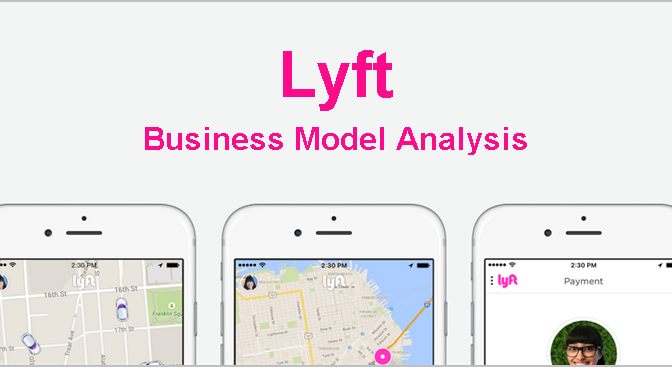
San Francisco-based Lyft is mobile phone application that offers on-demand ridesharing facility by connecting passengers who need a ride with drivers who have a car.

The Lyft cars can be recognized by its signature pink moustaches. They earlier were placed just above the number plate on the front, and now have evolved into a smaller pink moustache on their dashboards and are called ‘Glowstache.’

After every ride, drivers and passengers rate each other on a five-star scale. These ratings help to create the reputations of both drivers and passengers within the network.

Lyft offers three types of rides: –

  1. Lyft: – The original ride offered by the company. A personal ride that is available nationwide.
  2. Lyft Plus is a six-passenger ride
  3. Lyft Line is a cheaper ride for ridesharing as compared to the earlier two. It is presently available in San Francisco, Los Angeles, Austin, New York City, Boston and Chicago.

Its functioning is pretty simple. If you wish to use their service, all you need to do is: –

  • Download the Lyft app,
  • Sign-up with the necessary information like – personal details, valid phone number, and valid form of payment mode (credit card, link to Google Wallet or PayPal account).
  • Add your hometown, music preferences and other details to your profile, which would help you to connect with the driver or passenger.
  • Requests a ride using the app, from a nearby driver
  • Once the ride is confirmed, the app will show the driver’s name, their ratings by past passengers, and photos of the driver and their car
  • Lastly, after you reach your destination, pay for the ride and rate each other.

Talking about the drivers –

One of important principles of Lyft is to create and maintain trust among its users. And to do so they make sure to leave no table unturned. All their drivers have to undergo a range of screening processes which includes: –

  • A driver must be 21 years or older and must also have a driver’s license for more than 1 year
  • Their records are confirmed with the Department of Motor Vehicle, National sex offender registries, and thorough Criminal background checks are also performed.
  • The records for the last seven years are checked from the national and county-level databases
  • Face-to-face interviews with current Lyft drivers are also conducted
  • Lyft also has a Zero-tolerance drug and alcohol policy
  • And lastly, any driver averaging a low rating by users is dropped from the service.

And on the other end, even though Lyft drivers are classified as independent contractors, Lyft still makes sure that they are secured too. The company insures each driver with a $1 Mn commercial liability policy.

What Kind Of Strategies, Partnerships & Revenue Models Have They Adopted?

To begin with – as we already know obviously, their model is very similar to that of Uber, however, the main difference here is that Lyft has avoided the headaches and hang-ups of cabs and limousines themselves.

Instead, Lyft’s model acts as a medium to connect users who have cars or car-seats to share, with other users who are looking for a cheaper and more convenient modes of rides.

Lyft has very strategically yet evidently has narrowed down to the group of Millennials as their targeted market segment. According to the West Midland Family Center, a Millennial is the age group that falls within the birth range from 1977 to 1994.

This is the age group which believes in the culture and posses core values of being social, being a member of the global community and also are the ones that mainly use technology in their daily lives.

Lyft believes that this is the perfect age group for them, since they share various distinct parallels with the company. Not only would they be the right match for being an employee for this company, but would greatly help them as a consumer to generate profits.

To satisfy this target audience well, Lyft attempts to provide the best social experience through their service.

Lyft has maintained certain strategically formed ideologies that has helped them come this far. Some of these include their consistent pricing, nicer drivers which include a majority of women, etc….

On the pricing front, Lyft has created and maintained a fixed rate system that has an initial flat cost of service, post which, an additional cost per mile of ride is charged. This of course, varies in different areas of the United States depending on several factors.

In an attempt to strengthen themselves globally against the rising Uber, more recently, they have got into a strategic partnership with four of its regional rivals in a bid for more scale and service continuity, and to work together on technology and services. This includes Didi Kuaidi (China), Ola (India) and GrabTaxi (South East Asia).

Talking about their marketing strategies –

Lyft spends more than 60% of its revenue on marketing! Lyft uses a unique strategy wherein it has presented itself as a model which is about “creating new friendships in a car ride that lasts less than 20 minutes”!

Their strategy largely relies on word of mouth. Initial promotions aside, of course!

They promote the features of a standard Lyft car on Twitter, Facebook, Instagram and other social media platforms, which gives a feel-good-factor experience for the non-users to join Lyft. Later, depending on the customer’s satisfaction, they spread the word amongst their circle on social media or by word-of-mouth.

They create some very intelligent content, which is aimed right for the heart of a person. For example: their website has a page called ‘Lyft Stories’. It is a micro-blogging page which speaks about real-life user experiences. Their Facebook and Twitter pages are equally human-story-centric as the rest of their digital marketing channels.

Majorly, all their promotion is centralized around social media. Slick marketing, puns, eye-catching visual ads, clever slogans, etc., basically, story driven content! They also use a referral system offering credits and discounts, to divert traffic to their pages.

To sum it all – Lyft uses a 5 step marketing formula to get noticed: –

  • Talk about your USP’s
  • Understand the mind of your target audience and strategize accordingly.
  • Give them a reason to remember you. A Memorable Experience!
  • Be an opportunist. Capitalize on the trails that have already been blazed
  • Build Communities

Who Leads The Brand?

The brand is currently led and cofounded by two people ‘Logan Green’ and ‘John Zimmer’. They currently lead a management team which includes – Boris Korsunsky (Engineering Manager), Paul Thompson (Sr. Driver Communication Manager), David Estrada (VP of Government Relations) and Amit Patel (Director of Enterprise Partnerships).

LOGAN GREEN – CEO

Logan Green is the Co-founder and CEO of Lyft, which he had founded along with John Zimmer in 2012.

Logan now lives with his wife in Menlo Park in California, but unlike the recent generation of cofounders – he didn’t hold any fancy degree when he had started off. Rather, he had only completed his education with B.A. in Business Economics from the UCSB (University of California, Santa Barbara) in 2006, before which, he had attended New Roads High School in Santa Monica, California.

While he was a student, Green had not only created ‘The Green Initiative Fund’, but had also served as a board member for the ‘Isla Vista Recreation and Park District’ and ‘Santa Barbara Metropolitan Transit District’ where he was also known to be the youngest director as well.

Post these stints, Logan had moved on to work with UCSB as a Sustainability Director from August 2007 to February 2008.

In 2007, alongside John Zimmer, Green founded Zimride: a ridesharing platform that coordinated carpools, especially across college campuses.

Now, he was someone who deeply believed in solving problems, and while he was in his growing up days in Los Angeles, he had seen traffic as a pain-point which had been pestering people since a long time. Hence in an attempt to solve the transportation flaws, Logan had started a car-sharing program that let users unlock cars with radio-frequency identification within the UCSB campus. The program had over 2,000 people on campus sharing four cars.

He along with his co-founder John Zimmer was also named as the finalists of America’s Best Young Entrepreneurs by Business Week in 2009.

JOHN ZIMMER – PRESIDENT

John Zimmer is the cofounder and President of Lyft Inc, which he had co-founded along with Logan in 2012.

He spent most of his childhood in Greenwich in Connecticut where he grew up. He has completed his graduation from the Cornell University in Hotel Administration in 2006 and very few people are aware that, while he was at it, he was also a member of the Quill and Dagger society and Sigma Pi Fraternity as well.

Post his graduation, John started his career with ‘ESPN’ as a Summer Analyst in 2004.

Although this stint did not long for more than a year, but it gave him enough experience to move on to working with ‘Lehman Brothers’ as an Analyst in real estate finance in New York City.

While he was at Lehman Brothers, John got the opportunity to create real estate models in Microsoft Excel. Interestingly, he had left Lehman Brothers just three months before it declared bankruptcy in 2008.

Post which he diverted all his focus on Zimride, which they had founded in 2007, and later went on to become Lyft.

How Has Their Growth Been So Far?

To begin with, let’s give you a short brief into the backstory of Lyft.

Lyft was launched in the summer of 2007 as a service of Zimride, which was a ridesharing company across college campuses.

The basic idea of Zimride was to offer ridesharing services for longer trips, often between cities, and used to act as a medium between the drivers and passengers through the ‘Facebook Connect application’.

Logan and John lived in different cities and were introduced by a mutual friend on Facebook. Logan had posted details about his new company called “Zimride,” which had got the interest of John who was longing to start something on similar lines.

Since this idea sounded like a perfect opportunity to both, Logan flew out to New York within a week’s time of being introduced and met John.

Having done that, Logan developed the site in a matter of four months with his basic coding experience and launched the first version of the rideshare program at Cornell University.

In just six month’s time, more than 20% of the campus had signed up for the service and by April of 2012 they also had reached to a point where they managed to raise their first round of funding worth $7.5 million.

By now they had facilitated over 26,000 carpools, had completed more than 100 million miles of travel, had saved $50 million+ in vehicle operating expenses, and had a staffing of about 29 employees.

Their service was now actively available at over 125 universities which included the Cornell, UCSB, University of Minnesota, UCLA, UCSF, Harvard, University of Michigan, and many more…

In 2012, they launched Lyft, which offered similar services like Zimride, but was made available to the masses other than college campuses in general.

The name Zimride was officially changed to Lyft in May 2013, post which, Zimride (the earlier version) was also sold to ‘Enterprise Holdings’ (St. Louis) in July 2013, for
undisclosed terms of the sale.

In a matter of a year, the ride numbers and revenue of the company grew by five times and by now they not only directly competed with companies like – Sidecar, Haxi, and other small car-service start-ups, but they were now in direct competition with the biggest and the generic name of the car-service industry – Uber.

By now, the number of people using their service had also grown from 9,000 / month in 2012, to 631,000 / month in 2014. Besides that, Lyft was also seeing a drastic growth in both ridership and drivers, and had also an increase from 400 drivers and 40,000 rides (Dec 2012), 7,000 drivers and 488,000 rides (Dec 2013), to a whooping 51,000 drivers and 2.2 million rides (Dec 2014).

Additionally, Lyft was now accounting for revenues worth $130 Mn (2014).

Talking about the present year, the company is expecting a dramatic jump from 2.5 Mn rides a month in the beginning of the year, to 13 Mn rides a month by the end. They are also projecting their revenues to be somewhere around $796 Mn in 2015, for a valuation of $2.5 Bn.

Over the period of time, Lyft has also acquired four companies to attain, sustain and maintain its growth. These include – Leo (June 2015), Hitch (September 2014), Rover (April 2014) and Cherry (March 2013).

Lastly, over the period of time, the company has also raised a total of $1.12 Billion in nine rounds of funding from roughly 27 investors including – Carl Icahn, Rakuten, Coatue Management, Alibaba, Andreessen Horowitz, Mayfield Fund, K9 Ventures, Floodgate, etc.